Centre of Neuro-Oncology, Department of Neurosurgery, Jena University Hospital, Friedrich-Schiller-University Jena, Jena, Germany.
J Cancer Res Clin Oncol. 2023 Nov;149(17):15911-15922. doi: 10.1007/s00432-023-05338-1. Epub 2023 Sep 7.
Brain tumours can cause significant burden for patients and their families, including physical, psychological, and social challenges. This burden can be particularly difficult for patients with malignant brain tumours and those with underage children. However, the frequency of social burden among neuro-oncological patients and the proportion of patients with underaged children is currently unknown. The aim of this retrospective study is to determine the frequency of social and family dysfunction among neuro-oncological patients, the percentage of such patients who have underage children, and to assess their associated burden.
During a 22-month period, all brain tumour patients were asked to complete a short questionnaire that included epidemiological data, the EORTC-qlq-C30 and -BN20 questionnaire, and the distress thermometer. Data were collected and analysed using Prism 9 for macOS (version 9, GraphPad Prism).
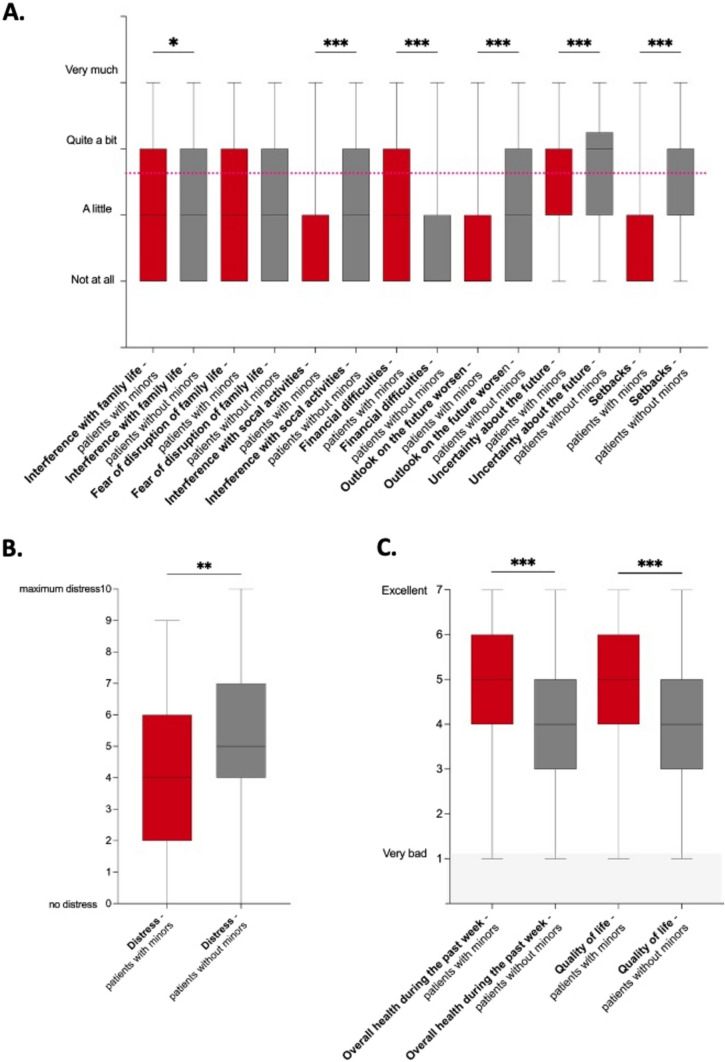
Our analysis included 881 brain tumour patients, of which 540 were female. Median age was 61 years (ranging from 16 to 88 years). Of all patients, 228 suffered from malignant intracranial tumours. More than half of all patients and more than 65% of patients with malignant tumours reported that their illness or medical treatment interfered with their social activities and family life. Almost 30% of patients reported moderate or severe complaints. About 27% of all patients (and 31% of patients with malignancies) expressed moderate or major concerns that their family life could be disrupted. Among the patients with malignancies, 83.5% of patients had a total of 318 children at the time of tumour diagnosis, with a mean age of 33 ± 0.9. Of these patients with malignancies, 38 (17.9%) had a total of 56 underage children at the time of tumour diagnosis, and currently have 53 underage children. Patients with minor children had more financial worries but less interference of their disease with social activities, less psycho-oncological distress, and a more positive outlook into the future (each, p < 0.0001). They evaluated their general health status and quality of life in the week prior to their current appointment significantly better (each p < 0.0001).
Our study found that 17.9% of patients with malignant brain tumours have underage children. However, having underage children may actually be a positive resource for these patients, as they show lower distress values and better quality of life.
脑肿瘤会给患者及其家属带来巨大负担,包括身体、心理和社会方面的挑战。对于恶性脑肿瘤患者和有未成年子女的患者来说,这种负担可能尤其沉重。然而,目前尚不清楚神经肿瘤患者的社会负担频率以及有未成年子女的患者比例。本回顾性研究旨在确定神经肿瘤患者的社会和家庭功能障碍频率、有未成年子女的患者比例,并评估其相关负担。
在 22 个月期间,所有脑肿瘤患者都被要求完成一份简短的问卷,其中包括流行病学数据、EORTC-qlq-C30 和 -BN20 问卷以及痛苦温度计。使用 Prism 9 for macOS(版本 9,GraphPad Prism)收集和分析数据。
我们的分析包括 881 名脑肿瘤患者,其中 540 名为女性。中位年龄为 61 岁(范围为 16 至 88 岁)。所有患者中,228 名患有颅内恶性肿瘤。超过一半的患者和超过 65%的恶性肿瘤患者报告说,他们的疾病或治疗干扰了他们的社交活动和家庭生活。近 30%的患者报告有中度或重度抱怨。约 27%的患者(恶性肿瘤患者中为 31%)表示对家庭生活可能受到干扰存在中度或主要担忧。在恶性肿瘤患者中,83.5%的患者在肿瘤诊断时共有 318 名子女,平均年龄为 33±0.9 岁。这些恶性肿瘤患者中有 38 名(17.9%)在肿瘤诊断时共有 56 名未成年子女,目前有 53 名未成年子女。有未成年子女的患者有更多的财务担忧,但疾病对社交活动的干扰较小,心理困扰较小,对未来的展望更为积极(均 p<0.0001)。他们对自己在当前预约前一周的一般健康状况和生活质量的评价明显更好(均 p<0.0001)。
我们的研究发现,17.9%的恶性脑肿瘤患者有未成年子女。然而,对于这些患者来说,有未成年子女实际上可能是一个积极的资源,因为他们的痛苦值较低,生活质量较高。