Bin Luo, Wang Xiaoping, Jiatong Hu, Donghua Fan, Qiang Wang, Yingchao Shen, Yiming Miao, Yong Ma
Department of Orthopaedics, Changshu Hospital Affiliated to Nanjing University of Chinese Medicine, Changshu, China.
Department of Orthopedics, PLA Strategic Support Force Characteristic Medical Center, Beijing, China.
Front Neurosci. 2023 Aug 22;17:1252651. doi: 10.3389/fnins.2023.1252651. eCollection 2023.
With the aging of the global population, Spinal injuries are often prone to occur and affect human health. The development of technology has put robots on the stage to assist in the treatment of spinal injuries.
A comprehensive literature search were carried out in multiple databases, including PubMed, Medline (Ovid), Web of Science, Cochrane, Embase, Scopus, CKNI, Wang fang, VIP database, Sino Med, Clinical Trails until 20th, June, 2023 to collect effect of robot-assisted gait training for patients with spinal cord injury patients. Primary outcome includes any changes of gait distance and gait speed. Secondary outcomes include any changes in functions (Such as TUG, Leg strength, 10 MWT) and any advent events. Data were extracted from two independent individuals and Cochrane Risk of Bias tool version 2.0 was assessed for the included studies. Systematic review and meta-analysis were performed by RevMan 5.3 software.
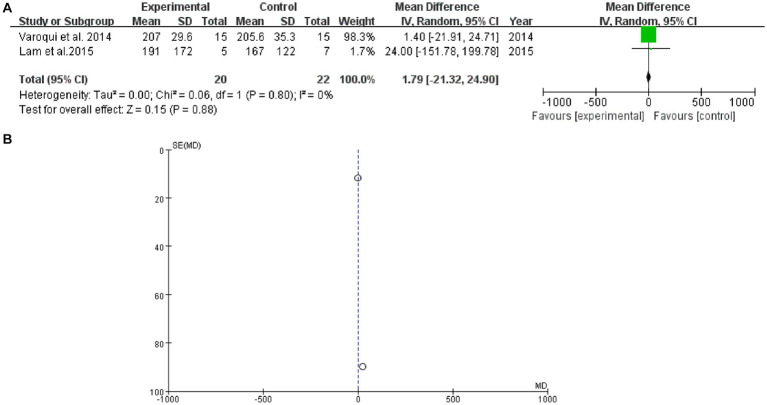
11 studies were included in meta-analysis. The result showed that gait distance [WMD = 16.05, 95% CI (-15.73, 47.83), I = 69%], gait speed (RAGT vs. regular treatment) [WMD = 0.01, 95% CI (-0.04, 0.05), I = 43%], gait speed (RAGT vs. no intervention) [WMD = 0.07, 95% CI (0.01, 0.12), I = 0%], leg strength [WMD = 0.59, 95% CI (-1.22, 2.40), I = 29%], TUG [WMD = 9.25, 95% CI (2.76, 15.73), I = 74%], 10 MWT [WMD = 0.01, 95% CI (-0.15, 0.16), I = 0%], and 6 MWT [WMD = 1.79, 95% CI (-21.32, 24.90), I = 0%].
Robot-assisted gait training seems to be helpful for patients with spinal cord to improve TUG. It may not affect gait distance, gait speed, leg strength, 10 MWT, and 6 MWT.
随着全球人口老龄化,脊髓损伤经常容易发生并影响人类健康。技术的发展使机器人走上舞台以协助脊髓损伤的治疗。
在多个数据库中进行全面的文献检索,包括PubMed、Medline(Ovid)、科学引文索引、考克兰系统评价、Embase、Scopus、中国知网、万方数据库、维普数据库、中国生物医学文献数据库、Clinical Trails,检索截至2023年6月20日,以收集机器人辅助步态训练对脊髓损伤患者的效果。主要结局包括步态距离和步态速度的任何变化。次要结局包括功能(如定时起立步行试验、腿部力量、10米步行试验)的任何变化以及任何不良事件。数据由两名独立人员提取,并使用Cochrane偏倚风险工具2.0对纳入研究进行评估。使用RevMan 5.3软件进行系统评价和荟萃分析。
11项研究纳入荟萃分析。结果显示,步态距离[加权均数差(WMD)=16.05,95%置信区间(CI)(-15.73,47.83),I²=69%],步态速度(机器人辅助步态训练与常规治疗相比)[WMD=0.01,95%CI(-0.04,0.05),I²=43%],步态速度(机器人辅助步态训练与无干预相比)[WMD=0.07,95%CI(0.01,0.12),I²=0%],腿部力量[WMD=0.59,95%CI(-1.22,2.40),I²=29%],定时起立步行试验[WMD=9.25,95%CI(2.7,6,15.73),I²=74%],10米步行试验[WMD=0.01,95%CI(-0.15,0.16),I²=0%],以及6分钟步行试验[WMD=1.79,95%CI(-21.32,24.90),I²=0%]。
机器人辅助步态训练似乎有助于脊髓损伤患者改善定时起立步行试验。它可能不会影响步态距离、步态速度、腿部力量、10米步行试验和6分钟步行试验。