Department of Toxicology and Cancer Biology, University of Kentucky, Lexington, KY 40536, USA.
Department of Cellular and Integrative Physiology, University of Nebraska Medical Center, Omaha, NE 68198, USA.
Cells. 2023 Aug 25;12(17):2145. doi: 10.3390/cells12172145.
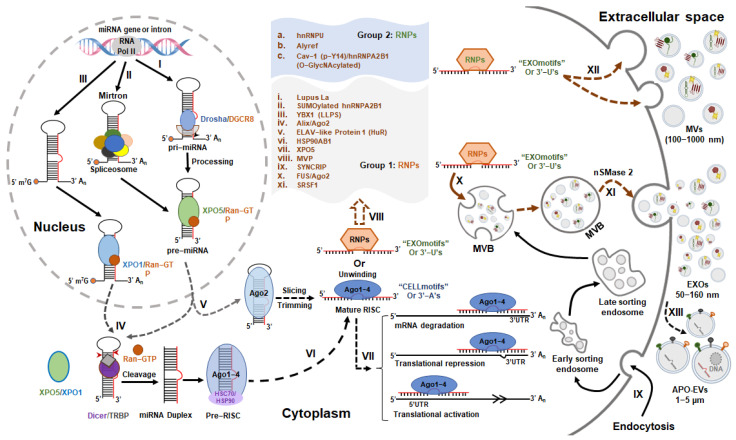
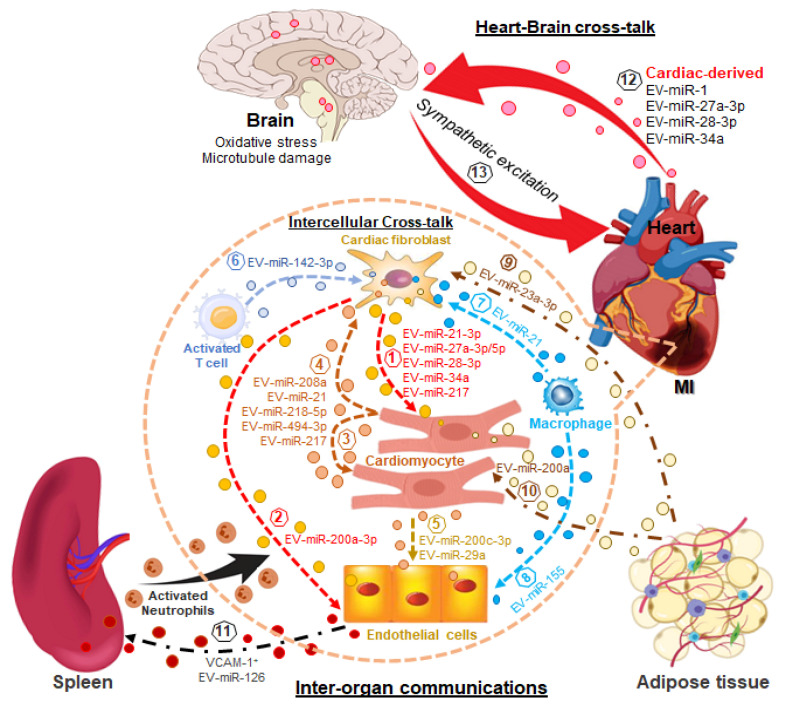
Extracellular vesicles (EVs) are emerging mediators of intracellular and inter-organ communications in cardiovascular diseases (CVDs), especially in the pathogenesis of heart failure through the transference of EV-containing bioactive substances. microRNAs (miRNAs) are contained in EV cargo and are involved in the progression of heart failure. Over the past several years, a growing body of evidence has suggested that the biogenesis of miRNAs and EVs is tightly regulated, and the sorting of miRNAs into EVs is highly selective and tightly controlled. Extracellular miRNAs, particularly circulating EV-miRNAs, have shown promising potential as prognostic and diagnostic biomarkers for heart failure and as therapeutic targets. In this review, we summarize the latest progress concerning the role of EV-miRNAs in HF and their application in a therapeutic strategy development for heart failure.
细胞外囊泡(EVs)是心血管疾病(CVDs)中细胞内和器官间通讯的新兴介质,特别是在心力衰竭的发病机制中,通过含有 EV 的生物活性物质的转移。microRNAs(miRNAs)包含在 EV 货物中,并参与心力衰竭的进展。在过去的几年中,越来越多的证据表明 miRNA 和 EV 的生物发生受到严格调控,并且 miRNA 向 EV 的分选是高度选择性和严格控制的。细胞外 miRNAs,特别是循环 EV-miRNAs,作为心力衰竭的预后和诊断生物标志物以及治疗靶点显示出有希望的潜力。在这篇综述中,我们总结了 EV-miRNAs 在 HF 中的作用及其在心力衰竭治疗策略开发中的应用的最新进展。