Matheve Thomas, Hodges Paul, Danneels Lieven
Spine, Head and Pain Research Unit Ghent, Department of Rehabilitation Sciences, Ghent University, 9000 Gent, Belgium.
REVAL-Rehabilitation Research Center, Faculty of Rehabilitation Sciences, UHasselt, 3500 Diepenbeek, Belgium.
J Clin Med. 2023 Aug 24;12(17):5510. doi: 10.3390/jcm12175510.
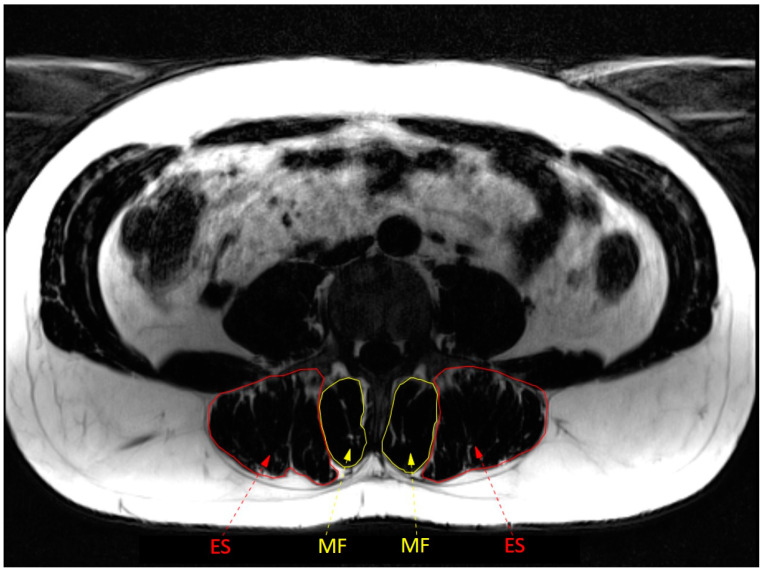
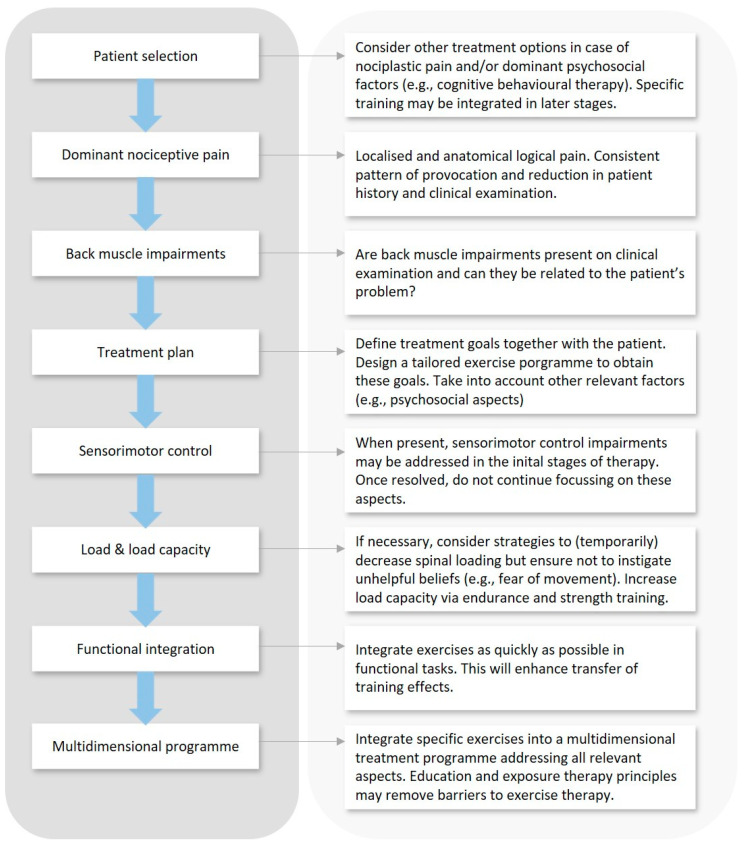
Changes in back muscle function and structure are highly prevalent in patients with chronic low back pain (CLBP). Since large heterogeneity in clinical presentation and back muscle dysfunctions exists within this population, the potential role of back muscle dysfunctions in the persistence of low back pain differs between individuals. Consequently, interventions should be tailored to the individual patient and be based on a thorough clinical examination taking into account the multidimensional nature of CLBP. Considering the complexity of this process, we will provide a state-of-the-art update on back muscle dysfunctions in patients with CLBP and their implications for treatment. To this end, we will first give an overview of (1) dysfunctions in back muscle structure and function, (2) the potential of exercise therapy to address these dysfunctions, and (3) the relationship between changes in back muscle dysfunctions and clinical parameters. In a second part, we will describe a framework for an individualised approach for back muscle training in patients with CLBP.
慢性下腰痛(CLBP)患者中背部肌肉功能和结构的改变非常普遍。由于该人群临床表现和背部肌肉功能障碍存在很大异质性,背部肌肉功能障碍在腰痛持续存在中的潜在作用因人而异。因此,干预措施应根据个体患者量身定制,并基于全面的临床检查,同时考虑到CLBP的多维度性质。考虑到这一过程的复杂性,我们将提供关于CLBP患者背部肌肉功能障碍及其对治疗影响的最新技术进展。为此,我们将首先概述:(1)背部肌肉结构和功能障碍;(2)运动疗法解决这些功能障碍的潜力;(3)背部肌肉功能障碍变化与临床参数之间的关系。在第二部分中,我们将描述CLBP患者背部肌肉训练个体化方法的框架。