Independent Researcher, Oxford OX4 3UD, UK.
European Commission, Joint Research Centre (JRC), 21027 Ispra, Italy.
Nutrients. 2023 Sep 2;15(17):3837. doi: 10.3390/nu15173837.
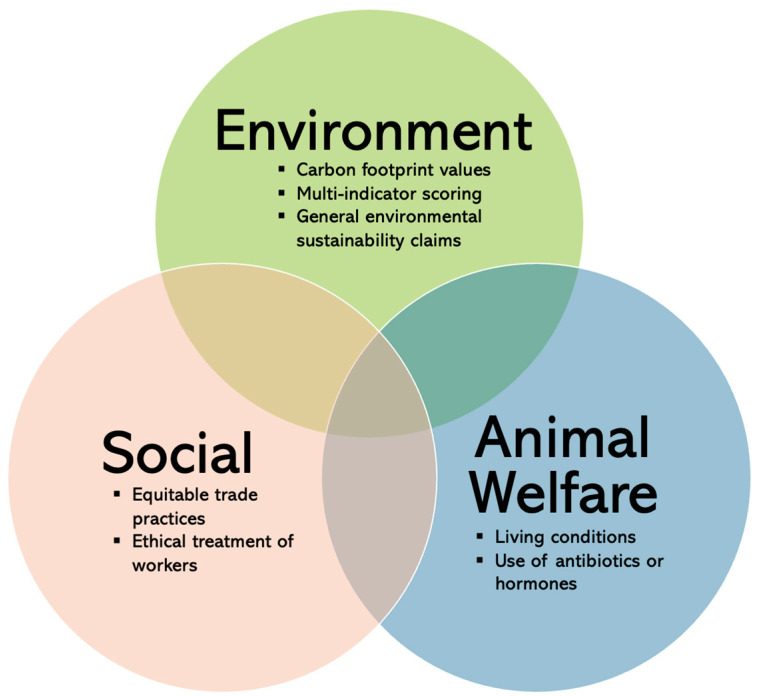
Sustainability labelling on food products can help consumers make informed purchasing decisions and support the urgent transition to sustainable food systems. While there is a relatively robust body of evidence on health and nutrition labelling, less is known about the effectiveness of sustainability labelling in facilitating sustainable food choices. This paper investigates the impact of sustainability labelling on consumer understanding, attitudes, and behaviour to support a more nuanced, detailed, and holistic understanding of the evidence. Using a narrative literature review methodology, the paper assesses studies covering environmental, social, and/or animal welfare aspects of sustainability labelling on food products. We found that consumer understanding of sustainability information is often limited, which could hinder behaviour change. While sustainability labelling can influence consumer attitudes and purchasing behaviours, evidence from real consumer settings tends to show small effect sizes. Consumers are generally willing to pay more for sustainability-labelled products, and organic labelling often leads to the highest reported willingness to pay. The review emphasises the importance of trust, suggesting a preference for labelling backed by governments or public authorities. Sustainability labelling that uses intuitively understandable cues has an increased impact, with visual aids such as traffic light colours showing promise. We conclude that further research is needed in real-world settings, using representative populations and exploring the influence of demographic factors, values, and attitudes.
食品产品的可持续性标签可以帮助消费者做出明智的购买决策,并支持向可持续食品系统的紧急转型。虽然关于健康和营养标签已经有了相对丰富的证据,但对于可持续性标签在促进可持续食品选择方面的有效性知之甚少。本文研究了可持续性标签对消费者理解、态度和行为的影响,以支持对证据进行更细致、更详细和更全面的理解。本文使用叙述性文献综述方法,评估了涵盖食品产品可持续性标签的环境、社会和/或动物福利方面的研究。我们发现,消费者对可持续性信息的理解往往有限,这可能会阻碍行为的改变。虽然可持续性标签可以影响消费者的态度和购买行为,但来自真实消费者环境的证据往往显示出较小的效应大小。消费者通常愿意为可持续性标签产品支付更高的价格,而有机标签通常会导致报告的最高支付意愿。该综述强调了信任的重要性,表明消费者更倾向于选择有政府或公共机构支持的标签。使用直观易懂的提示的可持续性标签具有更大的影响力,例如使用红绿灯颜色等视觉辅助工具显示出了前景。我们的结论是,需要在现实环境中进行进一步的研究,使用代表性人群,并探索人口统计因素、价值观和态度的影响。