Department of Electronics and Communications Engineering, Zagazig University, Zagazig 44519, Egypt.
EIAS Data Science Lab, College of Computer and Information Sciences, Prince Sultan University, Riyadh 11586, Saudi Arabia.
Sensors (Basel). 2023 Aug 25;23(17):7435. doi: 10.3390/s23177435.
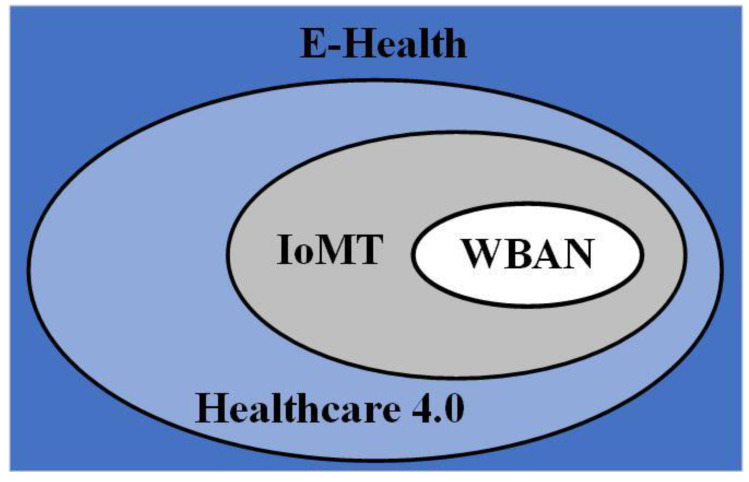
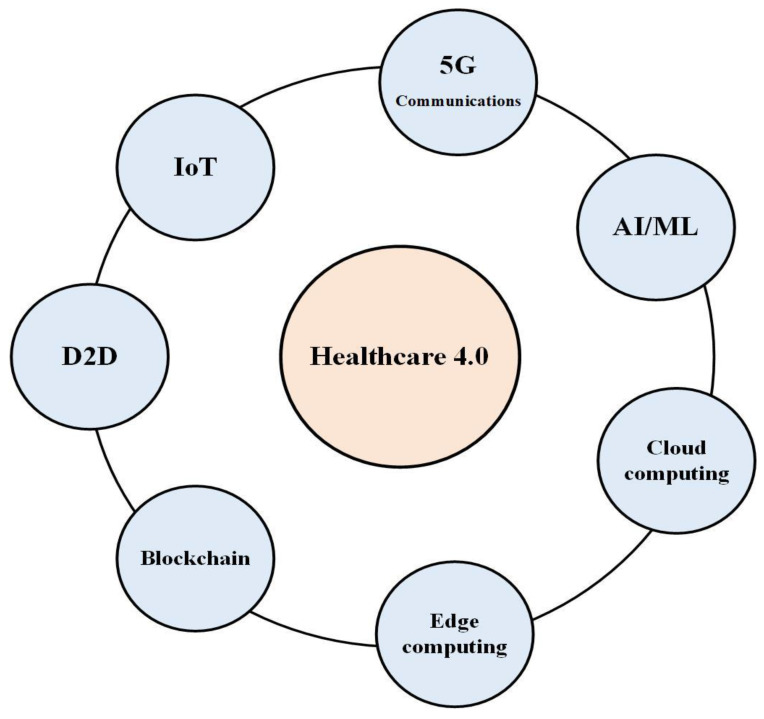
Healthcare 4.0 is a recent e-health paradigm associated with the concept of Industry 4.0. It provides approaches to achieving precision medicine that delivers healthcare services based on the patient's characteristics. Moreover, Healthcare 4.0 enables telemedicine, including telesurgery, early predictions, and diagnosis of diseases. This represents an important paradigm for modern societies, especially with the current situation of pandemics. The release of the fifth-generation cellular system (5G), the current advances in wearable device manufacturing, and the recent technologies, e.g., artificial intelligence (AI), edge computing, and the Internet of Things (IoT), are the main drivers of evolutions of Healthcare 4.0 systems. To this end, this work considers introducing recent advances, trends, and requirements of the Internet of Medical Things (IoMT) and Healthcare 4.0 systems. The ultimate requirements of such networks in the era of 5G and next-generation networks are discussed. Moreover, the design challenges and current research directions of these networks. The key enabling technologies of such systems, including AI and distributed edge computing, are discussed.
医疗 4.0 是最近与工业 4.0 概念相关的电子健康范例。它提供了实现精准医疗的方法,根据患者的特征提供医疗服务。此外,医疗 4.0 还实现了远程医疗,包括远程手术、疾病的早期预测和诊断。这是现代社会的一个重要范例,特别是在当前大流行的情况下。第五代蜂窝系统 (5G) 的发布、可穿戴设备制造的最新进展以及人工智能 (AI)、边缘计算和物联网 (IoT) 等新技术是医疗 4.0 系统发展的主要驱动力。为此,本工作考虑引入医疗物联网 (IoMT) 和医疗 4.0 系统的最新进展、趋势和要求。讨论了这些网络在 5G 和下一代网络时代的最终要求。此外,还讨论了这些网络的设计挑战和当前研究方向。讨论了这些系统的关键使能技术,包括 AI 和分布式边缘计算。