Hamed Ahmed A, Abd-Elaziz Ahmed M, Ghanem Manal M E, ElAwady Mohamed E, Abdel-Aziz Mohamed S
Microbial Chemistry Department, National Research Center, 33-El Bohouthst, P.O.12622, Dokki, Giza, Egypt.
Molecular Biology Department, National Research Center, 33-El Bohouthst, P.O.12622, Dokki, Giza, Egypt.
Folia Microbiol (Praha). 2024 Feb;69(1):221-234. doi: 10.1007/s12223-023-01088-2. Epub 2023 Sep 11.
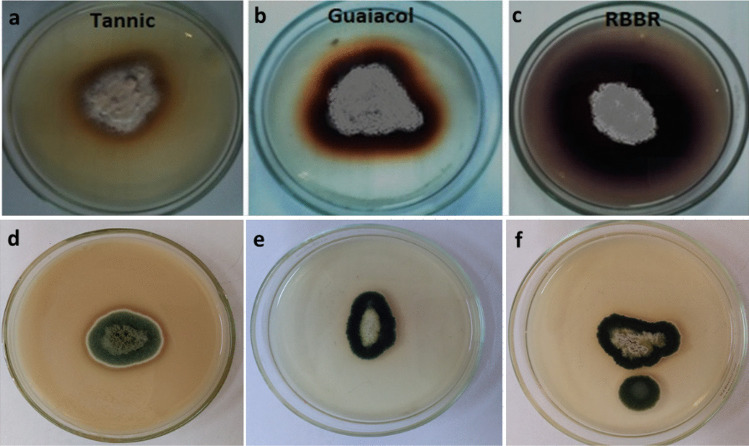
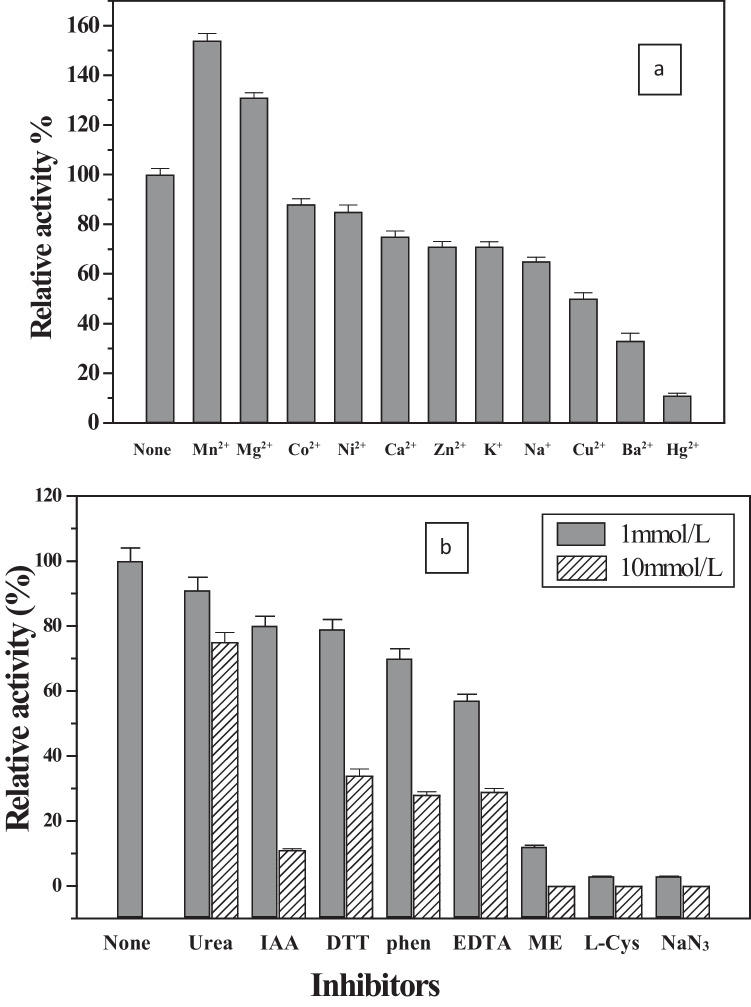
Laccase-producing fungus (MY3) was successfully isolated from soil samples collected from Mansoura Governorate, Egypt. This fungal isolate has shown a high laccase production level over other isolated fungi. The identity of this isolate was determined by the molecular technique 18SrRNA as Curvularia lunata MY3. The enzyme purification was performed using ammonium sulfate precipitation followed by Sephacryl S-200 and DEAE-Sepharose column chromatography. The denatured enzyme using SDS-PAGE had a molar mass of 65 kDa. The purified laccase had an optimum temperature at 40 °C for enzyme activity with 57.3 kJ/mol activation energy for 2,2'-azino-bis-3-ethylbenzothiazoline-6-sulfonic acid (ABTS) oxidation. The enzyme had an optimum pH of 5.0, and it has shown a high stability at the acidic range (4.5 to 5.5). Mn and Mg ions enhanced the enzyme activity, while most of the enzyme activity was inhibited by Hg. Some compounds such as 2-mercaptoethanol, L-cysteine, and sodium azide at a concentration of 10 mmol/L had shown a high suppression effect on the enzyme activity. The enzyme strongly oxidized ABTS and syringaldazine and moderately oxidized DMP and guaiacol. The antimicrobial activity of the purified enzyme towards three pathogenic strains (Escherichia coli ATCC-25922, Staphylococcus aureus NRRLB-767, and Candida albicans ATCC-10231) was evaluated for the potential use as an antimicrobial therapeutic enzyme.
从埃及曼苏拉省采集的土壤样本中成功分离出了产漆酶真菌(MY3)。与其他分离出的真菌相比,这种真菌分离株表现出较高的漆酶产量水平。通过18SrRNA分子技术确定该分离株的身份为新月弯孢霉MY3。采用硫酸铵沉淀法,随后通过Sephacryl S - 200和DEAE - 琼脂糖柱色谱法进行酶的纯化。使用SDS - PAGE变性后的酶摩尔质量为65 kDa。纯化后的漆酶在40℃时酶活性最佳,氧化2,2'-联氮-双-3-乙基苯并噻唑啉-6-磺酸(ABTS)的活化能为57.3 kJ/mol。该酶的最适pH为5.0,在酸性范围(4.5至5.5)表现出较高的稳定性。锰和镁离子增强了酶的活性,而汞对大部分酶活性有抑制作用。一些化合物如浓度为10 mmol/L的2-巯基乙醇、L-半胱氨酸和叠氮化钠对酶活性有较高的抑制作用。该酶能强烈氧化ABTS和丁香醛连氮,中度氧化2,6-二甲氧基苯酚和愈创木酚。评估了纯化酶对三种致病菌株(大肠杆菌ATCC - 25922、金黄色葡萄球菌NRRLB - 767和白色念珠菌ATCC - 10231)的抗菌活性,以确定其作为抗菌治疗酶的潜在用途。