Division of Critical Care Medicine, MLC2005, Cincinnati Children's Hospital Medical Center, 3333 Burnet Avenue, Cincinnati, OH, 45229, USA.
Department of Pediatrics, University of Cincinnati College of Medicine, Cincinnati, OH, 45627, USA.
Crit Care. 2024 Jul 17;28(1):246. doi: 10.1186/s13054-024-05020-z.
Sepsis poses a grave threat, especially among children, but treatments are limited owing to heterogeneity among patients. We sought to test the clinical and biological relevance of pediatric septic shock subclasses identified using reproducible approaches.
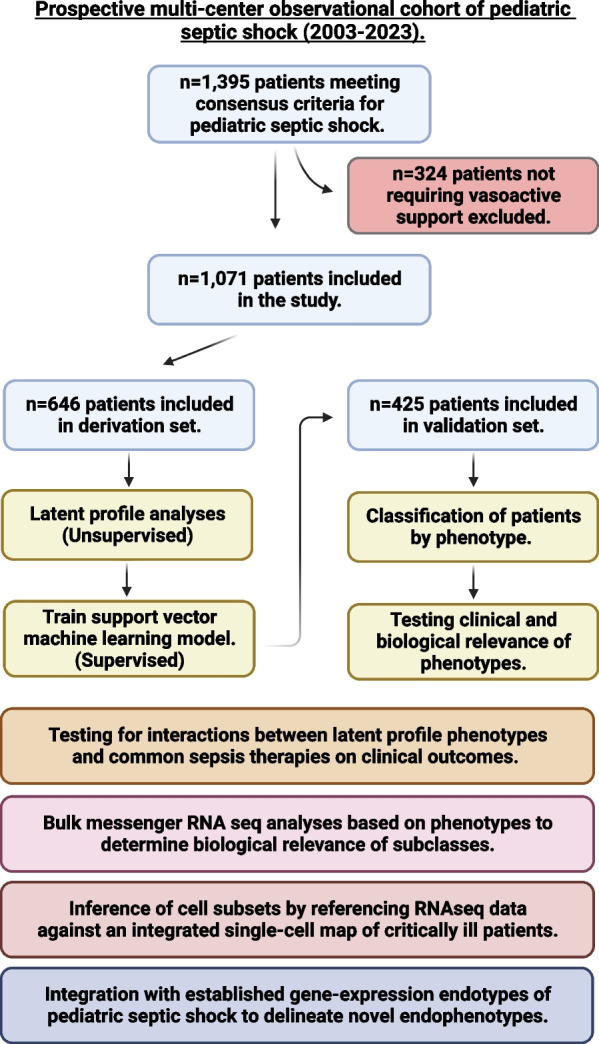
We performed latent profile analyses using clinical, laboratory, and biomarker data from a prospective multi-center pediatric septic shock observational cohort to derive phenotypes and trained a support vector machine model to assign phenotypes in an internal validation set. We established the clinical relevance of phenotypes and tested for their interaction with common sepsis treatments on patient outcomes. We conducted transcriptomic analyses to delineate phenotype-specific biology and inferred underlying cell subpopulations. Finally, we compared whether latent profile phenotypes overlapped with established gene-expression endotypes and compared survival among patients based on an integrated subclassification scheme.
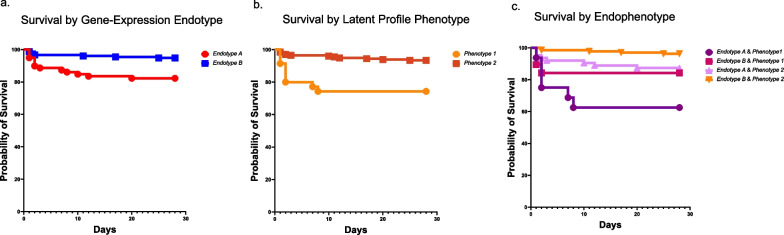
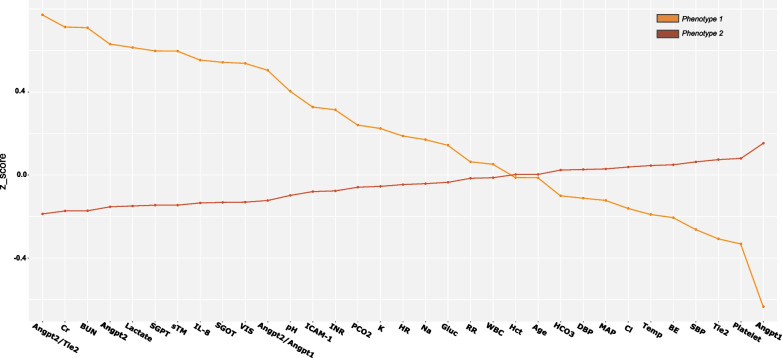
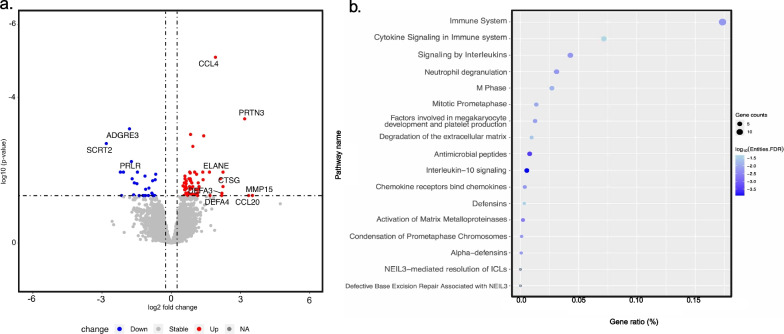
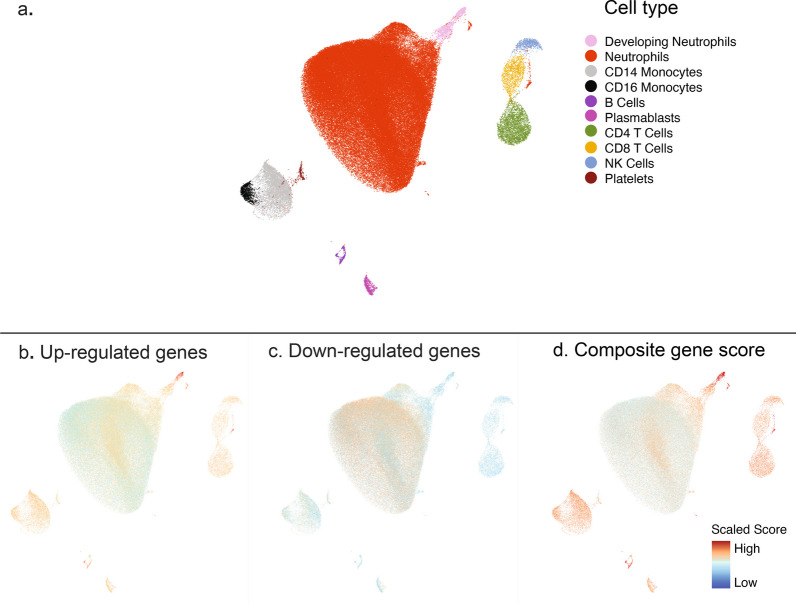
Among 1071 pediatric septic shock patients requiring vasoactive support on day 1 included, we identified two phenotypes which we designated as Phenotype 1 (19.5%) and Phenotype 2 (80.5%). Membership in Phenotype 1 was associated with ~ fourfold adjusted odds of complicated course relative to Phenotype 2. Patients belonging to Phenotype 1 were characterized by relatively higher Angiopoietin-2/Tie-2 ratio, Angiopoietin-2, soluble thrombomodulin (sTM), interleukin 8 (IL-8), and intercellular adhesion molecule 1 (ICAM-1) and lower Tie-2 and Angiopoietin-1 concentrations compared to Phenotype 2. We did not identify significant interactions between phenotypes, common treatments, and clinical outcomes. Transcriptomic analysis revealed overexpression of genes implicated in the innate immune response and driven primarily by developing neutrophils among patients designated as Phenotype 1. There was no statistically significant overlap between established gene-expression endotypes, reflective of the host adaptive response, and the newly derived phenotypes, reflective of the host innate response including microvascular endothelial dysfunction. However, an integrated subclassification scheme demonstrated varying survival probabilities when comparing patient endophenotypes.
Our research underscores the reproducibility of latent profile analyses to identify pediatric septic shock phenotypes with high prognostic relevance. Pending validation, an integrated subclassification scheme, reflective of the different facets of the host response, holds promise to inform targeted intervention among those critically ill.
脓毒症是一种严重的威胁,尤其是在儿童中,但由于患者之间存在异质性,治疗方法有限。我们试图通过使用可重复的方法来测试使用有预后意义的儿童脓毒性休克亚组。
我们使用前瞻性多中心儿科脓毒性休克观察队列的临床、实验室和生物标志物数据进行潜在剖面分析,以得出表型,并使用支持向量机模型在内部验证集中分配表型。我们确定了表型的临床相关性,并测试了它们与常见脓毒症治疗方法对患者结局的相互作用。我们进行了转录组分析,以描绘表型特异性生物学,并推断潜在的细胞亚群。最后,我们比较了潜在剖面表型是否与已建立的基因表达终末型重叠,并根据综合分类方案比较了患者的生存情况。
在纳入的 1071 例需要在第 1 天使用血管活性药物支持的儿科脓毒性休克患者中,我们确定了两种表型,我们将其命名为表型 1(19.5%)和表型 2(80.5%)。与表型 2相比,表型 1的患者发生复杂病程的调整后比值比约为 4 倍。与表型 2相比,属于表型 1的患者表现为相对较高的血管生成素 2/血管生成素 2 型受体(Tie-2)比值、血管生成素 2、可溶性血栓调节蛋白(sTM)、白细胞介素 8(IL-8)和细胞间黏附分子 1(ICAM-1),以及较低的 Tie-2 和血管生成素 1 浓度。我们没有发现表型、常见治疗方法和临床结局之间存在显著的相互作用。转录组分析显示,与表型 2相比,属于表型 1的患者存在与固有免疫反应相关的基因过度表达,主要由发育中的中性粒细胞驱动。与已建立的基因表达终末型相比,新确定的表型不存在统计学意义上的重叠,反映了宿主的适应性反应,而新确定的表型反映了宿主的固有反应,包括微血管内皮功能障碍。然而,当比较患者的内表型时,一个综合的分类方案显示出不同的生存概率。
我们的研究强调了潜在剖面分析在识别具有高预后意义的儿科脓毒性休克表型方面的可重复性。在得到验证之前,一个反映宿主反应不同方面的综合分类方案有望为那些重病患者提供有针对性的干预措施。