Princess Margaret Cancer Centre, University Health Network, Toronto, Ontario, Canada.
Department of Medical Biophysics, University of Toronto, Toronto, Ontario, Canada.
Cancer Discov. 2023 Nov 1;13(11):2470-2487. doi: 10.1158/2159-8290.CD-23-0331.
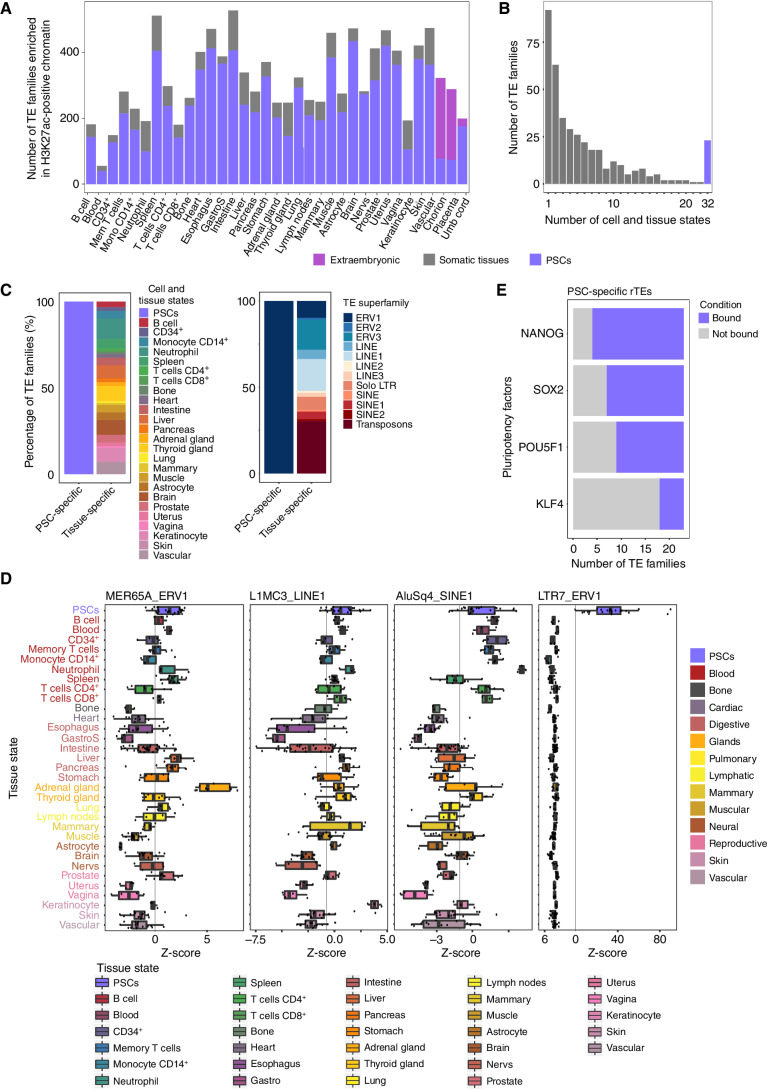
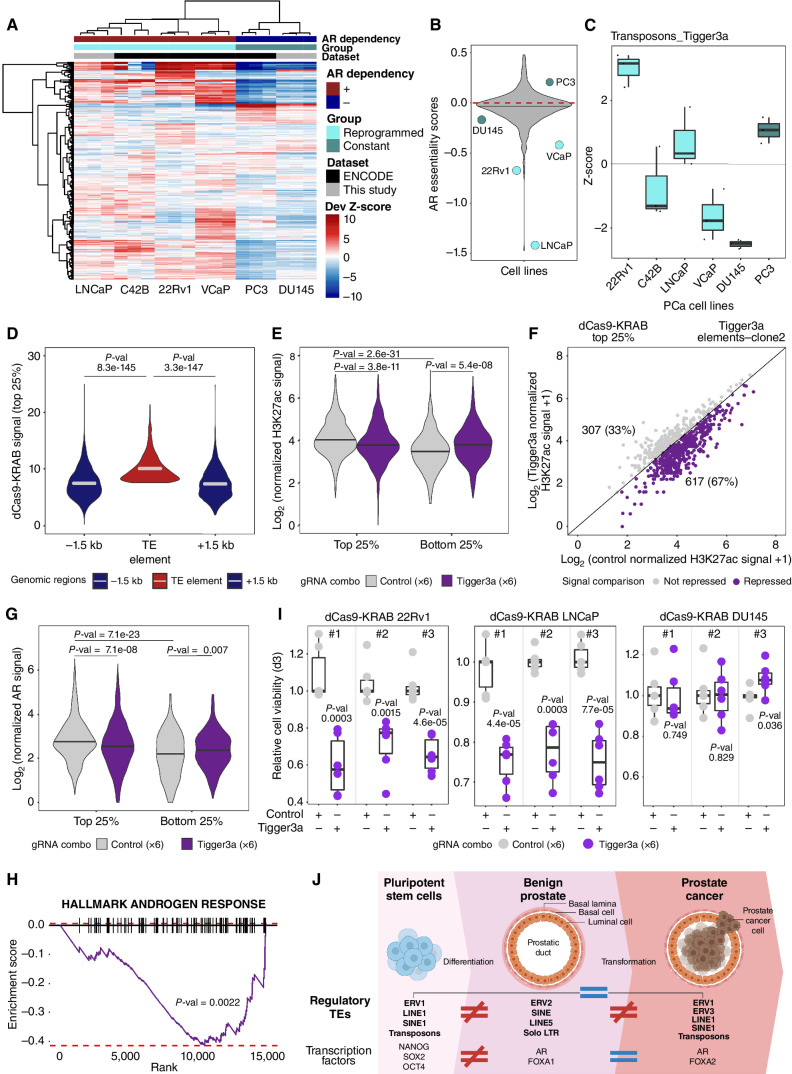
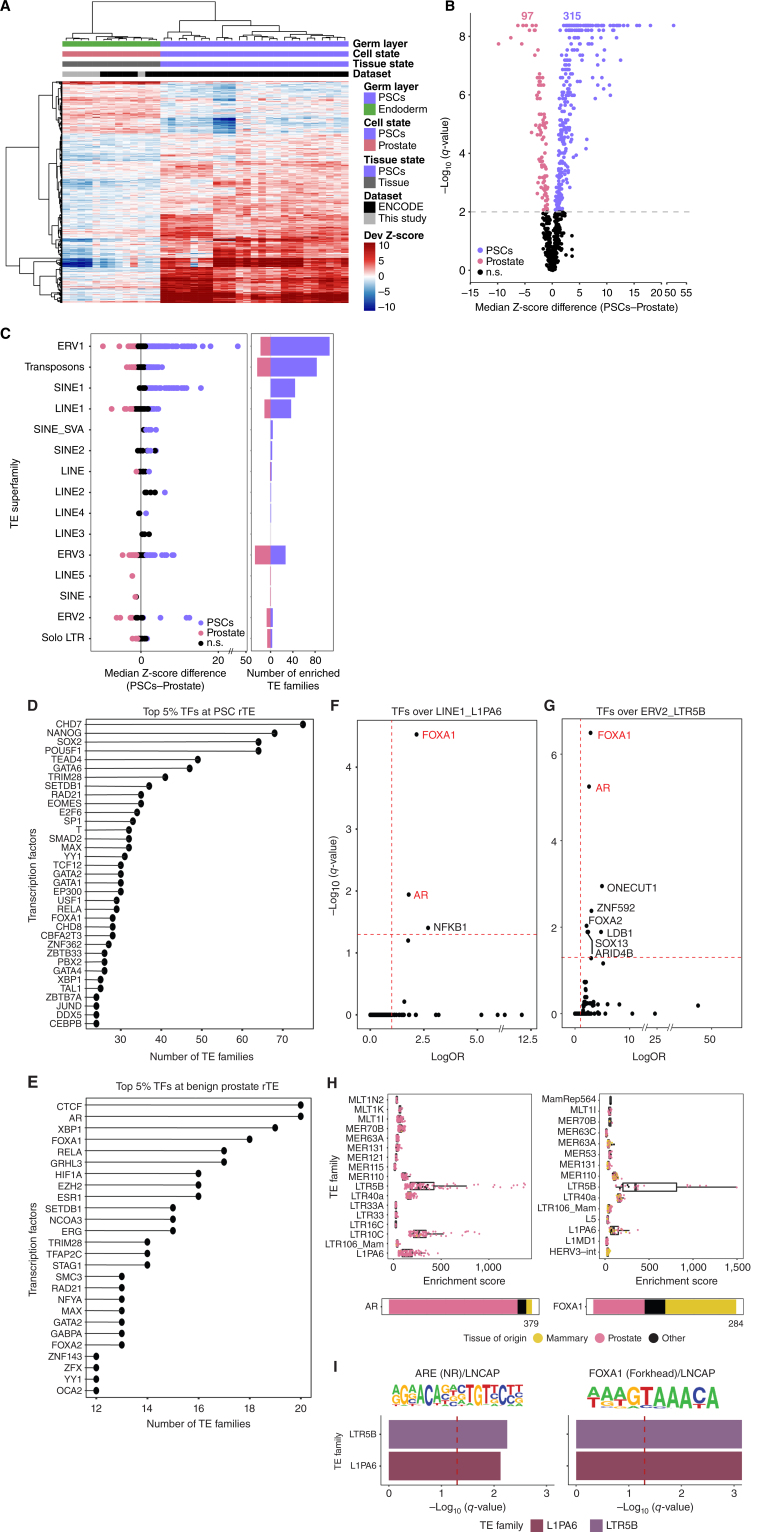
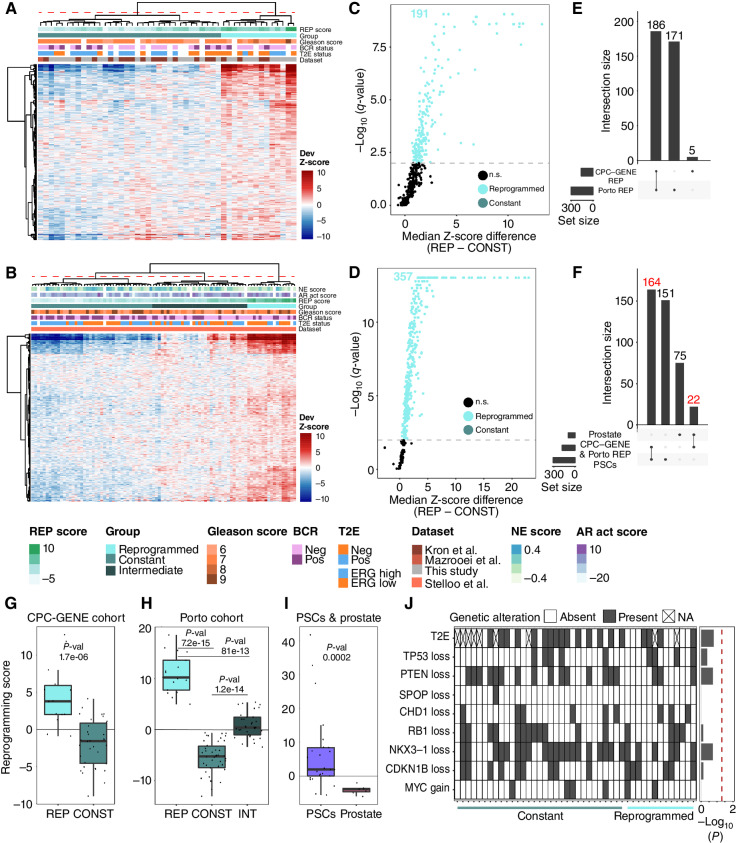
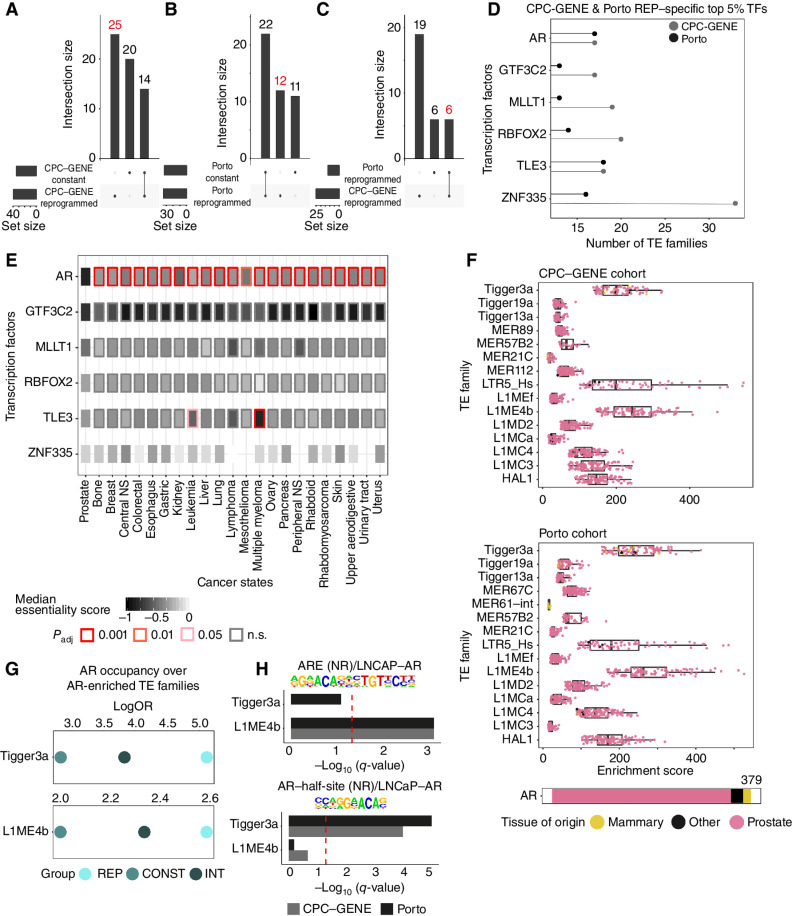
Transposable elements hold regulatory functions that impact cell fate determination by controlling gene expression. However, little is known about the transcriptional machinery engaged at transposable elements in pluripotent and mature versus oncogenic cell states. Through positional analysis over repetitive DNA sequences of H3K27ac chromatin immunoprecipitation sequencing data from 32 normal cell states, we report pluripotent/stem and mature cell state-specific "regulatory transposable elements." Pluripotent/stem elements are binding sites for pluripotency factors (e.g., NANOG, SOX2, OCT4). Mature cell elements are docking sites for lineage-specific transcription factors, including AR and FOXA1 in prostate epithelium. Expanding the analysis to prostate tumors, we identify a subset of regulatory transposable elements shared with pluripotent/stem cells, including Tigger3a. Using chromatin editing technology, we show how such elements promote prostate cancer growth by regulating AR transcriptional activity. Collectively, our results suggest that oncogenesis arises from lineage-specific transcription factors hijacking pluripotent/stem cell regulatory transposable elements.
We show that oncogenesis relies on co-opting transposable elements from pluripotent stem cells as regulatory elements altering the recruitment of lineage-specific transcription factors. We further discover how co-option is dependent on active chromatin states with important implications for developing treatment options against drivers of oncogenesis across the repetitive DNA. This article is featured in Selected Articles from This Issue, p. 2293.
转座元件具有调控功能,通过控制基因表达来影响细胞命运决定。然而,对于转座元件在多能性和成熟与致癌细胞状态下的转录机制知之甚少。通过对来自 32 种正常细胞状态的 H3K27ac 染色质免疫沉淀测序数据的重复 DNA 序列进行位置分析,我们报告了多能性/干细胞和成熟细胞状态特异性“调控转座元件”。多能性/干细胞元件是多能性因子(如 NANOG、SOX2、OCT4)的结合位点。成熟细胞元件是谱系特异性转录因子的停泊位点,包括前列腺上皮中的 AR 和 FOXA1。将分析扩展到前列腺肿瘤,我们确定了与多能性/干细胞共享的一组调控转座元件,包括 Tigger3a。使用染色质编辑技术,我们展示了这些元件如何通过调节 AR 转录活性来促进前列腺癌的生长。总的来说,我们的研究结果表明,肿瘤发生依赖于谱系特异性转录因子劫持多能性/干细胞调控转座元件。
我们表明,肿瘤发生依赖于将多能干细胞中的转座元件劫持为调节元件,改变谱系特异性转录因子的募集。我们进一步发现,这种共选择依赖于活性染色质状态,这对开发针对重复 DNA 中致癌驱动因素的治疗选择具有重要意义。本文选自本期特色文章,第 2293 页。