• 文献检索
  • 文档翻译
  • 深度研究
  • 学术资讯
  • Suppr Zotero 插件Zotero 插件
  • 邀请有礼
  • 套餐&价格
  • 历史记录
应用&插件
Suppr Zotero 插件Zotero 插件浏览器插件Mac 客户端Windows 客户端微信小程序
定价
高级版会员购买积分包购买API积分包
服务
文献检索文档翻译深度研究API 文档MCP 服务
关于我们
关于 Suppr公司介绍联系我们用户协议隐私条款
关注我们

Suppr 超能文献

核心技术专利:CN118964589B侵权必究
粤ICP备2023148730 号-1Suppr @ 2026

文献检索

告别复杂PubMed语法,用中文像聊天一样搜索,搜遍4000万医学文献。AI智能推荐,让科研检索更轻松。

立即免费搜索

文件翻译

保留排版,准确专业,支持PDF/Word/PPT等文件格式,支持 12+语言互译。

免费翻译文档

深度研究

AI帮你快速写综述,25分钟生成高质量综述,智能提取关键信息,辅助科研写作。

立即免费体验

使用具有两个注意力机制模块的卷积神经网络有效自动检测前交叉韧带损伤。

Effective automatic detection of anterior cruciate ligament injury using convolutional neural network with two attention mechanism modules.

机构信息

Department of Minimally Invasive Surgery and Sports Medicine, The 2Nd Affiliated Hospital of Harbin Medical University, Harbin, 150001, China.

Department of Control Science and Engineering, Harbin Institute of Technology, Harbin, 150001, China.

出版信息

BMC Med Imaging. 2023 Sep 11;23(1):120. doi: 10.1186/s12880-023-01091-6.

DOI:10.1186/s12880-023-01091-6
PMID:37697236
原文链接:https://pmc.ncbi.nlm.nih.gov/articles/PMC10494428/
Abstract

BACKGROUND

To develop a fully automated CNN detection system based on magnetic resonance imaging (MRI) for ACL injury, and to explore the feasibility of CNN for ACL injury detection on MRI images.

METHODS

Including 313 patients aged 16 - 65 years old, the raw data are 368 pieces with injured ACL and 100 pieces with intact ACL. By adding flipping, rotation, scaling and other methods to expand the data, the final data set is 630 pieces including 355 pieces of injured ACL and 275 pieces of intact ACL. Using the proposed CNN model with two attention mechanism modules, data sets are trained and tested with fivefold cross-validation.

RESULTS

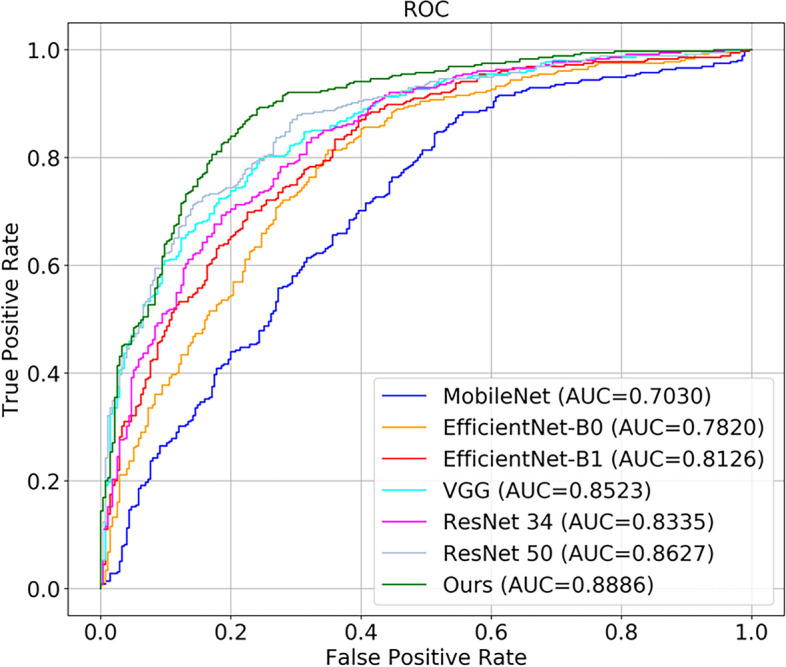
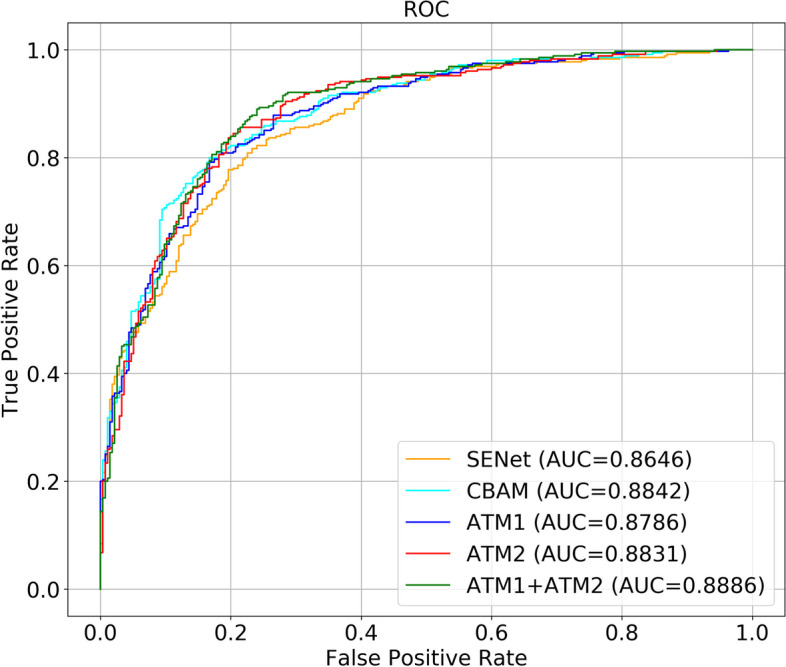
The performance is evaluated using accuracy, precision, sensitivity, specificity and F1 score of our proposed CNN model, with results of 0.8063, 0.7741, 0.9268, 0.6509 and 0.8436. The average accuracy in the fivefold cross-validation is 0.8064. For our model, the average area under curves (AUC) for detecting injured ACL has results of 0.8886.

CONCLUSION

We propose an effective and automatic CNN model to detect ACL injury from MRI of human knees. This model can effectively help clinicians diagnose ACL injury, improving diagnostic efficiency and reducing misdiagnosis and missed diagnosis.

摘要

背景

开发一种基于磁共振成像(MRI)的完全自动化卷积神经网络(CNN)检测系统,用于 ACL 损伤,并探讨 CNN 在 MRI 图像上检测 ACL 损伤的可行性。

方法

纳入 313 例 16-65 岁患者,原始数据为 368 份 ACL 损伤和 100 份 ACL 完整的 MRI。通过添加翻转、旋转、缩放等方法对数据进行扩充,最终数据集为 630 份,包括 355 份 ACL 损伤和 275 份 ACL 完整的 MRI。使用具有两个注意力机制模块的建议 CNN 模型,对数据集进行五重交叉验证训练和测试。

结果

使用我们提出的 CNN 模型的准确性、精确性、敏感性、特异性和 F1 评分来评估性能,结果分别为 0.8063、0.7741、0.9268、0.6509 和 0.8436。五重交叉验证的平均准确率为 0.8064。对于我们的模型,检测 ACL 损伤的平均曲线下面积(AUC)为 0.8886。

结论

我们提出了一种有效的自动 CNN 模型,用于从人类膝关节的 MRI 中检测 ACL 损伤。该模型可以有效帮助临床医生诊断 ACL 损伤,提高诊断效率,减少误诊和漏诊。
https://cdn.ncbi.nlm.nih.gov/pmc/blobs/ad47/10494428/140dbc86e361/12880_2023_1091_Fig12_HTML.jpg
https://cdn.ncbi.nlm.nih.gov/pmc/blobs/ad47/10494428/85e96740181a/12880_2023_1091_Fig1_HTML.jpg
https://cdn.ncbi.nlm.nih.gov/pmc/blobs/ad47/10494428/8ab5e26a13c1/12880_2023_1091_Fig2_HTML.jpg
https://cdn.ncbi.nlm.nih.gov/pmc/blobs/ad47/10494428/9d635797c16b/12880_2023_1091_Fig3_HTML.jpg
https://cdn.ncbi.nlm.nih.gov/pmc/blobs/ad47/10494428/efe079fcd38a/12880_2023_1091_Fig4_HTML.jpg
https://cdn.ncbi.nlm.nih.gov/pmc/blobs/ad47/10494428/756fa6dd536f/12880_2023_1091_Fig5_HTML.jpg
https://cdn.ncbi.nlm.nih.gov/pmc/blobs/ad47/10494428/842008aeec0b/12880_2023_1091_Fig6_HTML.jpg
https://cdn.ncbi.nlm.nih.gov/pmc/blobs/ad47/10494428/2fa3724379ee/12880_2023_1091_Fig7_HTML.jpg
https://cdn.ncbi.nlm.nih.gov/pmc/blobs/ad47/10494428/64bcefd53b03/12880_2023_1091_Fig8_HTML.jpg
https://cdn.ncbi.nlm.nih.gov/pmc/blobs/ad47/10494428/f71ed35c8770/12880_2023_1091_Fig9_HTML.jpg
https://cdn.ncbi.nlm.nih.gov/pmc/blobs/ad47/10494428/e3af5cad0205/12880_2023_1091_Fig10_HTML.jpg
https://cdn.ncbi.nlm.nih.gov/pmc/blobs/ad47/10494428/c07cd83c0f68/12880_2023_1091_Fig11_HTML.jpg
https://cdn.ncbi.nlm.nih.gov/pmc/blobs/ad47/10494428/140dbc86e361/12880_2023_1091_Fig12_HTML.jpg
https://cdn.ncbi.nlm.nih.gov/pmc/blobs/ad47/10494428/85e96740181a/12880_2023_1091_Fig1_HTML.jpg
https://cdn.ncbi.nlm.nih.gov/pmc/blobs/ad47/10494428/8ab5e26a13c1/12880_2023_1091_Fig2_HTML.jpg
https://cdn.ncbi.nlm.nih.gov/pmc/blobs/ad47/10494428/9d635797c16b/12880_2023_1091_Fig3_HTML.jpg
https://cdn.ncbi.nlm.nih.gov/pmc/blobs/ad47/10494428/efe079fcd38a/12880_2023_1091_Fig4_HTML.jpg
https://cdn.ncbi.nlm.nih.gov/pmc/blobs/ad47/10494428/756fa6dd536f/12880_2023_1091_Fig5_HTML.jpg
https://cdn.ncbi.nlm.nih.gov/pmc/blobs/ad47/10494428/842008aeec0b/12880_2023_1091_Fig6_HTML.jpg
https://cdn.ncbi.nlm.nih.gov/pmc/blobs/ad47/10494428/2fa3724379ee/12880_2023_1091_Fig7_HTML.jpg
https://cdn.ncbi.nlm.nih.gov/pmc/blobs/ad47/10494428/64bcefd53b03/12880_2023_1091_Fig8_HTML.jpg
https://cdn.ncbi.nlm.nih.gov/pmc/blobs/ad47/10494428/f71ed35c8770/12880_2023_1091_Fig9_HTML.jpg
https://cdn.ncbi.nlm.nih.gov/pmc/blobs/ad47/10494428/e3af5cad0205/12880_2023_1091_Fig10_HTML.jpg
https://cdn.ncbi.nlm.nih.gov/pmc/blobs/ad47/10494428/c07cd83c0f68/12880_2023_1091_Fig11_HTML.jpg
https://cdn.ncbi.nlm.nih.gov/pmc/blobs/ad47/10494428/140dbc86e361/12880_2023_1091_Fig12_HTML.jpg

相似文献

1
Effective automatic detection of anterior cruciate ligament injury using convolutional neural network with two attention mechanism modules.使用具有两个注意力机制模块的卷积神经网络有效自动检测前交叉韧带损伤。
BMC Med Imaging. 2023 Sep 11;23(1):120. doi: 10.1186/s12880-023-01091-6.
2
Automated detection of anterior cruciate ligament tears using a deep convolutional neural network.使用深度卷积神经网络自动检测前交叉韧带撕裂。
BMC Musculoskelet Disord. 2022 Jun 15;23(1):577. doi: 10.1186/s12891-022-05524-1.
3
Artificial Intelligence-Assisted Diagnosis of Anterior Cruciate Ligament Tears From Magnetic Resonance Images: Algorithm Development and Validation Study.基于磁共振成像的人工智能辅助前交叉韧带撕裂诊断:算法开发与验证研究
JMIR AI. 2022 Jul 26;1(1):e37508. doi: 10.2196/37508.
4
Efficient Detection of Knee Anterior Cruciate Ligament from Magnetic Resonance Imaging Using Deep Learning Approach.基于深度学习方法从磁共振成像中高效检测膝关节前交叉韧带
Diagnostics (Basel). 2021 Jan 11;11(1):105. doi: 10.3390/diagnostics11010105.
5
Improving inceptionV4 model based on fractional-order snow leopard optimization algorithm for diagnosing of ACL tears.基于分数阶雪豹优化算法改进 InceptionV4 模型用于 ACL 撕裂的诊断。
Sci Rep. 2024 Apr 29;14(1):9843. doi: 10.1038/s41598-024-60419-6.
6
Deep Learning for Detection of Complete Anterior Cruciate Ligament Tear.深度学习在完全性前交叉韧带撕裂检测中的应用。
J Digit Imaging. 2019 Dec;32(6):980-986. doi: 10.1007/s10278-019-00193-4.
7
Three-dimensional Magnetic Resonance Imaging of the Anterolateral Ligament of the Knee: An Evaluation of Intact and Anterior Cruciate Ligament-Deficient Knees From the Scientific Anterior Cruciate Ligament Network International (SANTI) Study Group.膝关节前外侧韧带的三维磁共振成像:来自科学前交叉韧带网络国际(SANTI)研究组的对完整和前交叉韧带缺失膝关节的评估。
Arthroscopy. 2018 Jul;34(7):2207-2217. doi: 10.1016/j.arthro.2018.02.014. Epub 2018 May 2.
8
Deep Learning Approach for Anterior Cruciate Ligament Lesion Detection: Evaluation of Diagnostic Performance Using Arthroscopy as the Reference Standard.基于深度学习的前交叉韧带损伤检测方法:以关节镜检查为参考标准评估诊断性能
J Magn Reson Imaging. 2020 Dec;52(6):1745-1752. doi: 10.1002/jmri.27266. Epub 2020 Jul 26.
9
Deep-learning-assisted diagnosis for knee magnetic resonance imaging: Development and retrospective validation of MRNet.深度学习辅助膝关节磁共振成像诊断:MRNet 的开发和回顾性验证。
PLoS Med. 2018 Nov 27;15(11):e1002699. doi: 10.1371/journal.pmed.1002699. eCollection 2018 Nov.
10
Diagnostic accuracy of machine-learning-assisted detection for anterior cruciate ligament injury based on magnetic resonance imaging: Protocol for a systematic review and meta-analysis.基于磁共振成像的机器学习辅助检测前交叉韧带损伤的诊断准确性:系统评价与荟萃分析方案
Medicine (Baltimore). 2019 Dec;98(50):e18324. doi: 10.1097/MD.0000000000018324.

引用本文的文献

1
Anterior cruciate ligament tear detection based on Res2Net modified by improved Lévy flight distribution.基于改进的 Lévy 飞行分布修正的 Res2Net 的前交叉韧带撕裂检测
Sci Rep. 2025 Jul 1;15(1):22023. doi: 10.1038/s41598-025-05777-5.
2
Magnetic resonance imaging of cruciate ligament disorders: current updates.交叉韧带疾病的磁共振成像:最新进展
EFORT Open Rev. 2025 Jul 1;10(7):475-486. doi: 10.1530/EOR-2024-0093.
3
Deep Learning Models to Detect Anterior Cruciate Ligament Injury on MRI: A Comprehensive Review.用于在磁共振成像(MRI)上检测前交叉韧带损伤的深度学习模型:一项全面综述。

本文引用的文献

1
HCCANet: histopathological image grading of colorectal cancer using CNN based on multichannel fusion attention mechanism.HCCANet:基于多通道融合注意力机制的 CNN 用于结直肠癌组织学图像分级。
Sci Rep. 2022 Sep 6;12(1):15103. doi: 10.1038/s41598-022-18879-1.
2
Convolutional Neural Network with Multiscale Fusion and Attention Mechanism for Skin Diseases Assisted Diagnosis.基于多尺度融合与注意力机制的卷积神经网络在皮肤病辅助诊断中的应用。
Comput Intell Neurosci. 2022 Jun 14;2022:8390997. doi: 10.1155/2022/8390997. eCollection 2022.
3
MHANet: A hybrid attention mechanism for retinal diseases classification.
Diagnostics (Basel). 2025 Mar 19;15(6):776. doi: 10.3390/diagnostics15060776.
4
Refined Detection and Classification of Knee Ligament Injury Based on ResNet Convolutional Neural Networks.基于残差神经网络的膝关节韧带损伤精细检测与分类
Life (Basel). 2024 Apr 5;14(4):478. doi: 10.3390/life14040478.
5
The Role of Artificial Intelligence in Anterior Cruciate Ligament Injuries: Current Concepts and Future Perspectives.人工智能在前交叉韧带损伤中的作用:当前概念与未来展望
Healthcare (Basel). 2024 Jan 24;12(3):300. doi: 10.3390/healthcare12030300.
MHANet:一种用于视网膜疾病分类的混合注意力机制。
PLoS One. 2021 Dec 16;16(12):e0261285. doi: 10.1371/journal.pone.0261285. eCollection 2021.
4
A Prediction Model for Primary Anterior Cruciate Ligament Injury Using Artificial Intelligence.一种使用人工智能的原发性前交叉韧带损伤预测模型。
Orthop J Sports Med. 2021 Sep 21;9(9):23259671211027543. doi: 10.1177/23259671211027543. eCollection 2021 Sep.
5
Text Data Augmentation for Deep Learning.用于深度学习的文本数据增强
J Big Data. 2021;8(1):101. doi: 10.1186/s40537-021-00492-0. Epub 2021 Jul 19.
6
Efficient Detection of Knee Anterior Cruciate Ligament from Magnetic Resonance Imaging Using Deep Learning Approach.基于深度学习方法从磁共振成像中高效检测膝关节前交叉韧带
Diagnostics (Basel). 2021 Jan 11;11(1):105. doi: 10.3390/diagnostics11010105.
7
Deep Convolutional Neural Networks for Thyroid Tumor Grading using Ultrasound B-mode Images.基于超声B模式图像的深度卷积神经网络用于甲状腺肿瘤分级
J Acoust Soc Am. 2020 Sep;148(3):1529. doi: 10.1121/10.0001924.
8
Abdominal musculature segmentation and surface prediction from CT using deep learning for sarcopenia assessment.基于深度学习的 CT 图像腹部肌肉分割与表面预测用于肌少症评估。
Diagn Interv Imaging. 2020 Dec;101(12):789-794. doi: 10.1016/j.diii.2020.04.011. Epub 2020 May 22.
9
Deep Learning-Based Methods for Automatic Diagnosis of Skin Lesions.基于深度学习的皮肤损伤自动诊断方法。
Sensors (Basel). 2020 Mar 21;20(6):1753. doi: 10.3390/s20061753.
10
Parallel Structure Deep Neural Network Using CNN and RNN with an Attention Mechanism for Breast Cancer Histology Image Classification.基于卷积神经网络(CNN)和循环神经网络(RNN)并带有注意力机制的并行结构深度神经网络用于乳腺癌组织学图像分类
Cancers (Basel). 2019 Nov 29;11(12):1901. doi: 10.3390/cancers11121901.