Department of Experimental Biology, Faculty of Biology and Animal Science, Wrocław University of Environmental and Life Sciences, Norwida 27B Street, A7 Building, 50-375 Wrocław, Poland.
International Institute of Translational Medicine, Jesionowa, 11, Malin, 55-114 Wisznia Mała, Poland.
Cells. 2021 Mar 30;10(4):755. doi: 10.3390/cells10040755.
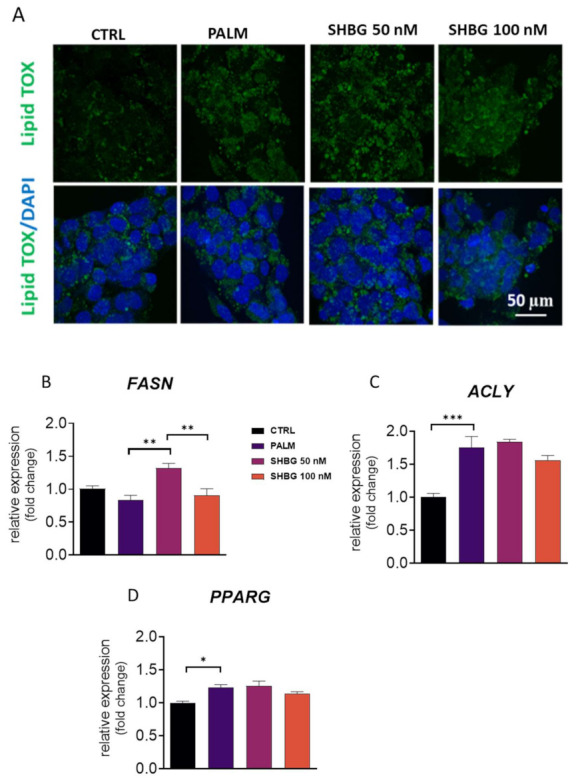
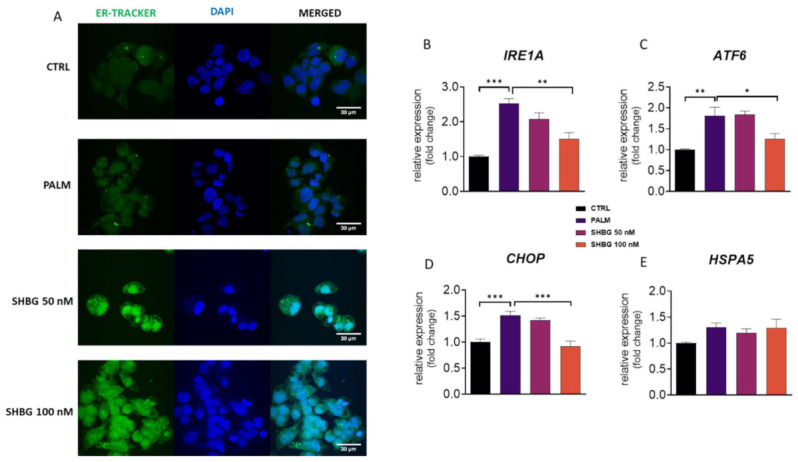
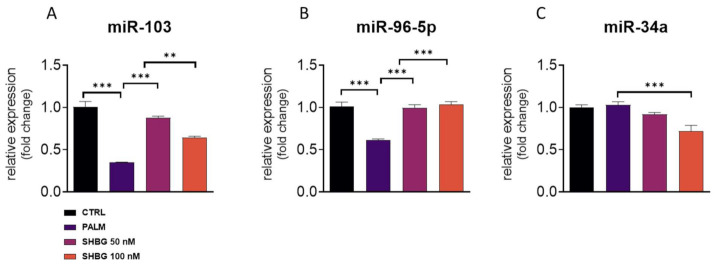
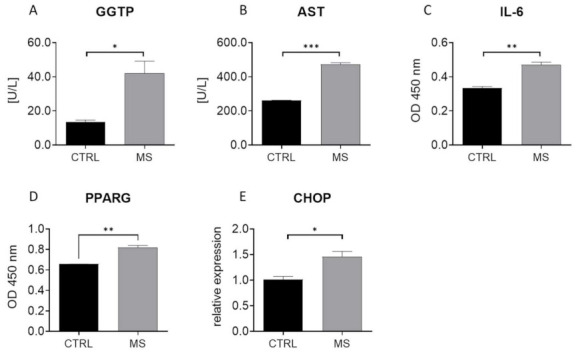
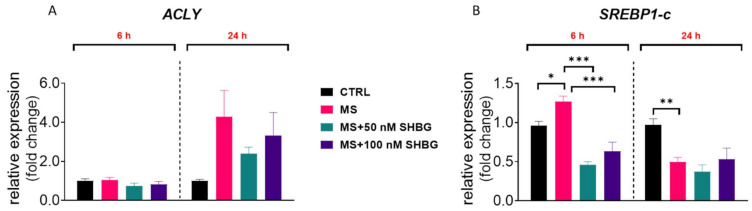
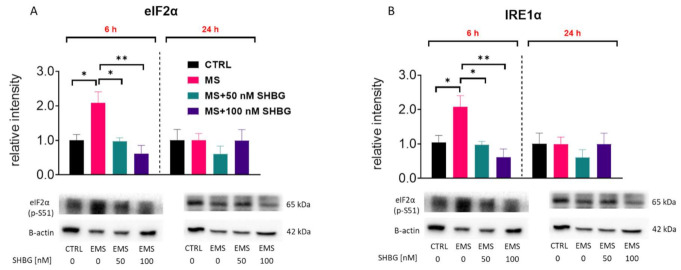
Despite multiple research studies regarding metabolic syndrome and diabetes, the full picture of their molecular background and pathogenies remains elusive. The latest studies revealed that sex hormone-binding globulin (SHBG)-a serum protein released mainly by the liver-may participate in metabolic dysregulation, as its low serum level correlates with a risk for obesity, metabolic syndrome, and diabetes. Yet, the molecular phenomenon linking SHBG with these disorders remains unclear. In the presented study, we investigate how exogenous SHBG affects metabolically impaired hepatocytes with special attention to endoplasmic reticulum stress (ER stress) and lipid metabolism both in vitro and ex vivo. For that reason, palmitate-treated HepG2 cells and liver tissue samples collected post mortem were cultured in the presence of 50 nM and 100 nM SHBG. We found that SHBG protects against ER stress development and its progression. We have found that SHBG decreased the expression levels of inositol-requiring enzyme 1 (IRE1α), activating transcription factor 6 (ATF6), DNA damage-inducible transcript 3 (CHOP), and immunoglobulin heavy chain-binding protein (BIP). Furthermore, we have shown that it regulates lipolytic gene expression ex vivo. Additionally, herein, we deliver a novel large-animal model to study SHBG in translational research. Our data provide new insights into the cellular and molecular mechanisms by which SHBG modulates hepatocyte metabolism and offer a new experimental approach to study SHBG in human diseases.
尽管有多项关于代谢综合征和糖尿病的研究,但它们的分子背景和发病机制仍未完全清楚。最新的研究表明,性激素结合球蛋白(SHBG)-一种主要由肝脏释放的血清蛋白-可能参与代谢失调,因为其血清水平低与肥胖、代谢综合征和糖尿病的风险相关。然而,将 SHBG 与这些疾病联系起来的分子现象尚不清楚。在本研究中,我们研究了外源性 SHBG 如何影响代谢受损的肝细胞,特别关注内质网应激(ER 应激)和脂质代谢,无论是在体外还是在体内。为此,我们培养了经棕榈酸处理的 HepG2 细胞和死后收集的肝组织样本,在 50 nM 和 100 nM SHBG 的存在下进行培养。我们发现 SHBG 可防止 ER 应激的发展及其进展。我们发现 SHBG 降低了肌醇需求酶 1(IRE1α)、激活转录因子 6(ATF6)、DNA 损伤诱导转录物 3(CHOP)和免疫球蛋白重链结合蛋白(BIP)的表达水平。此外,我们还表明它可调节体外的脂肪分解基因表达。此外,本文还提供了一种新的大型动物模型,用于研究 SHBG 在转化研究中的作用。我们的数据为 SHBG 调节肝细胞代谢的细胞和分子机制提供了新的见解,并为研究人类疾病中的 SHBG 提供了新的实验方法。