Department of Neurosurgery and Neuro-Oncology, Tianjin Medical University Cancer Institute and Hospital, National Clinical Research Center for Cancer; Key Laboratory of Cancer Prevention and Therapy, Tianjin's Clinical Research Center for Cancer, Tianjin, 300060, China.
Department of Pancreatic Cancer, Tianjin Medical University Cancer Institute and Hospital, National Clinical Research Center for Cancer; Key Laboratory of Cancer Prevention and Therapy, Tianjin's Clinical Research Center for Cancer, Tianjin, 300060, China.
J Exp Clin Cancer Res. 2023 Sep 11;42(1):238. doi: 10.1186/s13046-023-02814-x.
Gemcitabine (GEM)-based chemotherapy is the first-line option for pancreatic ductal adenocarcinoma (PDAC). However, the development of drug resistance limits its efficacy, and the specific mechanisms remain largely unknown. RUNX1, a key transcription factor in hematopoiesis, also involved in the malignant progression of PDAC, but was unclear in the chemoresistance of PDAC.
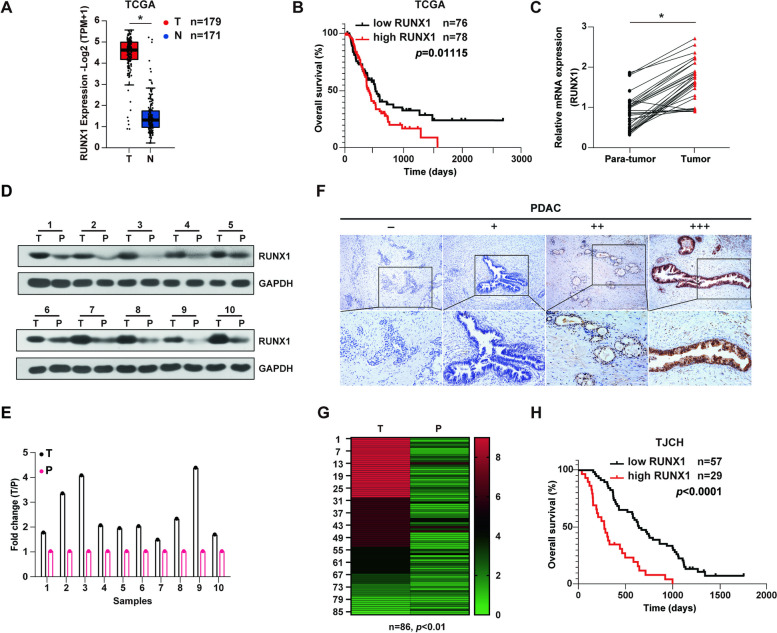
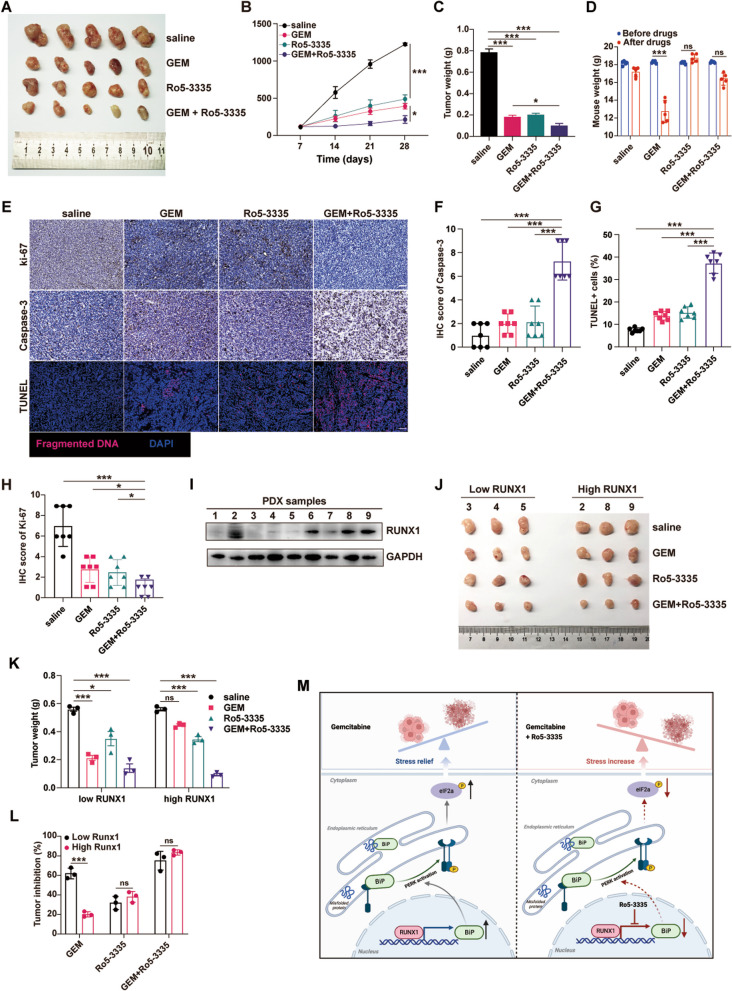
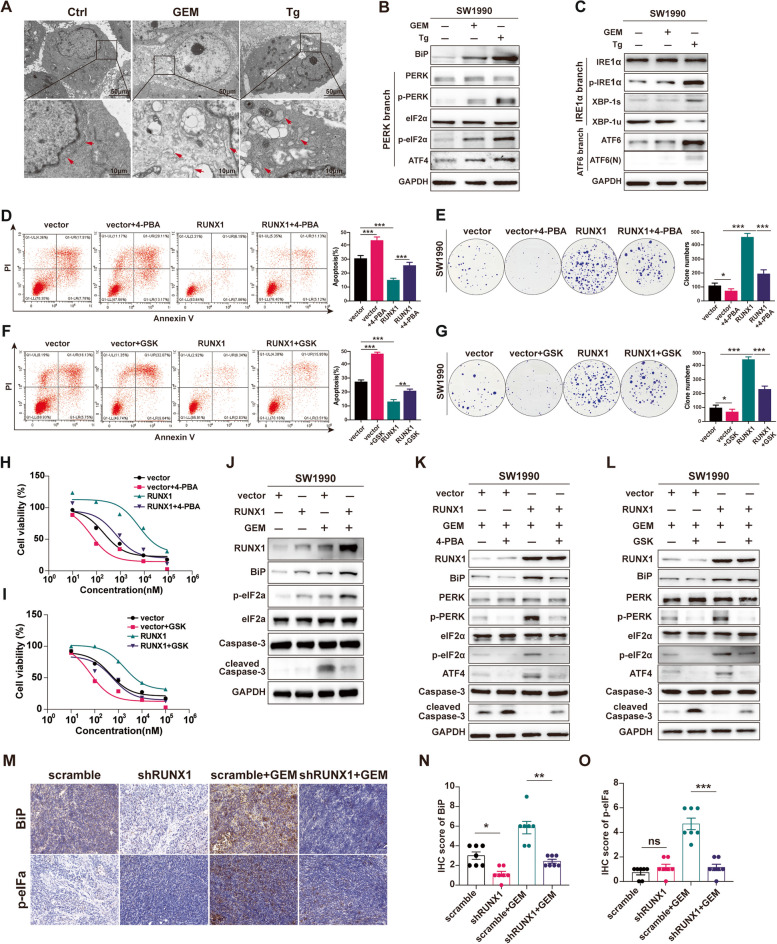
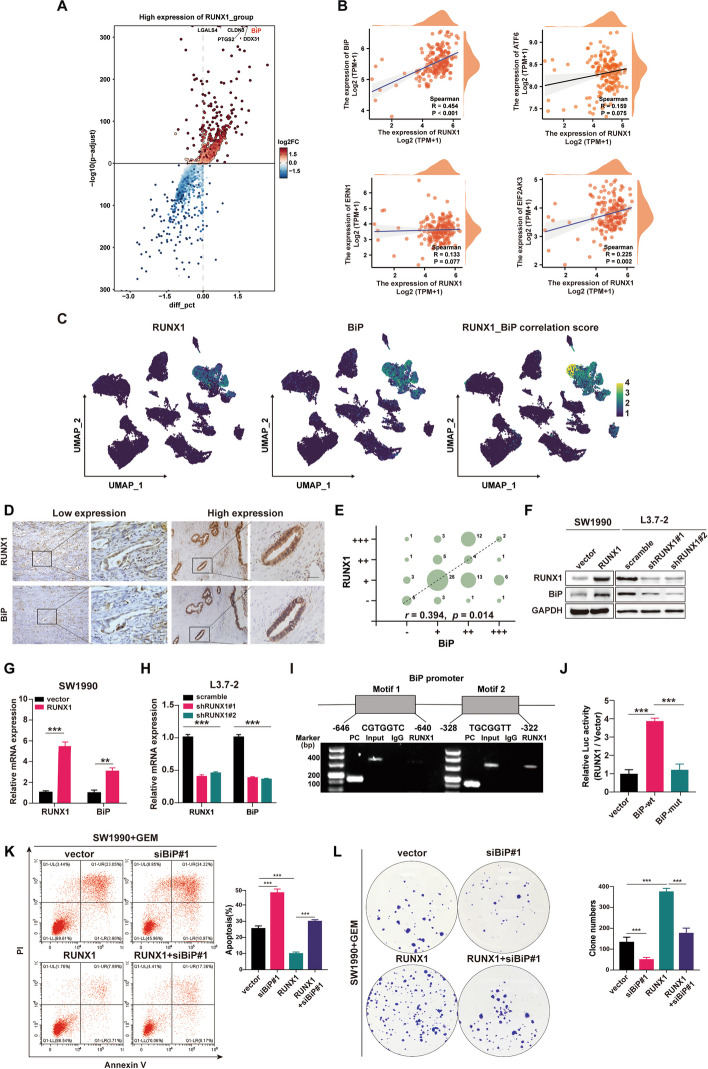
Comparative analysis was performed to screen GEM-resistance related genes using our single-cell RNA sequencing(scRNA-seq) data and two public RNA-sequencing datasets (GSE223463, GSE183795) for PDAC. The expression of RUNX1 in PDAC tissues was detected by qRT-PCR, immunohistochemistry (IHC) and western blot. The clinical significance of RUNX1 in PDAC was determined by single-or multivariate analysis and survival analysis. We constructed the stably expressing cell lines with shRUNX1 and RUNX1, and successfully established GEM-resistant cell line. The role of RUNX1 in GEM resistance was determined by CCK8 assay, plate colony formation assay and apoptosis analysis in vitro and in vivo. To explore the mechanism, we performed bioinformatic analysis using the scRNA-seq data to screen for the endoplasm reticulum (ER) stress signaling that was indispensable for RUNX1 in GEM resistance. We observed the cell morphology in ER stress by transmission electron microscopy and validated RUNX1 in gemcitabine resistance depended on the BiP/PERK/eIF2α pathway by in vitro and in vivo oncogenic experiments, using ER stress inhibitor(4-PBA) and PERK inhibitor (GSK2606414). The correlation between RUNX1 and BiP expression was assessed using the scRNA-seq data and TCGA dataset, and validated by RT-PCR, immunostaining and western blot. The mechanism of RUNX1 regulation of BiP was confirmed by ChIP-PCR and dual luciferase assay. Finally, the effect of RUNX1 inhibitor on PDAC was conducted in vivo mouse models, including subcutaneous xenograft and patient-derived xenograft (PDX) mouse models.
RUNX1 was aberrant high expressed in PDAC and closely associated with GEM resistance. Silencing of RUNX1 could attenuate resistance in GEM-resistant cell line, and its inhibitor Ro5-3335 displayed an enhanced effect in inhibiting tumor growth, combined with GEM treatment, in PDX mouse models and GEM-resistant xenografts. In detail, forced expression of RUNX1 in PDAC cells suppressed apoptosis induced by GEM exposure, which was reversed by the ER stress inhibitor 4-PBA and PERK phosphorylation inhibitor GSK2606414. RUNX1 modulation of ER stress signaling mediated GEM resistance was supported by the analysis of scRNA-seq data. Consistently, silencing of RUNX1 strongly inhibited the GEM-induced activation of BiP and PERK/eIF2α signaling, one of the major pathways involved in ER stress. It was identified that RUNX1 directly bound to the promoter region of BiP, a primary ER stress sensor, and stimulated BiP expression to enhance the reserve capacity for cell adaptation, which in turn facilitated GEM resistance in PDAC cells.
This study identifies RUNX1 as a predictive biomarker for response to GEM-based chemotherapy. RUNX1 inhibition may represent an effective strategy for overcoming GEM resistance in PDAC cells.
基于吉西他滨(GEM)的化疗是胰腺导管腺癌(PDAC)的一线选择。然而,药物耐药性的发展限制了其疗效,具体机制仍在很大程度上未知。RUNX1 是造血过程中的关键转录因子,也参与 PDAC 的恶性进展,但在 PDAC 的化疗耐药性中尚不清楚。
使用我们的单细胞 RNA 测序(scRNA-seq)数据和两个公共 RNA 测序数据集(GSE223463、GSE183795)对 PDAC 进行比较分析,以筛选 GEM 耐药相关基因。通过 qRT-PCR、免疫组织化学(IHC)和 Western blot 检测 PDAC 组织中 RUNX1 的表达。通过单变量或多变量分析和生存分析确定 RUNX1 在 PDAC 中的临床意义。我们构建了稳定表达 shRUNX1 和 RUNX1 的细胞系,并成功建立了 GEM 耐药细胞系。通过 CCK8 测定、平板集落形成测定和体外及体内凋亡分析,确定 RUNX1 在 GEM 耐药中的作用。为了探索机制,我们使用 scRNA-seq 数据进行了生物信息学分析,筛选出 ER 应激信号,该信号对 RUNX1 在 GEM 耐药中是必不可少的。我们通过透射电子显微镜观察 ER 应激时的细胞形态,并通过体外和体内致癌实验验证 RUNX1 在 gemcitabine 耐药中依赖于 BiP/PERK/eIF2α 通路,使用 ER 应激抑制剂(4-PBA)和 PERK 抑制剂(GSK2606414)。使用 scRNA-seq 数据和 TCGA 数据集评估 RUNX1 与 BiP 表达的相关性,并通过 RT-PCR、免疫染色和 Western blot 进行验证。通过 ChIP-PCR 和双荧光素酶测定证实了 RUNX1 调节 BiP 的机制。最后,在体内 PDAC 小鼠模型中进行了 RUNX1 抑制剂的研究,包括皮下异种移植和患者来源的异种移植(PDX)小鼠模型。
RUNX1 在 PDAC 中异常高表达,与 GEM 耐药密切相关。沉默 RUNX1 可减弱 GEM 耐药细胞系的耐药性,其抑制剂 Ro5-3335 与 GEM 联合治疗时,在 PDX 小鼠模型和 GEM 耐药异种移植中显示出增强的抑制肿瘤生长作用。具体而言,在 PDAC 细胞中强制表达 RUNX1 可抑制 GEM 暴露诱导的细胞凋亡,而 ER 应激抑制剂 4-PBA 和 PERK 磷酸化抑制剂 GSK2606414 可逆转这种作用。scRNA-seq 数据的分析支持 RUNX1 调节 ER 应激信号介导 GEM 耐药的作用。一致地,沉默 RUNX1 可强烈抑制 GEM 诱导的 BiP 和 PERK/eIF2α 信号通路的激活,这是 ER 应激的主要途径之一。研究发现 RUNX1 直接与内质网应激传感器 BiP 的启动子区域结合,刺激 BiP 表达,增强细胞适应的储备能力,从而促进 PDAC 细胞中的 GEM 耐药性。
本研究确定 RUNX1 作为 GEM 为基础的化疗反应的预测生物标志物。RUNX1 抑制可能代表克服 PDAC 细胞中 GEM 耐药的有效策略。