Yang Bo, Yang Kunhuan, Xi Ruitong, Chen Jingmeng, Wu Yalin
Fujian Provincial Key Laboratory of Ophthalmology and Visual Science, Fujian Engineering and Research Center of Eye Regenerative Medicine, Eye Institute of Xiamen University, School of Medicine, Xiamen University, Xiamen 361102, China.
School of Medicine, Xiamen University, Xiamen 361102, China.
Int J Mol Sci. 2024 Dec 19;25(24):13624. doi: 10.3390/ijms252413624.
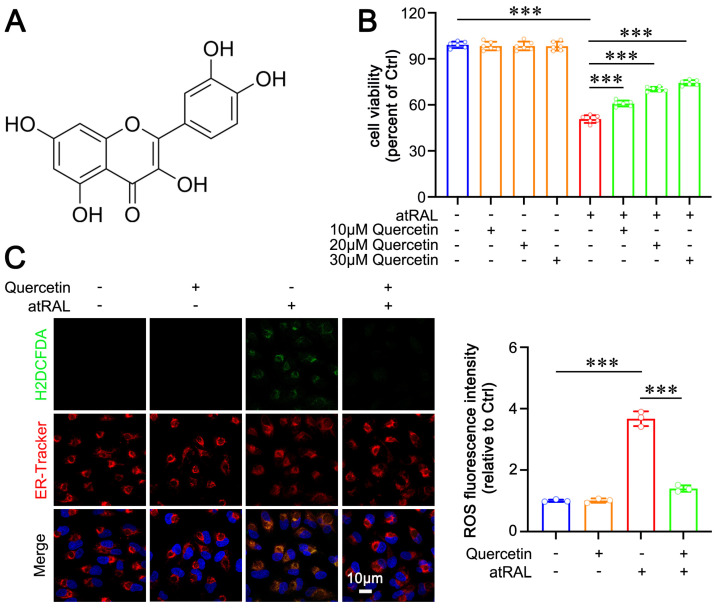
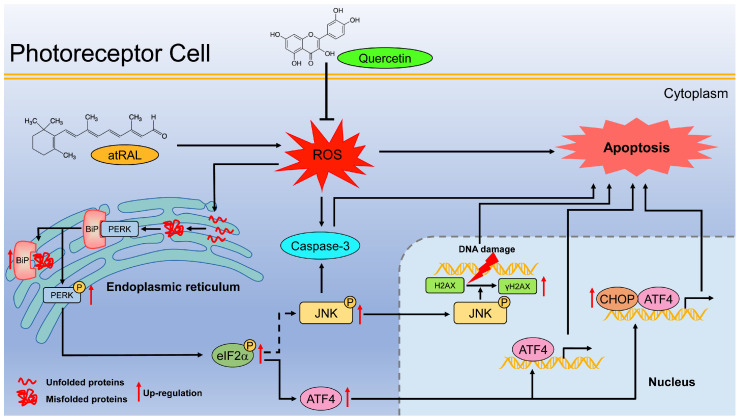
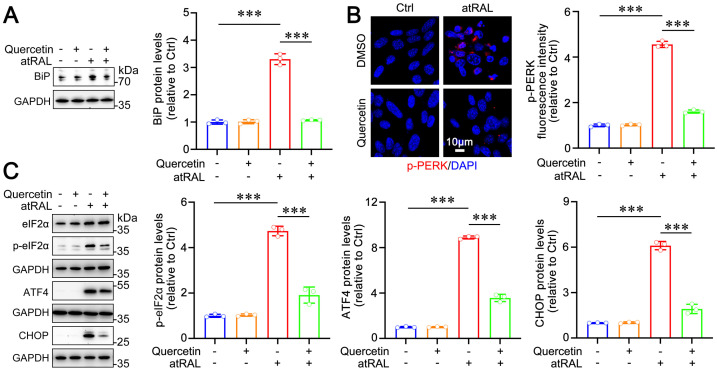
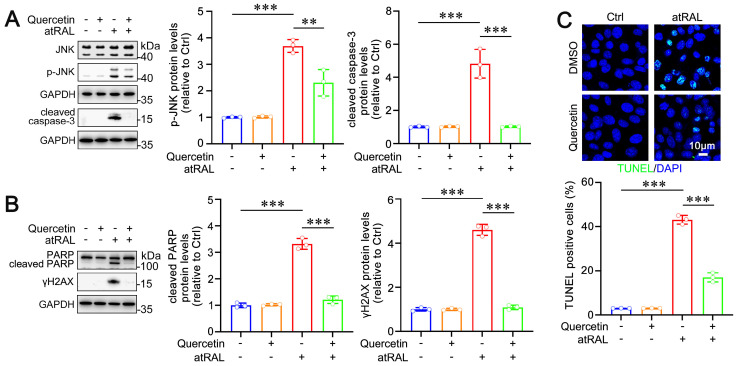
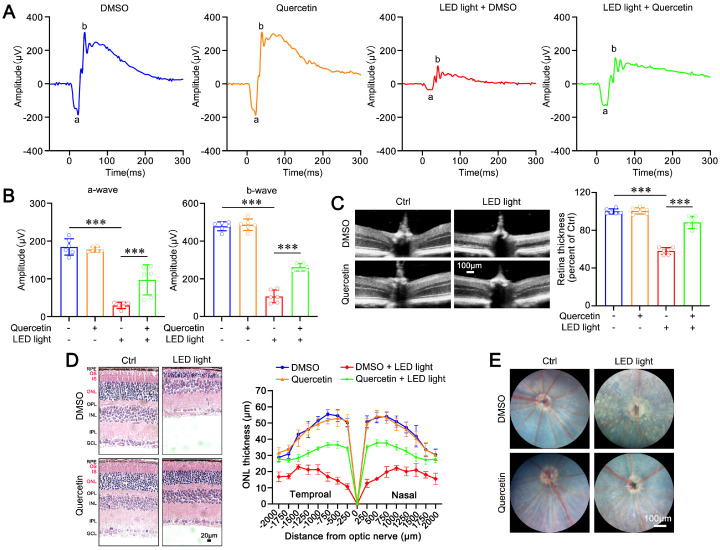
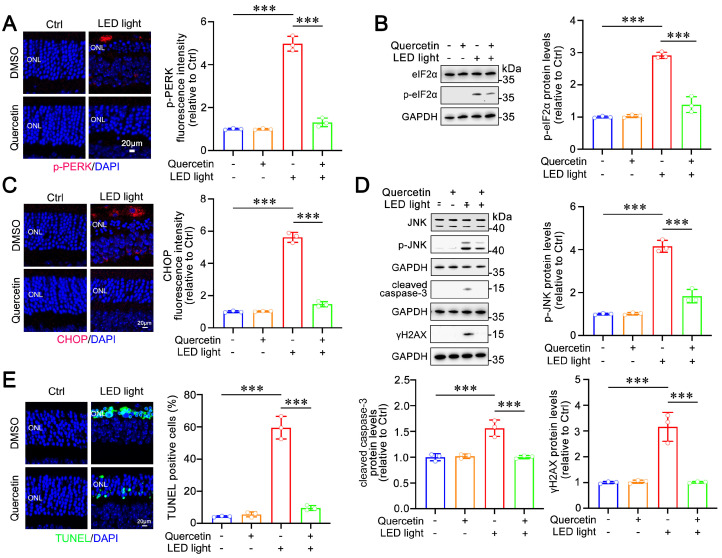
All--retinal (atRAL)-induced photoreceptor atrophy and retinal degeneration are hallmark features of dry age-related macular degeneration (AMD) and Stargardt disease type 1 (STGD1). The toxicity of atRAL is closely related to the generation of reactive oxygen species (ROS). Quercetin, a natural product, is known for its potent antioxidant properties; however, its effects in mitigating atRAL-mediated retinal damage remains unclear. This study investigated the protective effects of quercetin against atRAL-induced photoreceptor damage. Using atRAL-loaded 661W photoreceptor cells, we evaluated cell viability, ROS generation, and endoplasmic reticulum (ER) stress under quercetin treatment. Quercetin significantly restored the cell viability (to 70%) and reduced ROS generation in atRAL-treated 661W cells. Additionally, Western blot analysis demonstrated that quercetin mitigated protein kinase RNA-like ER kinase (PERK) signaling, preventing ER stress-induced apoptosis. Importantly, in mice, an animal model of light-induced atRAL accumulation in the retina, quercetin treatment effectively alleviated light-exposed photoreceptor atrophy and retinal degeneration by attenuating PERK signaling. Thus, quercetin protected photoreceptor cells from atRAL-induced damage by inhibiting ROS generation and PERK signaling, which suggests its potential as a therapeutic agent for atRAL-related retinal degeneration.
全反式视黄醛(atRAL)诱导的光感受器萎缩和视网膜变性是干性年龄相关性黄斑变性(AMD)和1型斯特格黄斑营养不良(STGD1)的标志性特征。atRAL的毒性与活性氧(ROS)的产生密切相关。槲皮素作为一种天然产物,以其强大的抗氧化特性而闻名;然而,其减轻atRAL介导的视网膜损伤的作用仍不清楚。本研究调查了槲皮素对atRAL诱导的光感受器损伤的保护作用。利用加载atRAL的661W光感受器细胞,我们评估了槲皮素处理下的细胞活力、ROS生成和内质网(ER)应激。槲皮素显著恢复了atRAL处理的661W细胞的细胞活力(至70%)并减少了ROS生成。此外,蛋白质免疫印迹分析表明,槲皮素减轻了蛋白激酶RNA样内质网激酶(PERK)信号传导,防止了内质网应激诱导的细胞凋亡。重要的是,在视网膜中光诱导atRAL积累的小鼠动物模型中,槲皮素处理通过减弱PERK信号传导有效减轻了光暴露引起的光感受器萎缩和视网膜变性。因此,槲皮素通过抑制ROS生成和PERK信号传导保护光感受器细胞免受atRAL诱导的损伤,这表明其作为atRAL相关视网膜变性治疗剂的潜力。