Etablissement Français du Sang Ile-de-France, Créteil, France.
INSERM U955, Equipe Transfusion et Maladies du Globule Rouge, Université Paris-Est Creteil, Institut Mondor de Recherche Biomédicale, Créteil, France.
Blood Adv. 2023 Dec 26;7(24):7608-7620. doi: 10.1182/bloodadvances.2022009328.
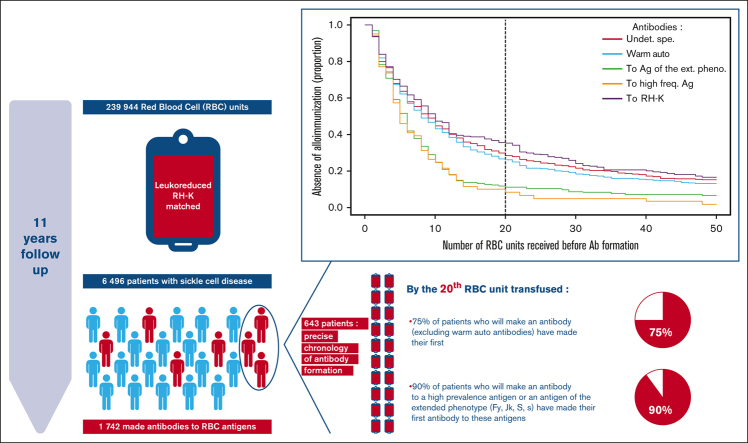
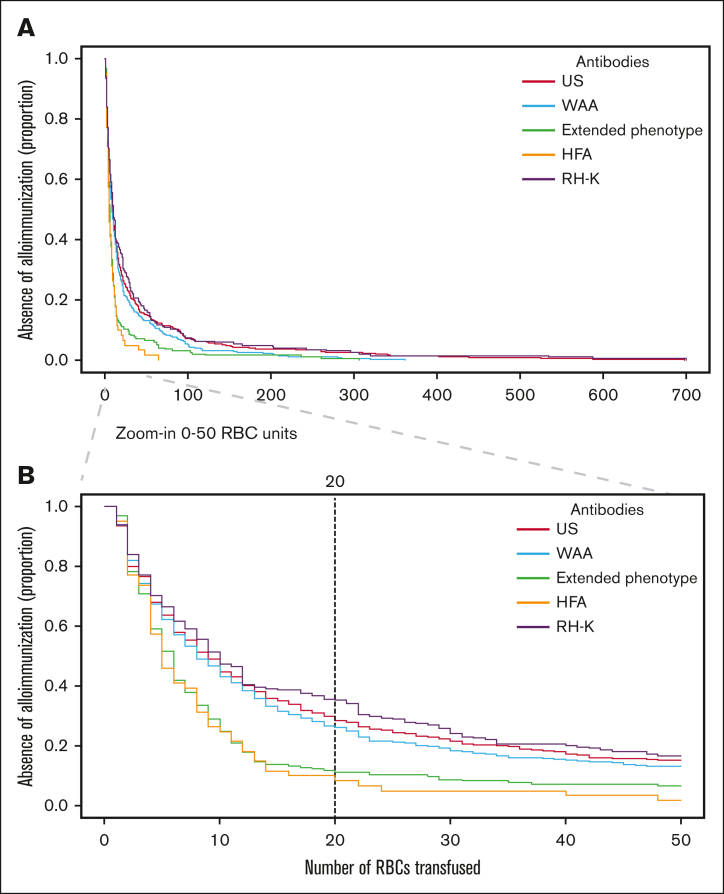
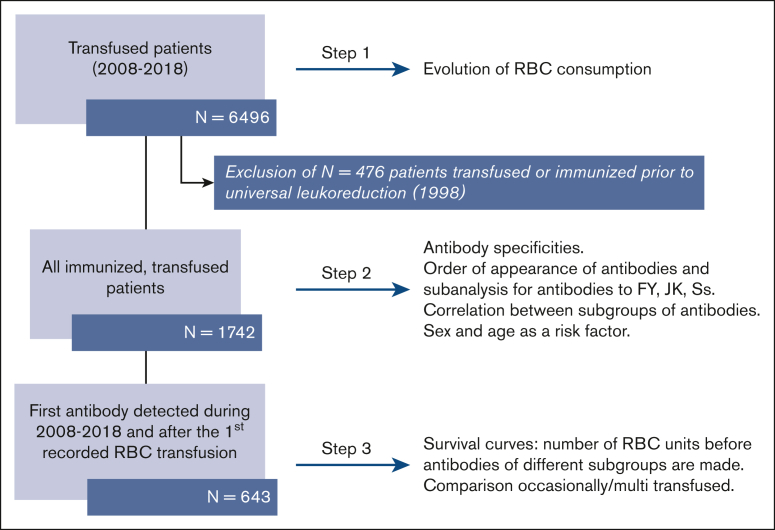
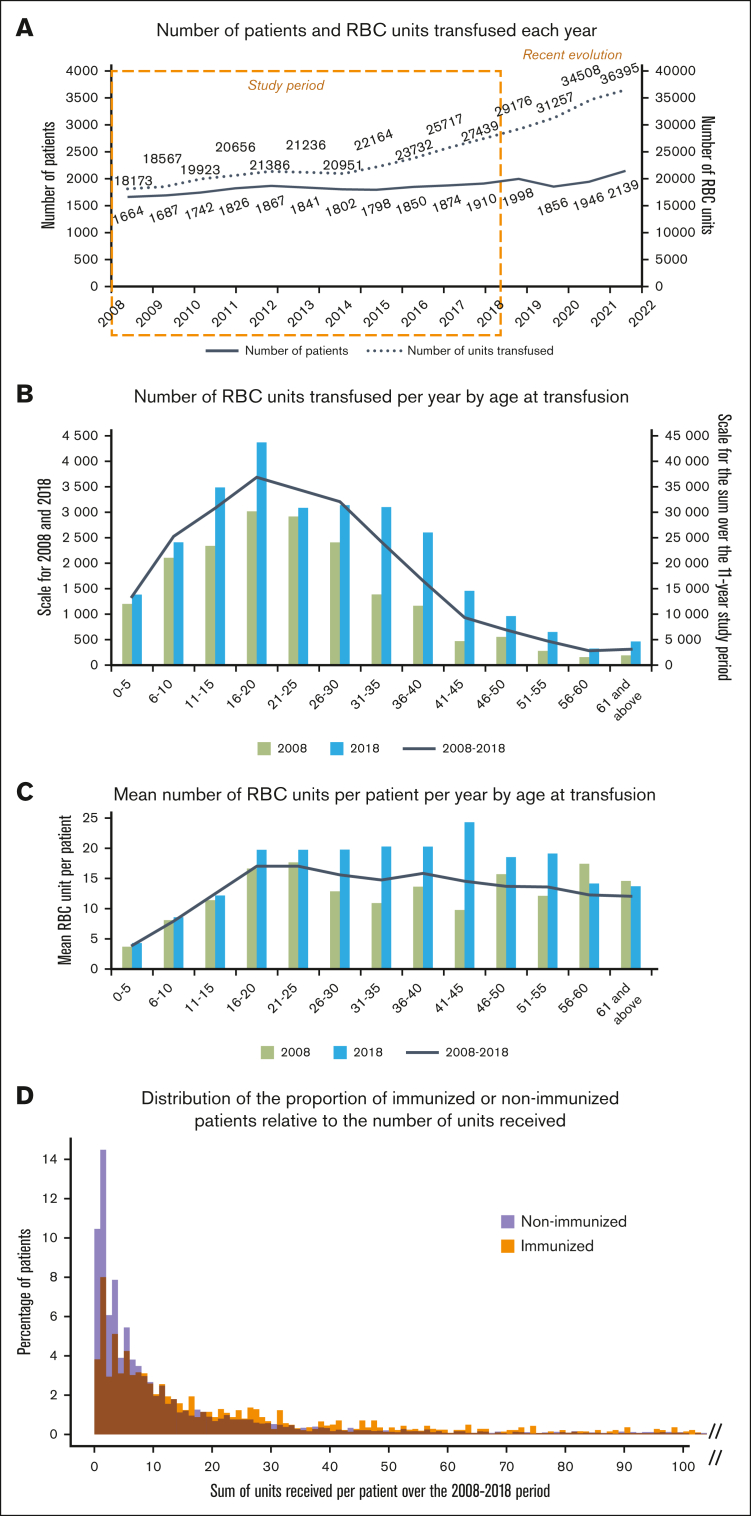
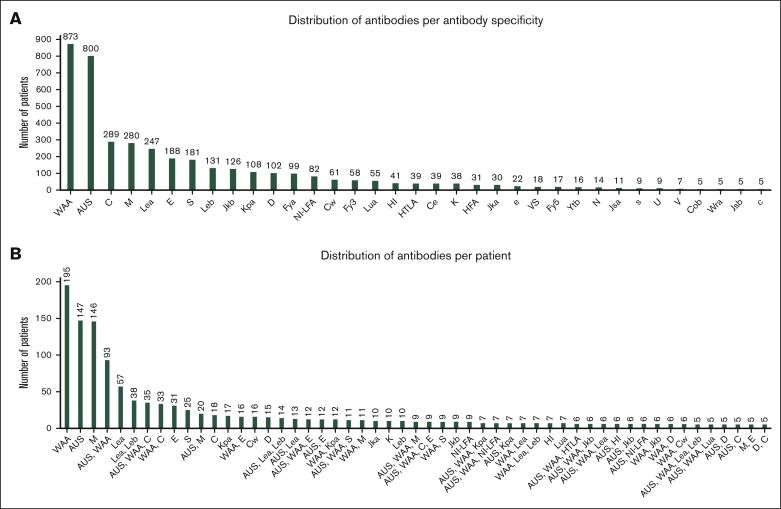
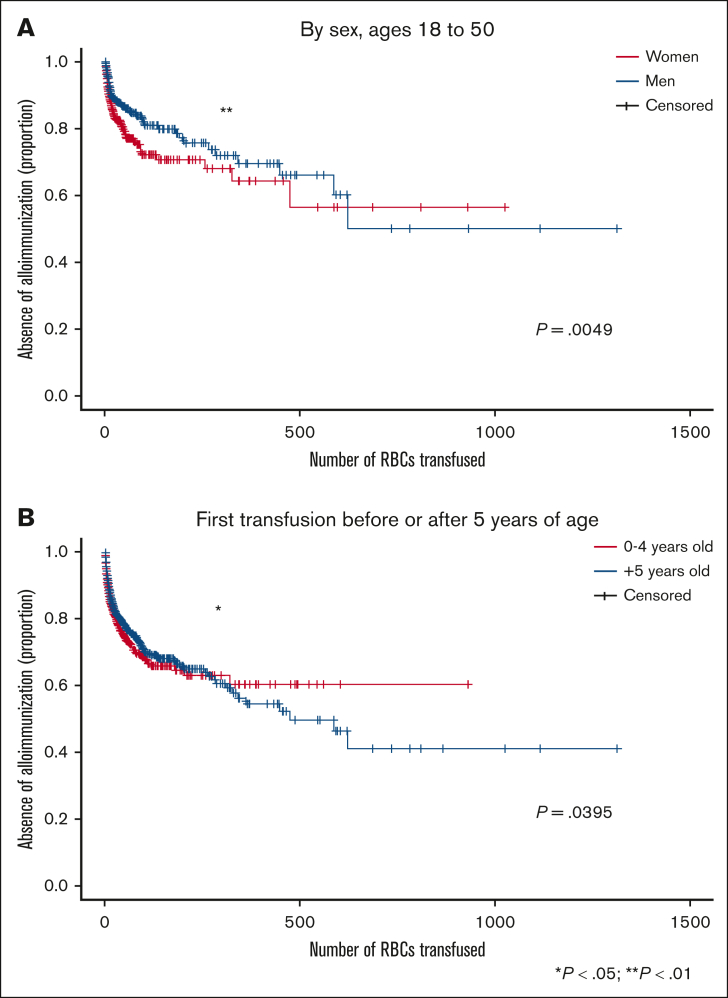
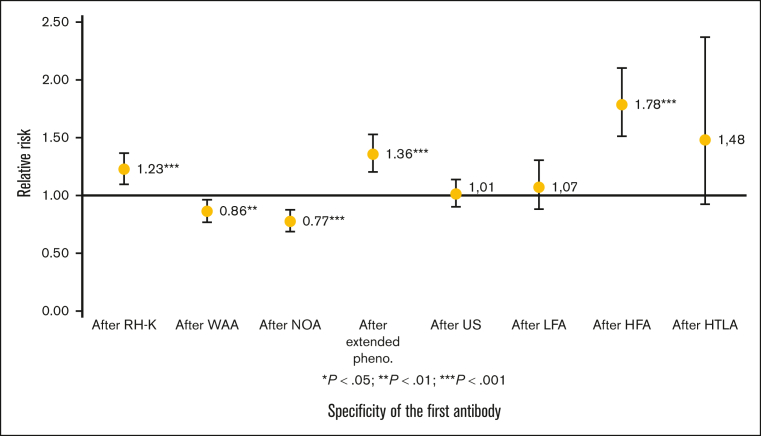
Red blood cell (RBC) transfusion is a major therapy for sickle cell disease (SCD). Patients are at risk of forming antibodies to RBC antigens, which can result in the impossibility to find compatible units and can cause hemolytic transfusion reactions. This retrospective study investigates the evolution of RBC consumption and the frequencies, specificities, and chronology of the appearance of antibodies in a population of patients consistently receiving RH (C, D, E, c, e) and K-matched RBC units (RBCus) from a predominantly European donor population. Over the 11-year period in the Paris area, 6496 patients received transfusion at least once for a total of 239 944 units. Antibodies were made by 1742 patients. The first antibodies of a patient were predictive of subsequent immunization. By the 17th RBCu transfused (by the 20th, excluding warm autoantibodies), 75% of the patients who would make antibodies had made their first. By the 16th, 90% who would make antibodies to a high frequency antigen had made their first antibody to these antigens. Females made their first antibodies slightly earlier than males. Patients who received multiple transfusions (>50 units) had a higher immunization prevalence than those who rarely received transfusion (<12 units) but fewer clinically significant antibodies. Patients with SCD and prophylactic RH-K matching not immunized by the 20th RBCu are likely to have a low alloimmunization risk (to antigens other than RH-K), that is, be low responders, especially relative to the most clinically significant antibodies. This number of 20 units is a point before which close monitoring of patients is most important but remains open to future adjustment.
红细胞(RBC)输血是治疗镰状细胞病(SCD)的主要方法。患者有形成 RBC 抗原抗体的风险,这可能导致无法找到相容的单位,并可能导致溶血性输血反应。这项回顾性研究调查了在一个从主要是欧洲供体人群中接受 RH(C、D、E、c、e)和 K 匹配 RBC 单位(RBCu)的患者人群中,RBC 消耗的演变以及抗体的频率、特异性和出现的时间顺序。在巴黎地区的 11 年期间,6496 名患者至少接受了一次输血,总计输注了 239944 单位。有 1742 名患者产生了抗体。患者的第一个抗体可预测随后的免疫接种。在输注第 17 个 RBCu(第 20 个,不包括温热自身抗体)时,75%的会产生抗体的患者已经产生了第一个抗体。在第 16 个时,90%的会对高频抗原产生抗体的患者已经产生了针对这些抗原的第一个抗体。女性比男性更早产生第一个抗体。接受多次输血(>50 单位)的患者比很少接受输血(<12 单位)的患者具有更高的免疫接种流行率,但产生的临床意义较小的抗体较少。在输注第 20 个 RBCu 之前未被 RH-K 匹配预防性免疫的 SCD 患者可能具有较低的同种异体免疫风险(除 RH-K 以外的抗原),也就是说,他们是低反应者,尤其是相对于最具临床意义的抗体。这个 20 单位的数字是患者密切监测最重要的时间点,但仍可根据未来情况进行调整。