Department of Psychiatry and Human Behavior, Warren Alpert Medical School of Brown University, Providence, RI, USA.
Department of Pediatrics, Women and Infants Hospital, Providence, RI, USA.
Pediatr Res. 2024 Jan;95(1):377-385. doi: 10.1038/s41390-023-02814-9. Epub 2023 Sep 12.
Very preterm infants are at high risk for neurodevelopmental impairments. We used a child-centered approach (latent profile analysis [LPA]) to describe 2-year neurobehavioral profiles for very preterm infants based on cognitive, motor, and behavioral outcomes. We hypothesized that distinct outcome profiles would differ in the severity and co-occurrence of neurodevelopmental and behavioral impairment.
We studied children born <33 weeks' gestation from the Environmental influences on Child Health Outcomes Program with at least one neurobehavioral assessment at age 2 (Bayley Scales of Infant and Toddler Development, Child Behavior Checklist, Modified Checklist for Autism in Toddlers, cerebral palsy diagnosis). We applied LPA to identify subgroups of children with different patterns of outcomes.
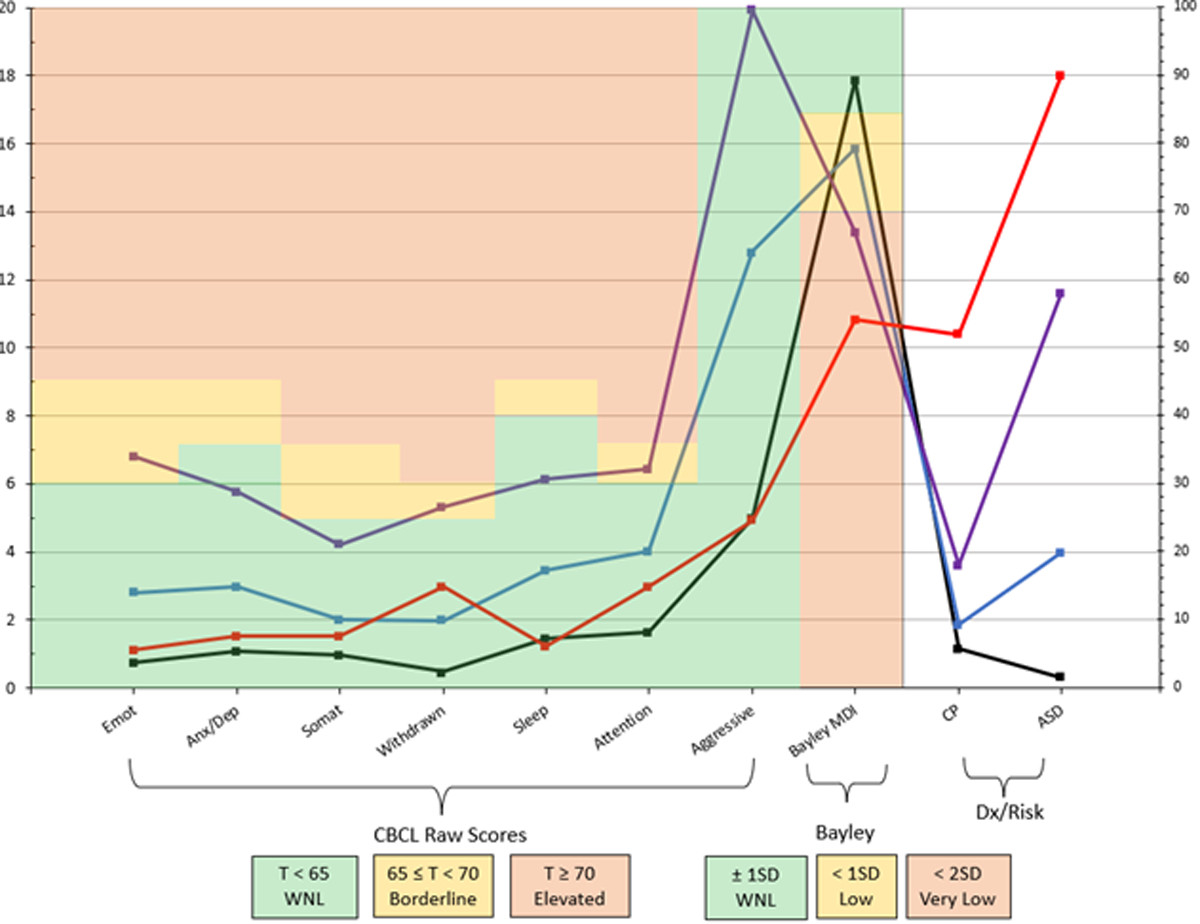
In 2036 children (52% male; 48% female), we found four distinct neurobehavioral profiles. Most children (85%) were categorized into one of two profiles characterized by no/mild neurodevelopmental delay and a low prevalence of behavioral problems. Fewer children (15%) fell into one of two profiles characterized by severe neurodevelopmental impairments. One profile consisted of children (5%) with co-occurring neurodevelopmental impairment and behavioral problems.
Child-centered approaches provide a comprehensive, parsimonious description of neurodevelopment following preterm birth and can be useful for clinical and research purposes.
Most research on outcomes for children born very preterm have reported rates of impairment in single domains. Child-centered approaches describe profiles of children with unique combinations of cognitive, motor, and behavioral strengths and weaknesses. We capitalized on data from the nationwide Environmental influences on Child Health Outcomes Program to examine these profiles in a large sample of children born <33 weeks gestational age. We found four distinct neurobehavioral profiles consisting of different combinations of cognitive, motor, and behavioral characteristics. This information could aid in the development of clinical interventions that target different profiles of children with unique developmental needs.
极早产儿存在发生神经发育损伤的高风险。我们采用以儿童为中心的方法(潜在剖面分析[LPA]),根据认知、运动和行为结局,描述极早产儿 2 岁时的神经行为概况。我们假设不同的结局概况在神经发育和行为损伤的严重程度和共病发生率上存在差异。
我们对环境对儿童健康结局影响研究项目中胎龄<33 周的儿童进行了研究,这些儿童至少在 2 岁时有一次神经行为评估(贝利婴幼儿发展量表、儿童行为检查表、改良婴幼儿孤独症检查表、脑瘫诊断)。我们应用 LPA 来识别具有不同结局模式的儿童亚组。
在 2036 名儿童(52%为男性;48%为女性)中,我们发现了四种不同的神经行为概况。大多数儿童(85%)归入两种概况之一,表现为无/轻度神经发育迟缓,行为问题的发生率较低。较少的儿童(15%)归入两种概况之一,表现为严重的神经发育损伤。一种概况由同时存在神经发育损伤和行为问题的儿童(5%)组成。
以儿童为中心的方法提供了一种全面、简洁的描述,可用于描述早产儿出生后的神经发育情况,并且可以用于临床和研究目的。
大多数关于极早产儿出生后结局的研究都报告了单一领域损伤的发生率。以儿童为中心的方法描述了具有认知、运动和行为优势和劣势独特组合的儿童概况。我们利用全国环境对儿童健康结局影响研究项目的数据,在一个较大的胎龄<33 周的儿童样本中研究了这些概况。我们发现了四种不同的神经行为概况,由认知、运动和行为特征的不同组合组成。这些信息可能有助于制定针对具有独特发育需求的不同儿童概况的临床干预措施。