Department of Anesthesiology and Reanimation, Konya City Hospital, Konya, Turkey.
Department of General Surgery, Konya City Hospital, Konya, Turkey.
Medicine (Baltimore). 2023 Sep 15;102(37):e35168. doi: 10.1097/MD.0000000000035168.
Hemorrhoidectomy is a common surgical procedure associated with significant postoperative pain. The conventional analgesic methods used for hemorrhoidectomy often have adverse effects and may not provide adequate pain relief. The sacral erector spinae plane block (ESPB) is a newly introduced technique that has shown promise in various surgical procedures. This prospective, randomized, controlled trial aimed to evaluate the analgesic effects of sacral ESPB following hemorrhoidectomy.
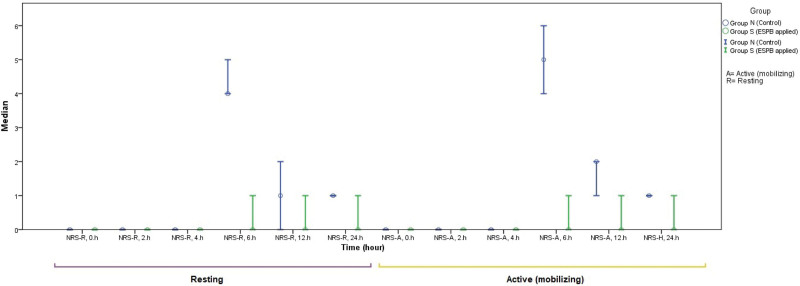
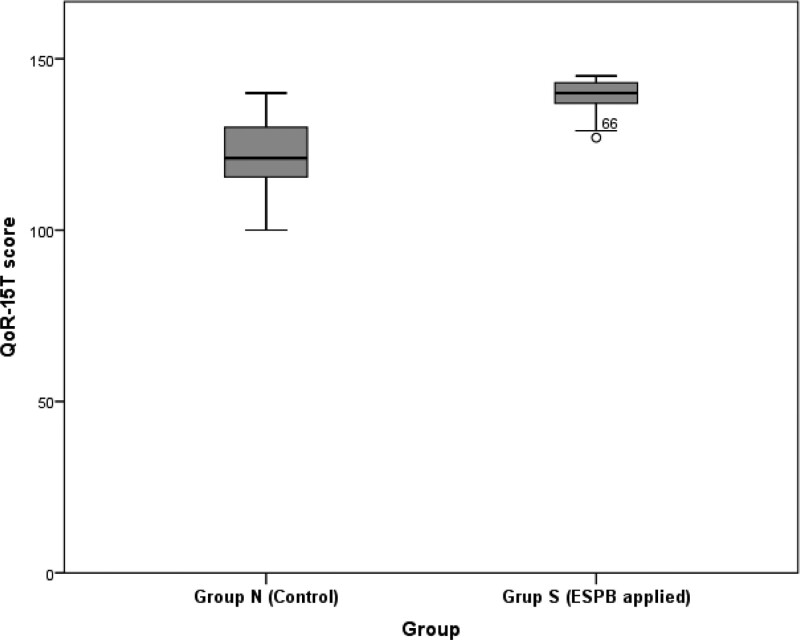
Seventy patients undergoing hemorrhoidectomy were divided into 2 groups: the control group and the sacral ESPB group. Bilateral sacral ESPB was performed in the sacral ESPB group, whereas no intervention was performed in the control group. The numeric rating scale at rest and during the active period (mobilizing) was used as the primary outcome measure. Secondary outcome measures were the cumulative doses of tramadol, the number of patients who required rescue analgesia postoperatively, and quality of recovery-15 Turkish version patient recovery quality.
The sacral ESPB group had significantly low numeric rating scale scores at various time points (P < .05). More patients in the control group needed rescue analgesia during the postoperative period (P < .001). The dosages of tramadol consumption after the first 24 hours postoperatively were significantly lower in the sacral ESPB group compared with the control group (P < .001). Furthermore, quality of recovery-15 Turkish version scores were high in the sacral ESPB group (P < .001).
The results suggest that sacral ESPB is an effective method for post-hemorrhoidectomy pain management, reducing the need for additional analgesics and improving patient recovery.
痔切除术是一种常见的手术,术后会有明显的疼痛。痔切除术常用的传统镇痛方法往往有不良反应,可能无法提供充分的镇痛效果。骶棘肌平面阻滞(ESPB)是一种新引入的技术,在各种手术中显示出良好的效果。本前瞻性、随机、对照试验旨在评估痔切除术后骶棘肌平面阻滞的镇痛效果。
70 例行痔切除术的患者分为两组:对照组和骶棘肌平面阻滞组。骶棘肌平面阻滞组行双侧骶棘肌平面阻滞,对照组则不进行任何干预。主要观察指标为静息和活动期(活动期)的数字评分量表。次要观察指标为曲马多的累积剂量、术后需要补救镇痛的患者人数以及土耳其版质量恢复 15 分患者的恢复质量。
骶棘肌平面阻滞组在各时间点的数字评分量表评分均显著较低(P<0.05)。对照组有更多的患者在术后需要补救镇痛(P<0.001)。与对照组相比,骶棘肌平面阻滞组术后 24 小时内曲马多的用量明显较低(P<0.001)。此外,骶棘肌平面阻滞组的质量恢复 15 分土耳其版评分较高(P<0.001)。
结果表明,骶棘肌平面阻滞是痔切除术后疼痛管理的有效方法,减少了对额外镇痛药物的需求,并改善了患者的恢复。