Abdullah Zafirah Liyana, Chee Hui-Yee, Yusof Rohana, Mohd Fauzi Fazlin
Department of Pharmaceutical Life Sciences, Faculty of Pharmacy, Universiti Teknologi MARA Selangor, Puncak Alam Campus, 42300 Bandar Puncak Alam, Selangor, Malaysia.
Department of Medical Microbiology, Faculty of Medicine and Health Sciences, Universiti Putra Malaysia, 43400 UPM Serdang, Selangor, Malaysia.
ACS Omega. 2023 Aug 28;8(36):32483-32497. doi: 10.1021/acsomega.3c02607. eCollection 2023 Sep 12.
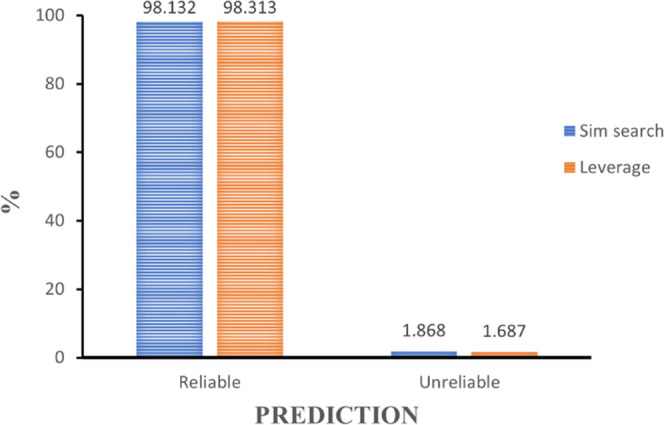
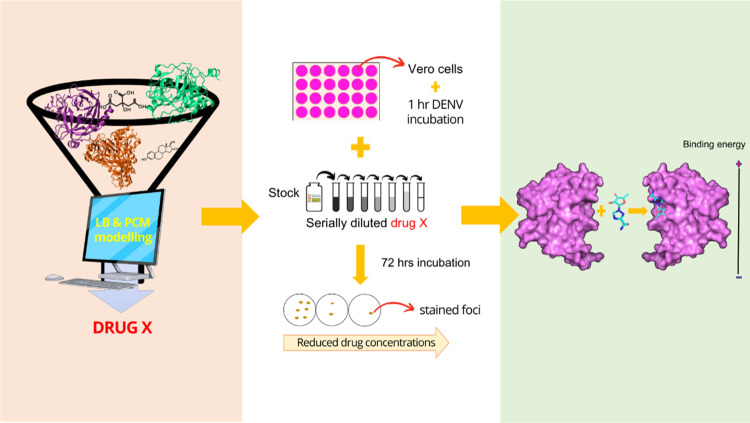
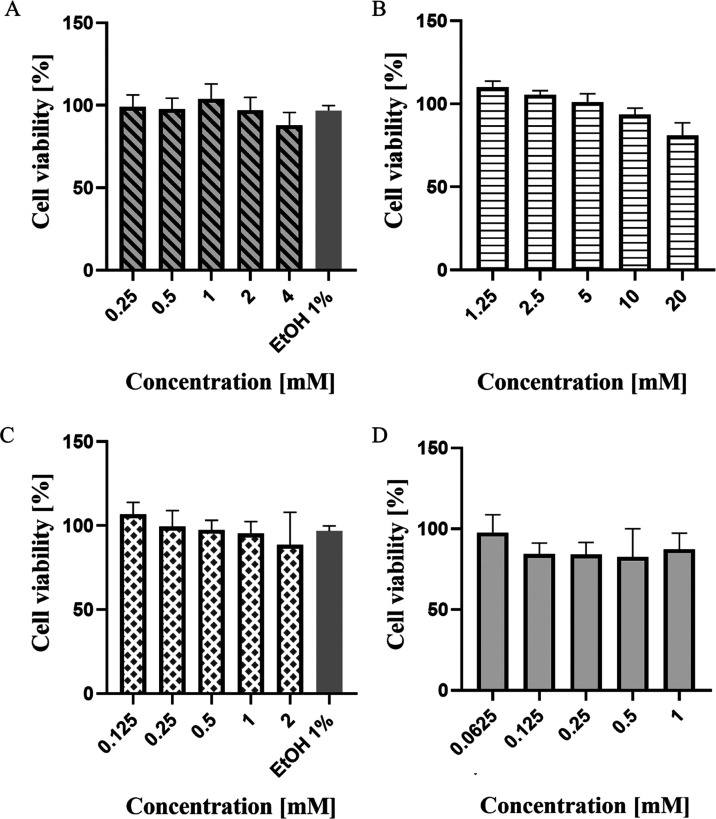
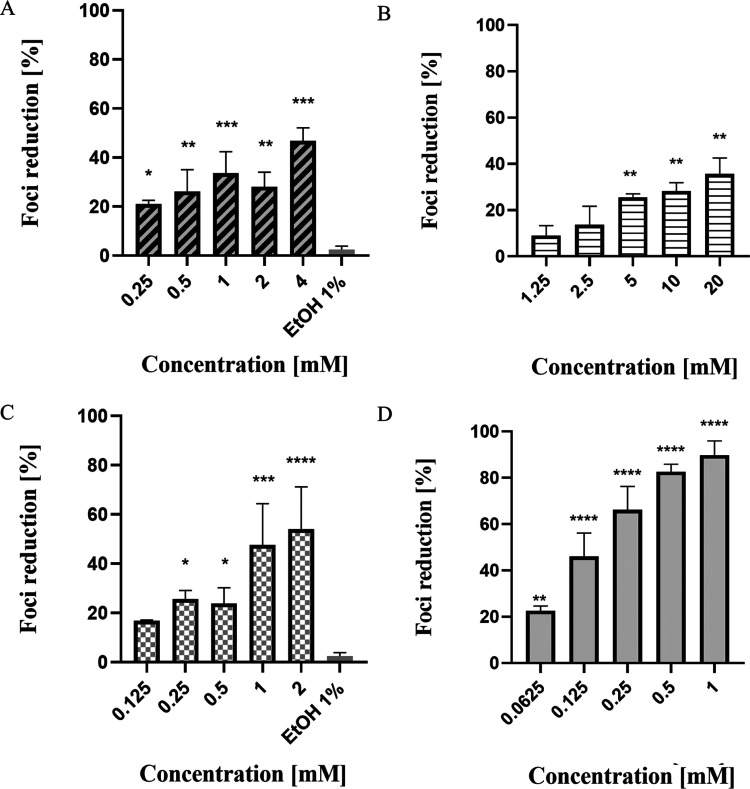
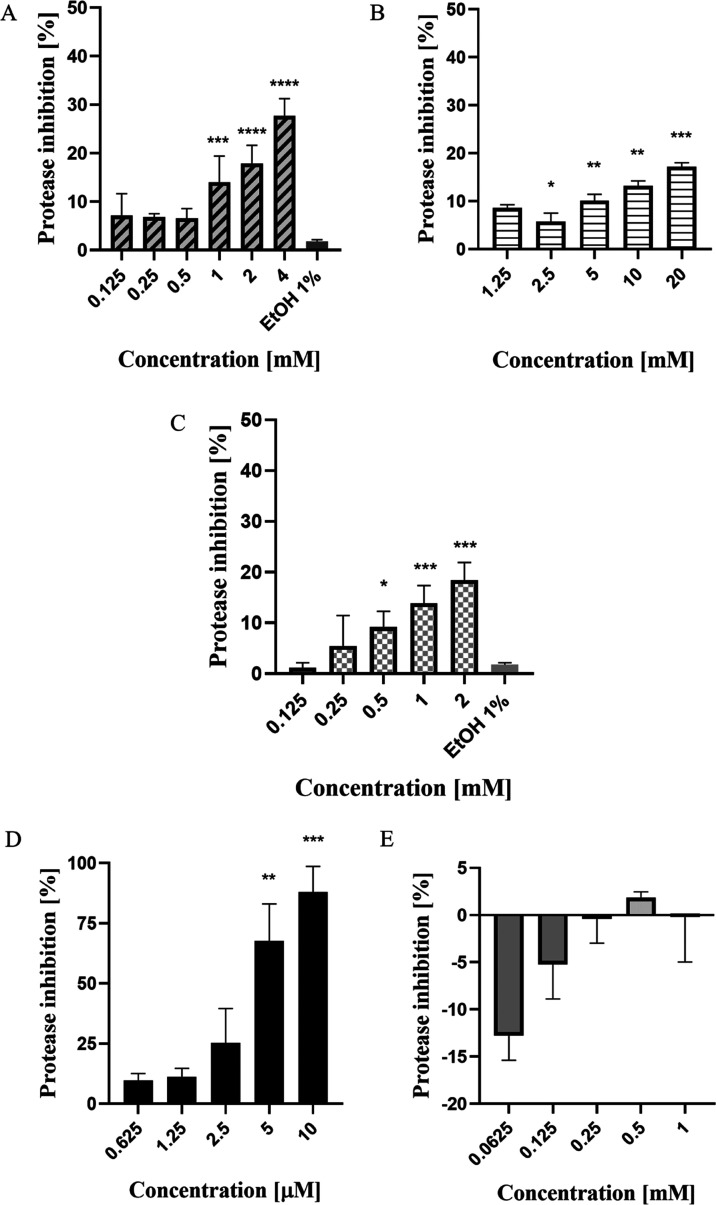
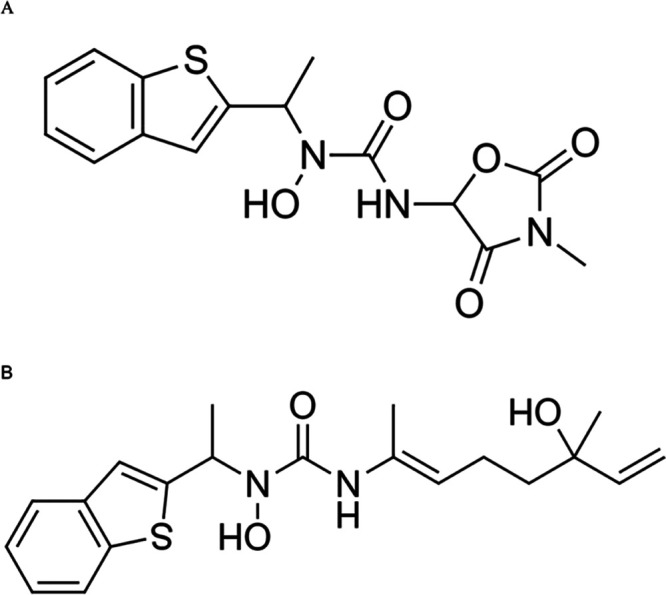
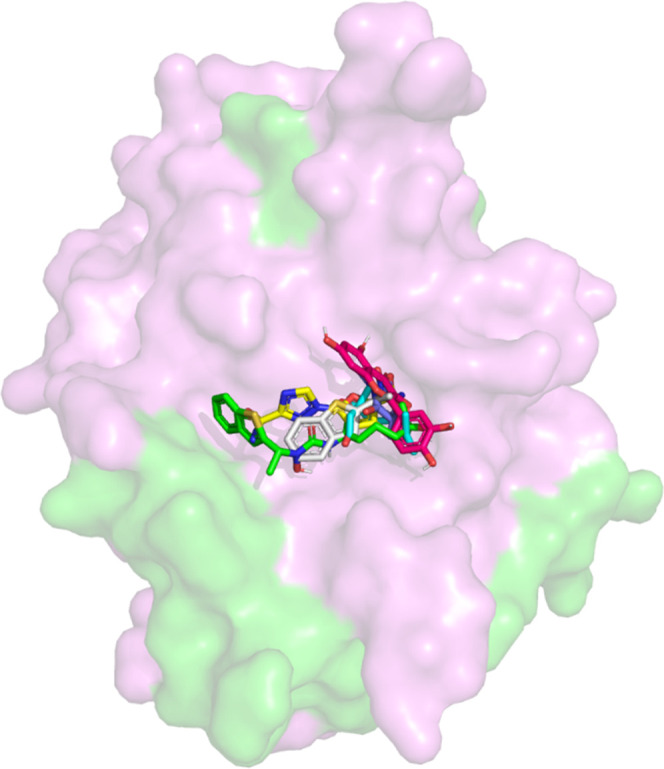
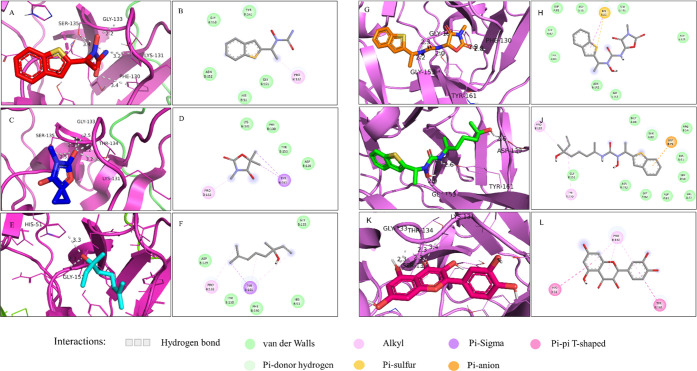
Dengue virus (DENV) infection is one of the most widely spread flavivirus infections. Despite the fatality it could cause, no antiviral treatment is currently available to treat the disease. Hence, this study aimed to repurpose old drugs as novel DENV NS3 inhibitors. Ligand-based (L-B) and proteochemometric (PCM) prediction models were built using 62,354 bioactivity data to screen for potential NS3 inhibitors. Selected drugs were then subjected to the foci forming unit reduction assay (FFURA) and protease inhibition assay. Finally, molecular docking was performed to validate these results. The studies revealed that both models performed well in the internal and external validations. However, the L-B model showed better accuracy in the external validation in terms of its sensitivity (0.671). In the validation, all drugs (zileuton, trimethadione, and linalool) were able to moderately inhibit the viral activities at the highest concentration tested. Zileuton showed comparable results with linalool when tested at 2 mM against the DENV NS3 protease, with a reduction of protease activity at 17.89 and 18.42%, respectively. Two new compounds were also proposed through the combination of the selected drugs, which are ziltri (zilueton + trimethadione) and zilool (zileuton + linalool). The molecular docking study confirms the observations where all drugs and proposed compounds were able to achieve binding affinity ≥ -4.1 kcal/mol, with ziltri showing the highest affinity at -7.7 kcal/mol, surpassing the control, panduratin A. The occupation of both S1 and S2 subpockets of NS2B-NS3 may be essential and a reason for the lower binding energy shown by the proposed compounds compared to the screened drugs. Based on the results, this study provided five potential new lead compounds (ziltri, zilool, zileuton, linalool, and trimethadione) for DENV that could be modified further.
登革病毒(DENV)感染是最广泛传播的黄病毒感染之一。尽管它可能导致死亡,但目前尚无抗病毒治疗方法来治疗该疾病。因此,本研究旨在将旧药重新用作新型DENV NS3抑制剂。使用62354个生物活性数据建立了基于配体(L-B)和蛋白质化学计量学(PCM)的预测模型,以筛选潜在的NS3抑制剂。然后将选定的药物进行灶形成单位减少试验(FFURA)和蛋白酶抑制试验。最后,进行分子对接以验证这些结果。研究表明,这两种模型在内部和外部验证中均表现良好。然而,L-B模型在外部验证中显示出更高的准确性,其灵敏度为0.671。在验证中,所有药物(齐留通、三甲双酮和芳樟醇)在测试的最高浓度下均能适度抑制病毒活性。当在2 mM浓度下针对DENV NS3蛋白酶进行测试时,齐留通与芳樟醇显示出可比的结果,蛋白酶活性分别降低了17.89%和18.42%。通过将选定的药物组合还提出了两种新化合物,即齐三(齐留通+三甲双酮)和齐醇(齐留通+芳樟醇)。分子对接研究证实了所有药物和提出的化合物均能够实现结合亲和力≥-4.1 kcal/mol的观察结果,其中齐三显示出最高亲和力,为-7.7 kcal/mol,超过了对照药物盘多拉美。NS2B-NS3的S1和S2亚口袋的占据可能至关重要,也是所提出的化合物与筛选出的药物相比显示出较低结合能的原因。基于这些结果,本研究为DENV提供了五种潜在的新先导化合物(齐三、齐醇、齐留通、芳樟醇和三甲双酮),可进一步进行修饰。