Huenchuguala Sandro, Segura-Aguilar Juan
Escuela de Tecnología Médica, Facultad de Salud, Universidad Santo Tomás, Los Carreras, Osorno, Chile.
Molecular & Clinical Pharmacology, Instituto de Ciencias Biomedicas (ICBM), Faculty of medicine, University of Chile, Independencia, Santiago, Chile.
Neural Regen Res. 2024 Mar;19(3):529-535. doi: 10.4103/1673-5374.380878.
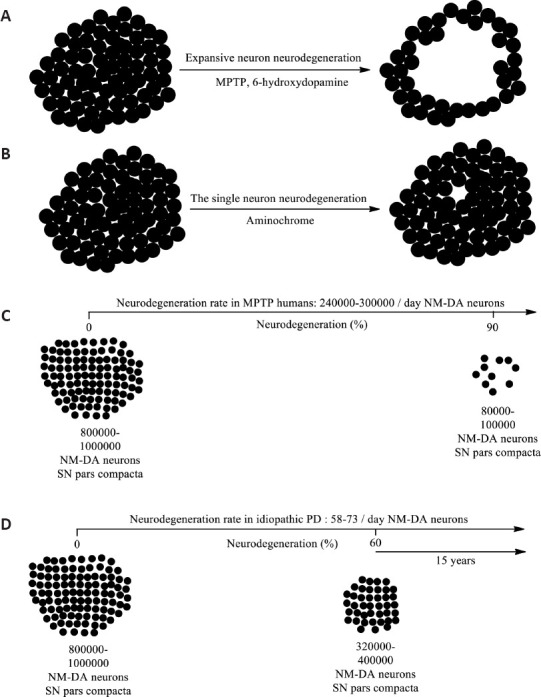
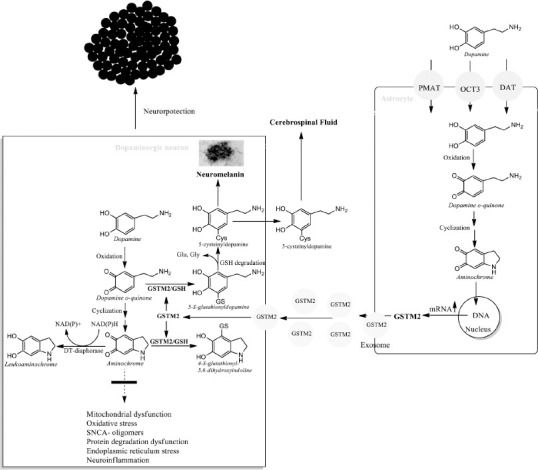
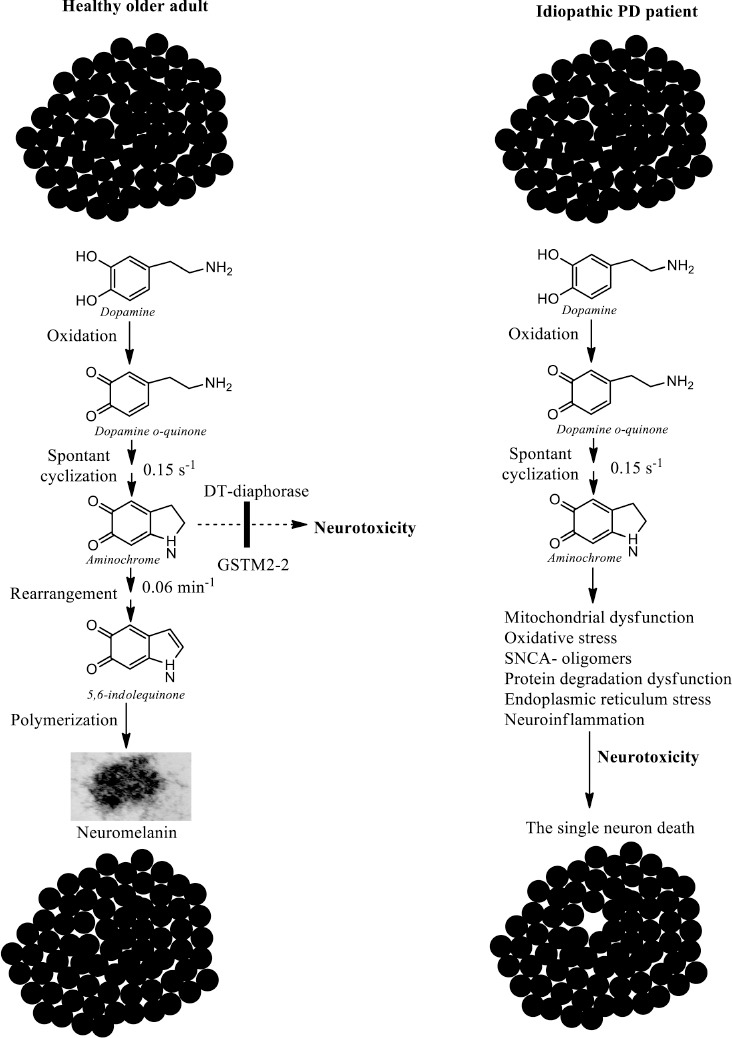
The positive effect of levodopa in the treatment of Parkinson's disease, although it is limited in time and has severe side effects, has encouraged the scientific community to look for new drugs that can stop the neurodegenerative process or even regenerate the neuromelanin-containing dopaminergic nigrostriatal neurons. Successful preclinical studies with coenzyme Q10, mitoquinone, isradipine, nilotinib, TCH346, neurturin, zonisamide, deferiprone, prasinezumab, and cinpanemab prompted clinical trials. However, these failed and after more than 50 years levodopa continues to be the key drug in the treatment of the disease, despite its severe side effects after 4-6 years of chronic treatment. The lack of translated successful results obtained in preclinical investigations based on the use of neurotoxins that do not exist in the human body as new drugs for Parkinson's disease treatment is a big problem. In our opinion, the cause of these failures lies in the experimental animal models involving neurotoxins that do not exist in the human body, such as 1-methyl-4-phenyl-1,2,3,6-tetrahydropyridine and 6-hydroxydopamine, that induce a very fast, massive and expansive neurodegenerative process, which contrasts with the extremely slow one of neuromelanin-containing dopaminergic neurons. The exceedingly slow progress of the neurodegenerative process of the nigrostriatal neurons in idiopathic Parkinson's patients is due to (i) a degenerative model in which the neurotoxic effect of an endogenous neurotoxin affects a single neuron, (ii) a neurotoxic event that is not expansive and (iii) the fact that the neurotoxin that triggers the neurodegenerative process is produced inside the neuromelanin-containing dopaminergic neurons. The endogenous neurotoxin that fits this degenerative model involving one single neuron at a time is aminochrome, since it (i) is generated within neuromelanin-containing dopaminergic neurons, (ii) does not cause an expansive neurotoxic effect and (iii) triggers all the mechanisms involved in the neurodegenerative process of the nigrostriatal neurons in idiopathic Parkinson's disease. In conclusion, based on the hypothesis that the neurodegenerative process of idiopathic Parkinson's disease corresponds to a single-neuron neurodegeneration model, we must search for molecules that increase the expression of the neuroprotective enzymes DT-diaphorase and glutathione transferase M2-2. It has been observed that the activation of the Kelch-like ECH-associated protein 1/nuclear factor (erythroid-derived 2)-like 2 pathway is associated with the transcriptional activation of the DT-diaphorase and glutathione transferase genes.
左旋多巴在治疗帕金森病方面具有积极作用,尽管其作用时间有限且有严重副作用,但仍促使科学界去寻找能阻止神经退行性过程甚至使含神经黑素的多巴胺能黑质纹状体神经元再生的新药。辅酶Q10、米托醌、伊拉地平、尼洛替尼、TCH346、神经营养因子、唑尼沙胺、去铁酮、普拉克索单抗和西潘单抗的临床前研究取得成功,进而推动了临床试验。然而,这些试验均告失败,尽管长期使用左旋多巴4至6年后会出现严重副作用,但50多年来它仍是治疗该疾病的关键药物。缺乏基于使用人体不存在的神经毒素作为帕金森病治疗新药的临床前研究成功转化结果是一个大问题。我们认为,这些失败的原因在于涉及人体不存在的神经毒素的实验动物模型,如1-甲基-4-苯基-1,2,3,6-四氢吡啶和6-羟基多巴胺,它们会引发非常快速、大规模且广泛的神经退行性过程,这与含神经黑素的多巴胺能神经元极其缓慢的神经退行性过程形成对比。特发性帕金森病患者黑质纹状体神经元神经退行性过程进展极其缓慢的原因在于:(i)一种退行性模型,其中内源性神经毒素的神经毒性作用影响单个神经元;(ii)一种不广泛的神经毒性事件;(iii)引发神经退行性过程的神经毒素在含神经黑素的多巴胺能神经元内部产生。符合这种一次只涉及一个神经元的退行性模型的内源性神经毒素是氨基色素,因为它(i)在含神经黑素的多巴胺能神经元内生成;(ii)不会引起广泛的神经毒性作用;(iii)触发特发性帕金森病黑质纹状体神经元神经退行性过程中涉及的所有机制。总之,基于特发性帕金森病的神经退行性过程对应单神经元神经退行性模型这一假设,我们必须寻找能增加神经保护酶DT-二氢嘧啶脱氢酶和谷胱甘肽转移酶M2-2表达的分子。据观察, Kelch样ECH相关蛋白1/核因子(红细胞衍生2)样2通路的激活与DT-二氢嘧啶脱氢酶和谷胱甘肽转移酶基因的转录激活有关。