Ye Jiancheng, He Lu, Beestrum Molly
Weill Cornell Medicine, New York, NY, USA.
Feinberg School of Medicine, Northwestern University, Chicago, IL, USA.
NPJ Digit Med. 2023 Sep 18;6(1):174. doi: 10.1038/s41746-023-00908-6.
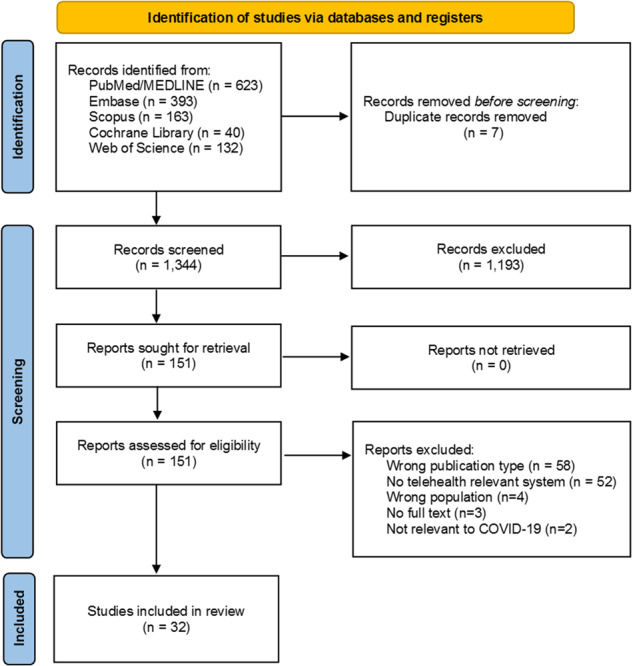
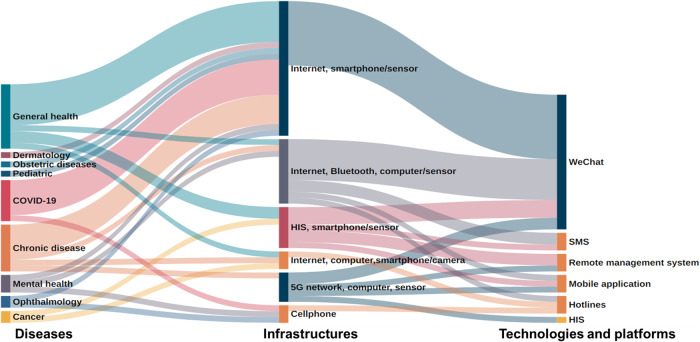
The rapid advancement of telehealth technologies has the potential to revolutionize healthcare delivery, especially in developing countries and resource-limited settings. Telehealth played a vital role during the COVID-19 pandemic, supporting numerous healthcare services. We conducted a systematic review to gain insights into the characteristics, barriers, and successful experiences in implementing telehealth during the COVID-19 pandemic in China, a representative of the developing countries. We also provide insights for other developing countries that face similar challenges to developing and using telehealth during or after the pandemic. This systematic review was conducted through searching five prominent databases including PubMed/MEDLINE, Embase, Scopus, Cochrane Library, and Web of Science. We included studies clearly defining any use of telehealth services in all aspects of health care during the COVID-19 pandemic in China. We mapped the barriers, successful experiences, and recommendations based on the Consolidated Framework for Implementation Research (CFIR). A total of 32 studies met the inclusion criteria. Successfully implementing and adopting telehealth in China during the pandemic necessitates strategic planning across aspects at society level (increasing public awareness and devising appropriate insurance policies), organizational level (training health care professionals, improving workflows, and decentralizing tasks), and technological level (strategic technological infrastructure development and designing inclusive telehealth systems). WeChat, a widely used social networking platform, was the most common platform used for telehealth services. China's practices in addressing the barriers may provide implications and evidence for other developing countries or low-and middle- income countries (LMICs) to implement and adopt telehealth systems.
远程医疗技术的迅速发展有可能彻底改变医疗服务的提供方式,尤其是在发展中国家和资源有限的环境中。在新冠疫情期间,远程医疗发挥了至关重要的作用,支持了众多医疗服务。我们进行了一项系统综述,以深入了解中国作为发展中国家的代表在新冠疫情期间实施远程医疗的特点、障碍和成功经验。我们还为其他在疫情期间或之后面临类似挑战以发展和使用远程医疗的发展中国家提供见解。这项系统综述是通过检索五个著名数据库进行的,包括PubMed/MEDLINE、Embase、Scopus、Cochrane图书馆和Web of Science。我们纳入了明确界定在中国新冠疫情期间医疗保健各方面使用远程医疗服务的研究。我们基于实施研究综合框架(CFIR)梳理了障碍、成功经验和建议。共有32项研究符合纳入标准。在疫情期间在中国成功实施和采用远程医疗需要在社会层面(提高公众意识并制定适当的保险政策)、组织层面(培训医疗保健专业人员、改进工作流程并分散任务)和技术层面(战略技术基础设施开发和设计包容性远程医疗系统)进行全面战略规划。微信作为一个广泛使用的社交网络平台,是用于远程医疗服务的最常见平台。中国在应对障碍方面的做法可能为其他发展中国家或中低收入国家(LMICs)实施和采用远程医疗系统提供启示和证据。