Ye Jiancheng, Hai Jiarui, Wang Zidan, Wei Chumei, Song Jiacheng
Feinberg School of Medicine, Northwestern University, Chicago, Illinois, USA.
Department of Engineering, Johns Hopkins University, Baltimore, Maryland, USA.
JAMIA Open. 2023 Apr 12;6(2):ooad023. doi: 10.1093/jamiaopen/ooad023. eCollection 2023 Jul.
To develop and apply a natural language processing (NLP)-based approach to analyze public sentiments on social media and their geographic pattern in the United States toward coronavirus disease 2019 (COVID-19) vaccination. We also aim to provide insights to facilitate the understanding of the public attitudes and concerns regarding COVID-19 vaccination.
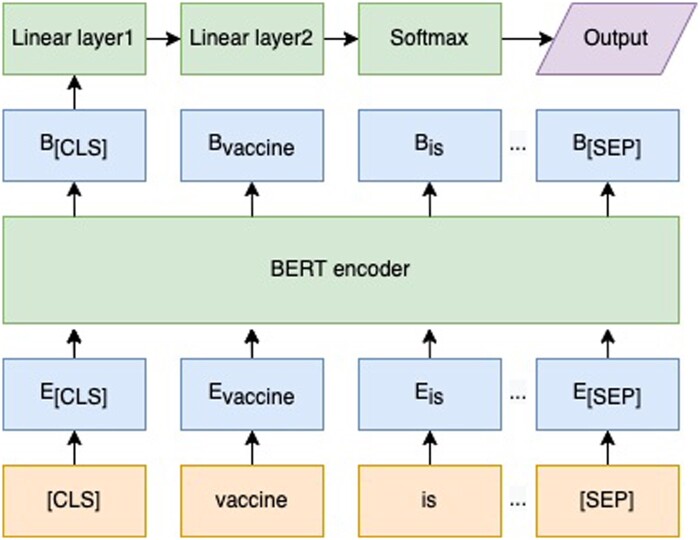
We collected Tweet posts by the residents in the United States after the dissemination of the COVID-19 vaccine. We performed sentiment analysis based on the Bidirectional Encoder Representations from Transformers (BERT) and qualitative content analysis. Time series models were leveraged to describe sentiment trends. Key topics were analyzed longitudinally and geospatially.
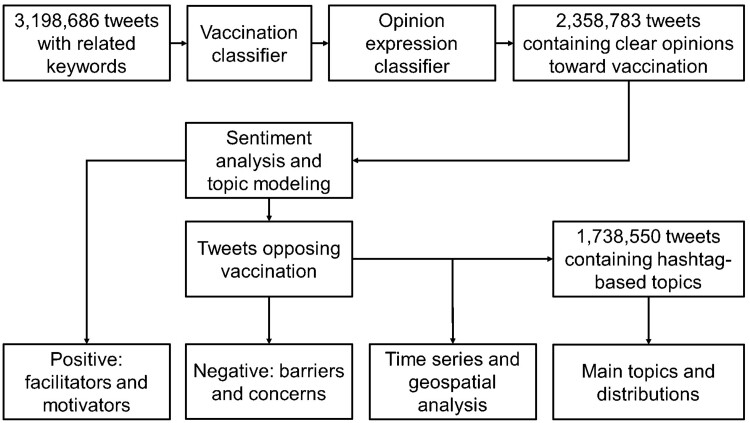
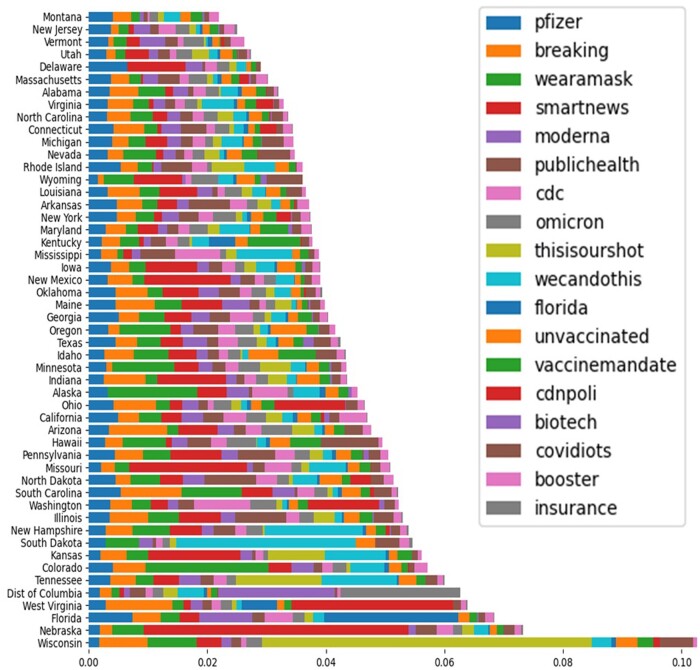
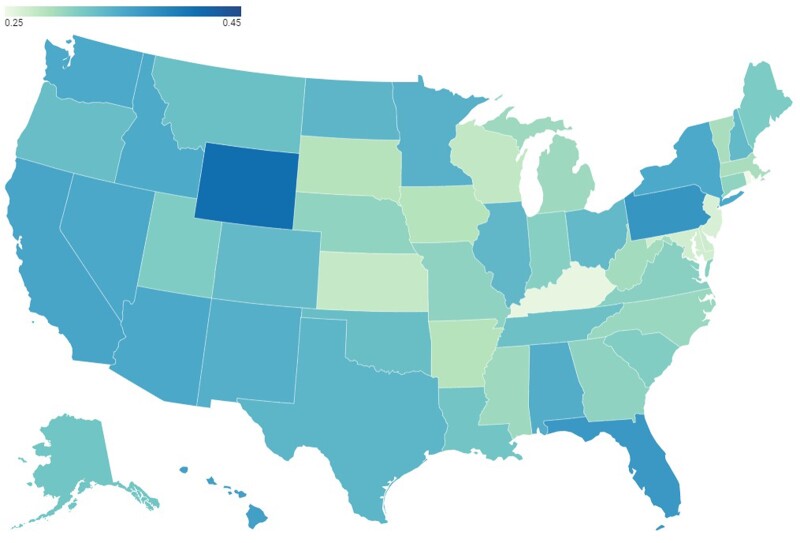
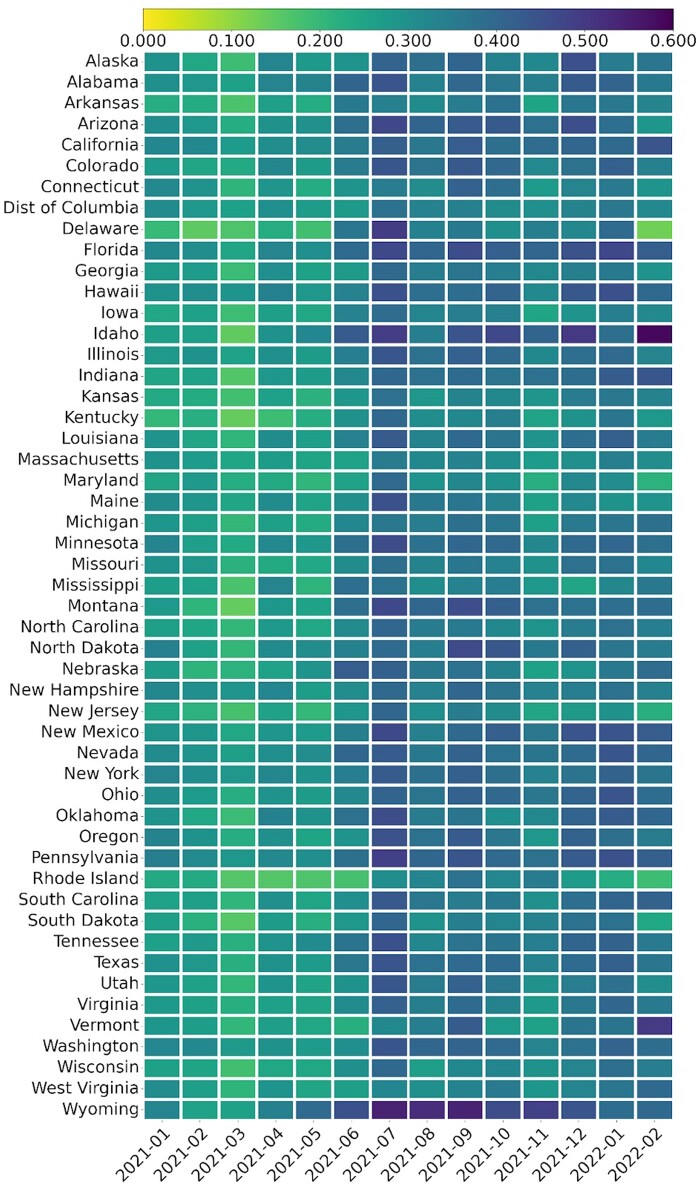
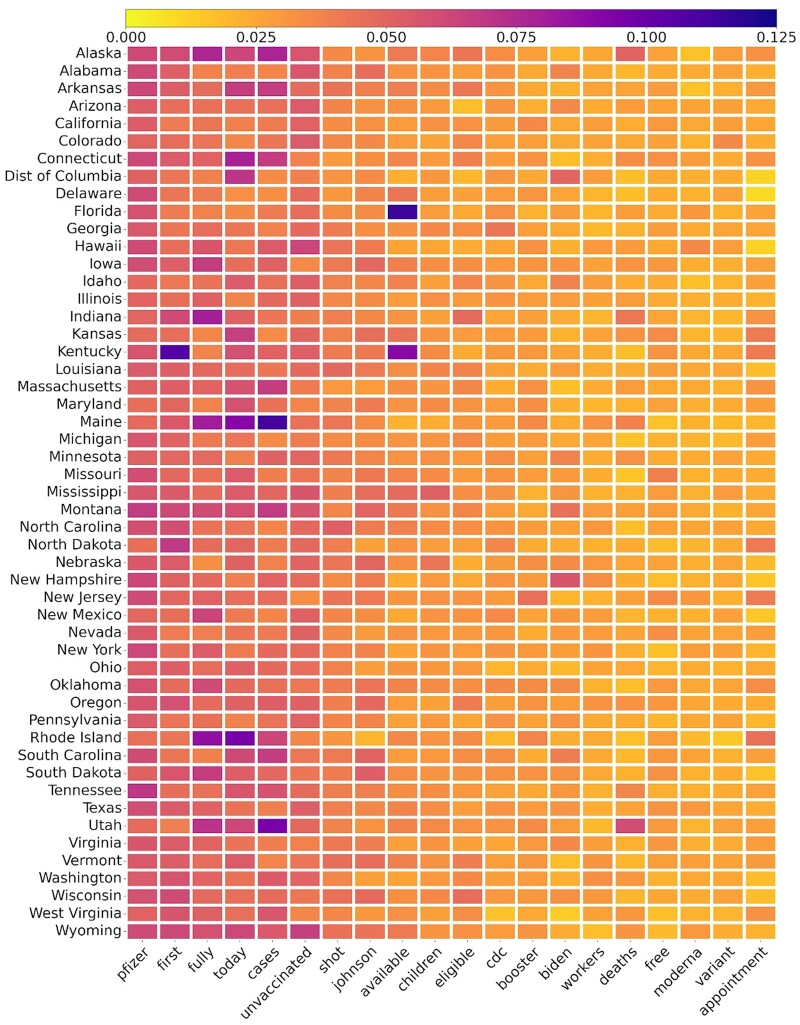
A total of 3 198 686 Tweets related to COVID-19 vaccination were extracted from January 2021 to February 2022. 2 358 783 Tweets were identified to contain clear opinions, among which 824 755 (35.0%) expressed negative opinions towards vaccination while 1 534 028 (65.0%) demonstrated positive opinions. The accuracy of the BERT model was 79.67%. The key hashtag-based topics include Pfizer, breaking, wearamask, and smartnews. The sentiment towards vaccination across the states showed manifest variability. Key barriers to vaccination include mistrust, hesitancy, safety concern, misinformation, and inequity.
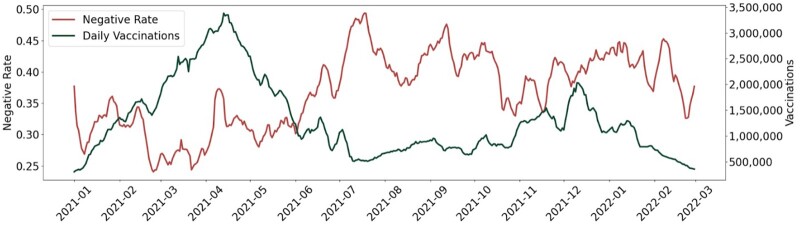
We found that opinions toward the COVID-19 vaccination varied across different places and over time. This study demonstrates the potential of an analytical pipeline, which integrates NLP-enabled modeling, time series, and geospatial analyses of social media data. Such analyses could enable real-time assessment, at scale, of public confidence and trust in COVID-19 vaccination, help address the concerns of vaccine skeptics, and provide support for developing tailored policies and communication strategies to maximize uptake.
开发并应用一种基于自然语言处理(NLP)的方法,以分析美国社交媒体上关于2019冠状病毒病(COVID-19)疫苗接种的公众情绪及其地理模式。我们还旨在提供见解,以促进对公众关于COVID-19疫苗接种的态度和担忧的理解。
我们收集了美国居民在COVID-19疫苗接种信息发布后的推文。我们基于来自变换器的双向编码器表示(BERT)进行了情感分析和定性内容分析。利用时间序列模型来描述情感趋势。对关键主题进行纵向和地理空间分析。
2021年1月至2022年2月期间,共提取了3198686条与COVID-19疫苗接种相关的推文。确定其中2358783条推文包含明确意见,其中824755条(35.0%)对疫苗接种表达了负面意见,而1534028条(65.0%)表达了正面意见。BERT模型的准确率为79.67%。基于关键主题标签的主题包括辉瑞、突发、戴口罩和智能新闻。各州对疫苗接种的情绪表现出明显差异。疫苗接种的主要障碍包括不信任、犹豫、安全担忧、错误信息和不公平。
我们发现,不同地区和不同时间对COVID-19疫苗接种的意见存在差异。本研究展示了一种分析流程的潜力,该流程整合了基于NLP的建模、时间序列和社交媒体数据的地理空间分析。此类分析能够大规模实时评估公众对COVID-19疫苗接种的信心和信任,帮助解决疫苗怀疑论者的担忧,并为制定量身定制的政策和沟通策略以最大限度地提高疫苗接种率提供支持。