Department of Evolutionary Biology, Faculty of Life Sciences, University of Vienna, Djerassiplatz 1, 1030, Vienna, Austria.
Institute of Marine Research (IIM-CSIC), Eduardo Cabello 6, 36208, Vigo, Spain.
Sci Rep. 2023 Sep 19;13(1):15492. doi: 10.1038/s41598-023-42435-0.
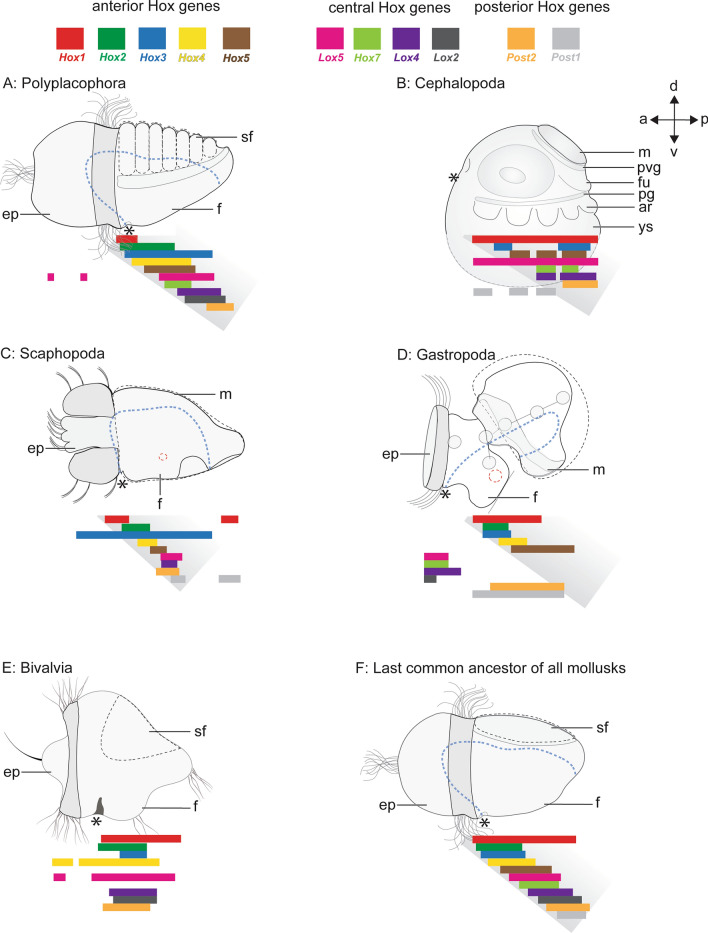
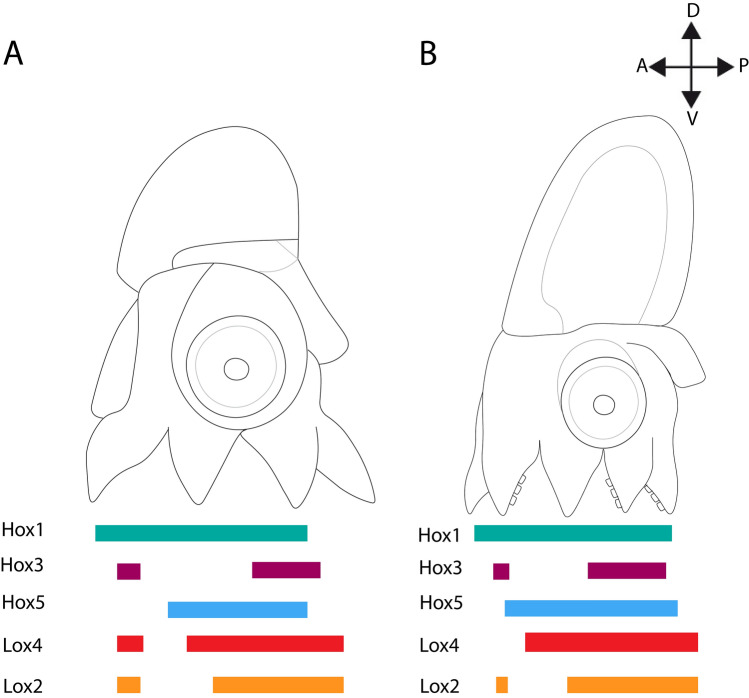
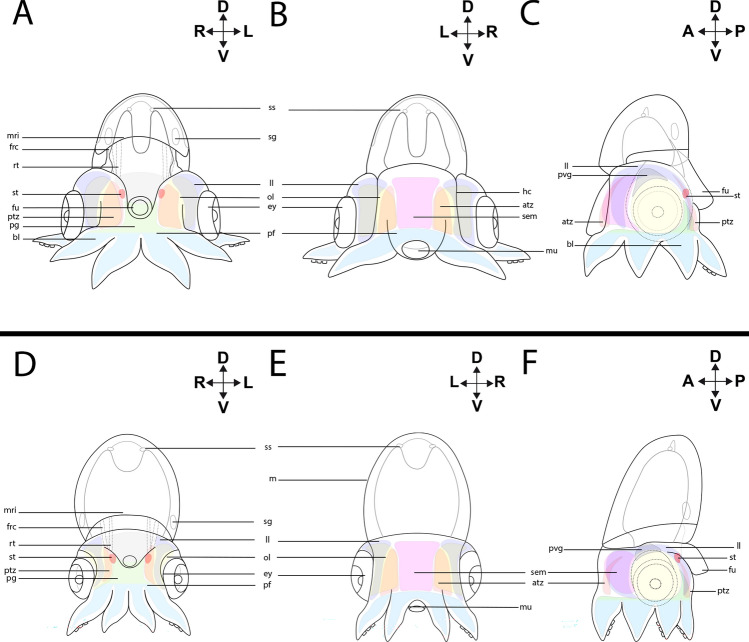
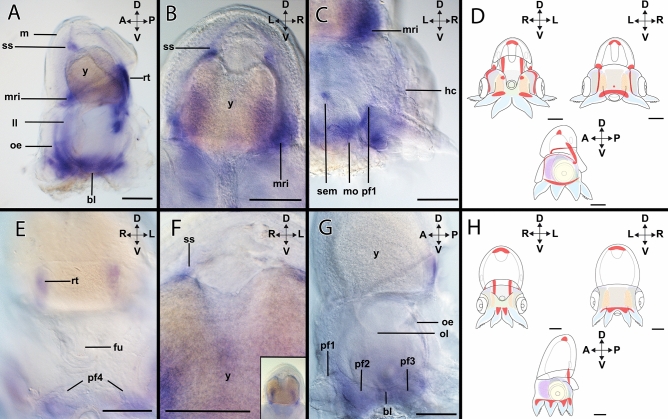
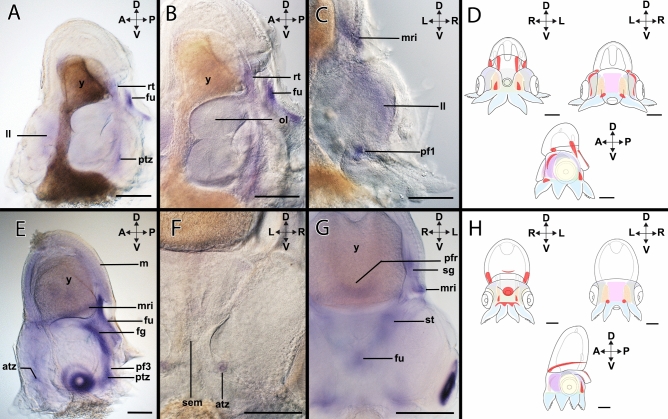
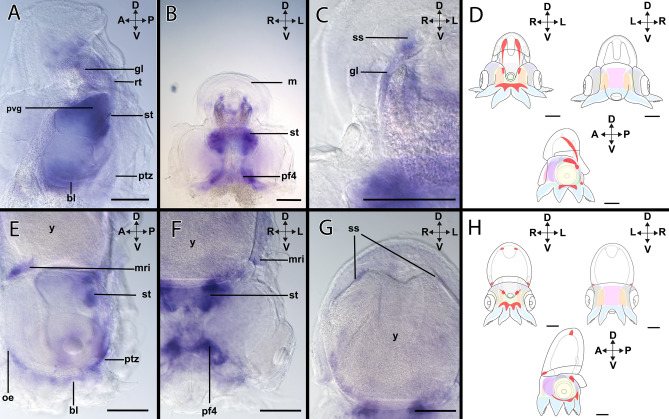
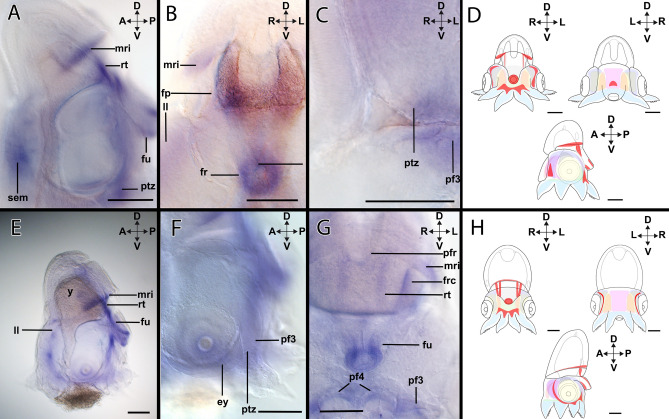
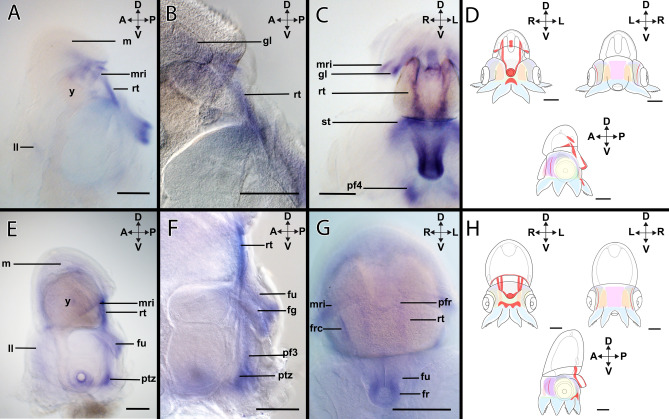
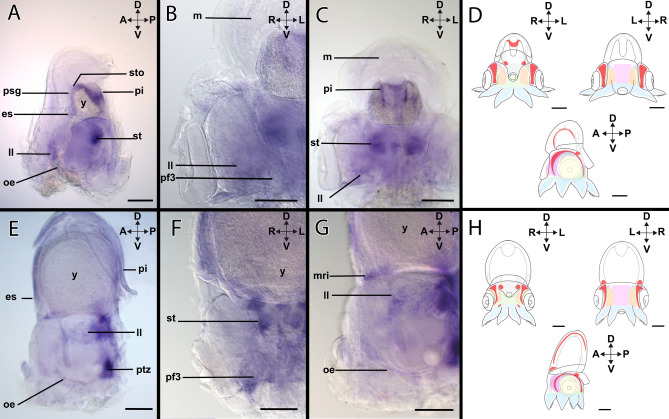
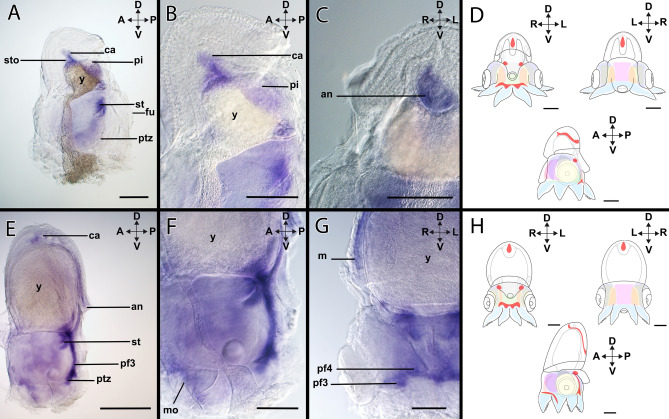
Few other invertebrates captivate our attention as cephalopods do. Octopods, cuttlefish, and squids amaze with their behavior and sophisticated body plans that belong to the most intriguing among mollusks. Little is, however, known about their body plan formation and the role of Hox genes. The latter homeobox genes pattern the anterior-posterior body axis and have only been studied in a single decapod species so far. Here, we study developmental Hox and ParaHox gene expression in Octopus vulgaris. Hox genes are expressed in a near-to-staggered fashion, among others in homologous organs of cephalopods such as the stellate ganglia, the arms, or funnel. As in other mollusks Hox1 is expressed in the nascent octopod shell rudiment. While ParaHox genes are expressed in an evolutionarily conserved fashion, Hox genes are also expressed in some body regions that are considered homologous among mollusks such as the cephalopod arms and funnel with the molluscan foot. We argue that cephalopod Hox genes are recruited to a lesser extent into the formation of non-related organ systems than previously thought and emphasize that despite all morphological innovations molecular data still reveal the ancestral molluscan heritage of cephalopods.
很少有其他无脊椎动物像头足类动物那样吸引我们的注意力。章鱼、乌贼和鱿鱼以其行为和复杂的身体结构而令人惊叹,这些身体结构属于最有趣的软体动物之列。然而,人们对它们的身体结构形成和 Hox 基因的作用知之甚少。这些同源盒基因构建了身体的前后轴,迄今为止仅在一种十足目甲壳动物中进行了研究。在这里,我们研究了普通章鱼的发育 Hox 和 ParaHox 基因表达。Hox 基因以近乎交错的方式表达,除其他外,还在头足类动物的星状神经节、臂或漏斗等同源器官中表达。与其他软体动物一样,Hox1 也在新生的章鱼壳原基中表达。虽然 ParaHox 基因以进化上保守的方式表达,但 Hox 基因也在一些被认为是软体动物同源的身体区域中表达,例如头足类动物的臂和漏斗与软体动物的脚。我们认为,与以前的观点相比,头足类动物的 Hox 基因在形成非相关器官系统中的作用被较少地招募,并且尽管存在所有形态创新,分子数据仍然揭示了头足类动物的祖先软体动物遗产。