Department of Plant Breeding, Physiology and Seed Science, University of Agriculture in Krakow, Łobzowska 24, 31-140, Krakow, Poland.
Department of Pharmaceutical Botany, Faculty of Pharmacy, Jagiellonian University Medical College, Medyczna 9, 30-688, Krakow, Poland.
Sci Rep. 2023 Sep 19;13(1):15520. doi: 10.1038/s41598-023-42619-8.
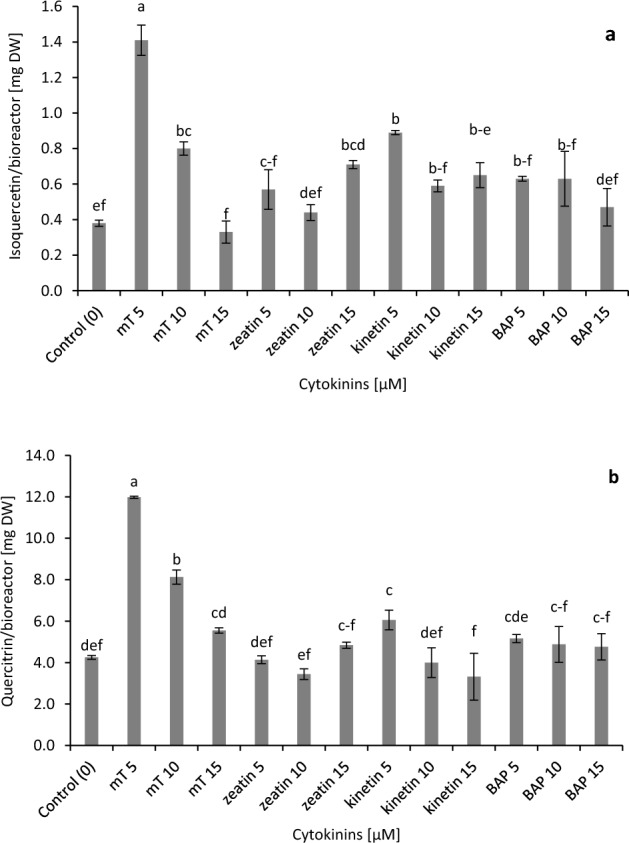
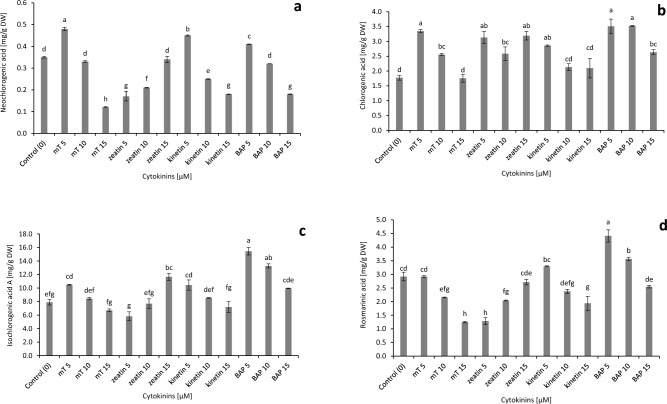
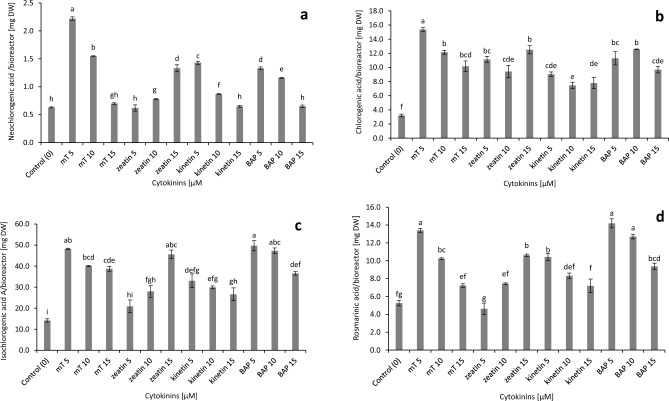
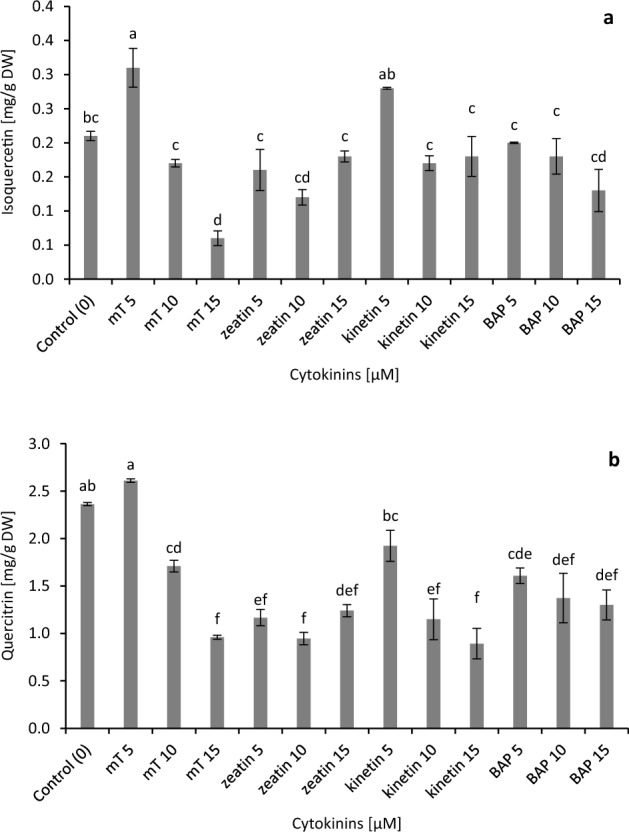
Stevia rebaudiana Bertoni possesses various medicinal and food industrial applications. This study is the first to explore the effect of the cytokinins meta-Topolin (mT; 6-(3-hydroxybenzylamino) purine), zeatin, kinetin, and BAP (6-benzylaminopurine) at concentrations of 0 (control), 5, 10, and 15 µM on shoot multiplication, as well as stevioside, rebaudioside A, phenolic acid, and flavonoid content in bioreactor cultures. The highest number of shoots (23.4 per explant) was obtained in the medium containing 5 μM of mT. However, 15 μM of mT was superior for fresh biomass production and dry biomass accumulation. Reversed-phase (RP)-HPLC analysis showed a beneficial effect of 5 μM mT on stevioside (11.43 mg/g dry weight [DW]) and rebaudioside A (10.74 mg/g DW) biosynthesis. In all conditions, the ratio of rebaudioside A/stevioside ranged from 0.75 to 1.12. The phenolic acids chlorogenic, neochlorogenic, isochlorogenic A, and rosmarinic were confirmed in the stevia extracts, as were the flavonoids isoquercetin, and quercitrin. The highest accumulations of chlorogenic and neochlorogenic acids and flavonoids were observed in shoot tissues derived from 5 µM mT, whereas 5 µM of BAP stimulated biosynthesis of chlorogenic, isochlorogenic A, and rosmarinic acids. This is the first report on the use of mT-cytokinin showing high potential in stevia cultures.
甜菊糖是一种具有多种药用和食品工业应用的植物。本研究首次探索了细胞分裂素 meta-Topolin(mT;6-(3-羟基苄基氨基)嘌呤)、玉米素、激动素和 BAP(6-苄氨基嘌呤)在 0(对照)、5、10 和 15 μM 浓度下对生物反应器培养物中芽的增殖以及甜菊苷、莱鲍迪苷 A、酚酸和类黄酮含量的影响。在含有 5 μM mT 的培养基中获得了最多的芽(每个外植体 23.4 个)。然而,15 μM 的 mT 更有利于鲜生物量的生产和干生物量的积累。反相(RP)-HPLC 分析表明,5 μM mT 对甜菊苷(11.43 mg/g 干重 [DW])和莱鲍迪苷 A(10.74 mg/g DW)生物合成有有益作用。在所有条件下,莱鲍迪苷 A/甜菊苷的比值在 0.75 到 1.12 之间。甜菊叶提取物中还确认了绿原酸、新绿原酸、异绿原酸 A 和迷迭香酸等酚酸以及异槲皮苷和槲皮苷等类黄酮。在来自 5 μM mT 的芽组织中观察到绿原酸和新绿原酸以及类黄酮的积累量最高,而 5 μM 的 BAP 则刺激了绿原酸、异绿原酸 A 和迷迭香酸的生物合成。这是首次报道 mT-细胞分裂素在甜菊培养物中具有很高的应用潜力。