Department of Chemistry, National Institute of Technology Nagaland, Chumukedima, Nagaland, 797103, India.
Sci Rep. 2023 Sep 19;13(1):15487. doi: 10.1038/s41598-023-40713-5.
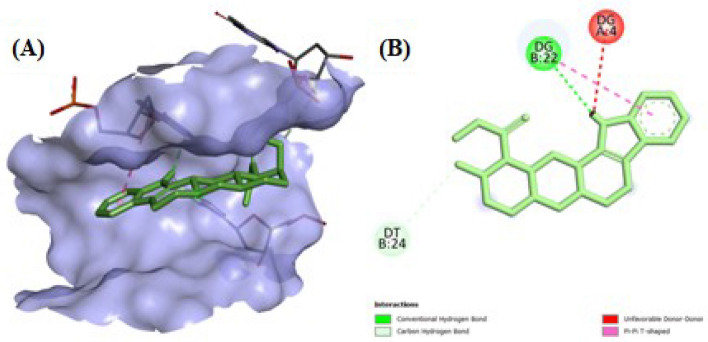
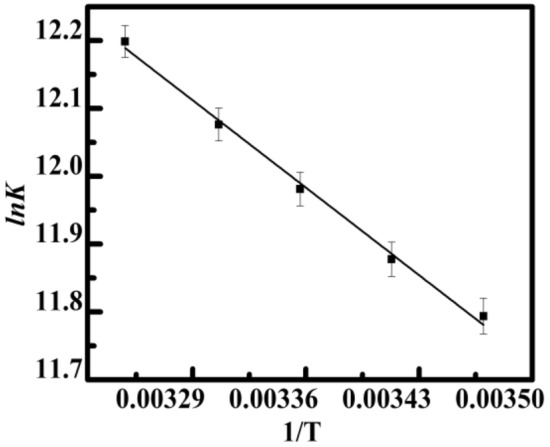
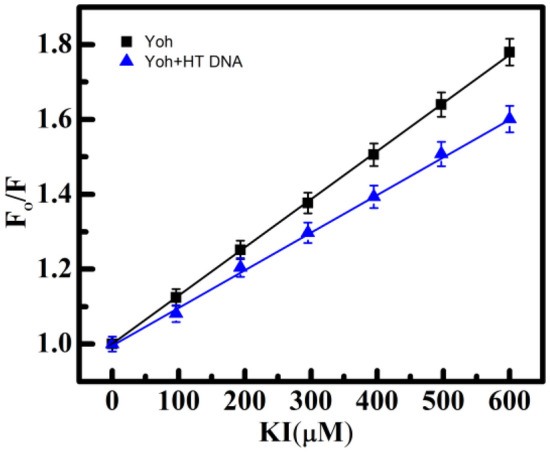
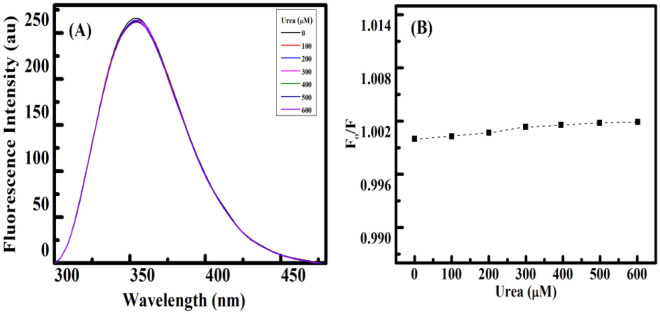
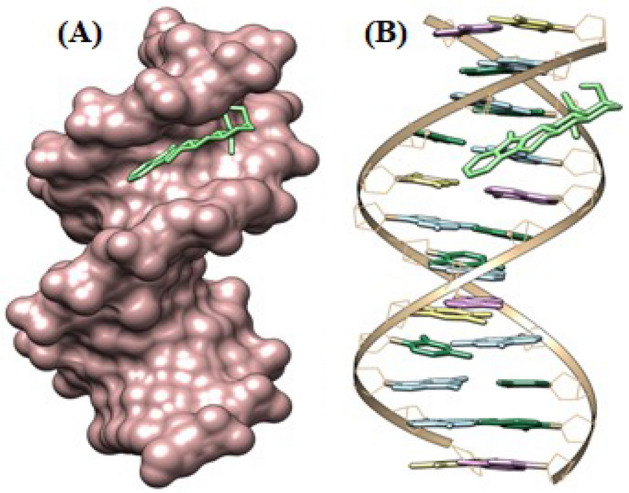
DNA interactions with multivalent ligand(s) have increasingly become the subject of substantial research. For several small molecules with therapeutic potential, nucleic acids serve as their primary molecular target. Such interaction has been shown to affect transcription or replication, ultimately leading to apoptotic cell death. As a result, researchers are becoming increasingly interested in understanding how small molecules interact with DNA making it possible to develop new, DNA-specific drugs. The bioactive indole alkaloid, Yohimbe (Yohimbine; Yh) has been broadly studied in pharmacological properties while its binding mode to DNA has not been explicated so far. This study adopted molecular modelling and multi-spectroscopic methods to investigate the interaction between Yohimbine and herring testes (HT DNA) in physiological conditions. Minor hypochromic and bathochromic shifts of fluorescence intensity were observed, suggesting the binding of Yh to HT DNA. The Scatchard plot analyses using the McGhee-von Hipple method revealed non-cooperative binding and affinities in the range of 10 M. The thermodynamic parameters suggested exothermic binding, which was favoured by negative enthalpy and positive entropy changes from temperature-dependent fluorescence experiments. Salt-dependent fluorescence suggested that the interaction between the ligand and DNA was governed by non-polyelectrolytic forces. The results of iodide quenching, urea denaturation assay, dye displacement, and in silico molecular docking, suggested groove binding of Yh to HT DNA. Thus, the groove binding mechanism of interaction was validated by both biophysical and computational techniques. The structural elucidation and energetic profiling of Yh's interaction with naturally occurring polymeric DNA can be useful to the development of DNA-targeted therapeutics.
DNA 与多价配体的相互作用越来越成为大量研究的主题。对于一些具有治疗潜力的小分子,核酸是它们的主要分子靶标。这种相互作用已被证明会影响转录或复制,最终导致细胞凋亡。因此,研究人员越来越有兴趣了解小分子如何与 DNA 相互作用,从而有可能开发新的、针对 DNA 的药物。生物活性吲哚生物碱育亨宾(育亨宾;Yh)在药理学特性方面得到了广泛研究,但其与 DNA 的结合模式迄今尚未阐明。本研究采用分子建模和多光谱方法研究了生理条件下育亨宾与鲱鱼精(HT DNA)之间的相互作用。荧光强度观察到轻微的减色和增色位移,表明 Yh 与 HT DNA 结合。使用 McGhee-von Hipple 方法的 Scatchard 图分析显示非协同结合和亲和力在 10-5 M 范围内。热力学参数表明是放热结合,这是由温度依赖性荧光实验中的负焓和正熵变化所支持的。盐依赖性荧光表明,配体与 DNA 之间的相互作用受非聚电解质力控制。碘化物猝灭、尿素变性试验、染料置换和计算机分子对接的结果表明 Yh 与 HT DNA 的沟结合。因此,通过生物物理和计算技术验证了 Yh 与天然聚合 DNA 相互作用的沟结合机制。Yh 与天然存在的聚合 DNA 相互作用的结构阐明和能量分析可能有助于开发针对 DNA 的治疗药物。