Department of Biochemistry and Molecular Biophysics, Washington University in St Louis, St Louis, Missouri, USA.
Department of Medicine, Washington University in St Louis, St Louis, Missouri, USA.
Mol Cell Proteomics. 2023 Nov;22(11):100649. doi: 10.1016/j.mcpro.2023.100649. Epub 2023 Sep 19.
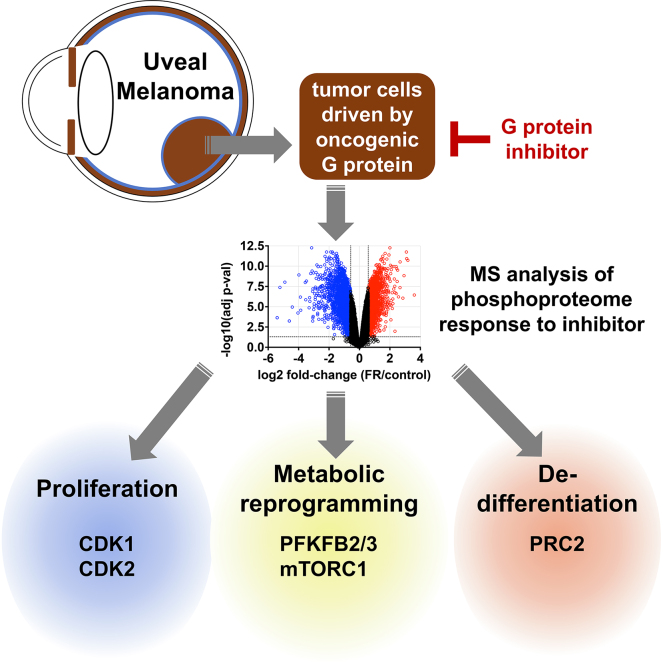
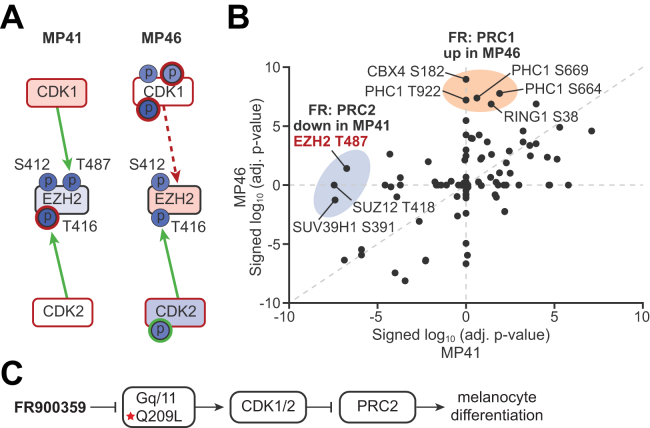
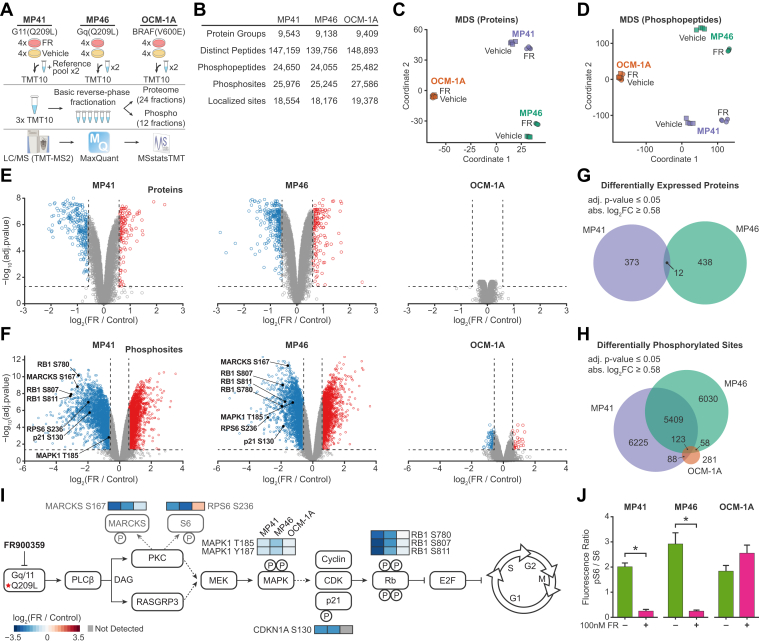
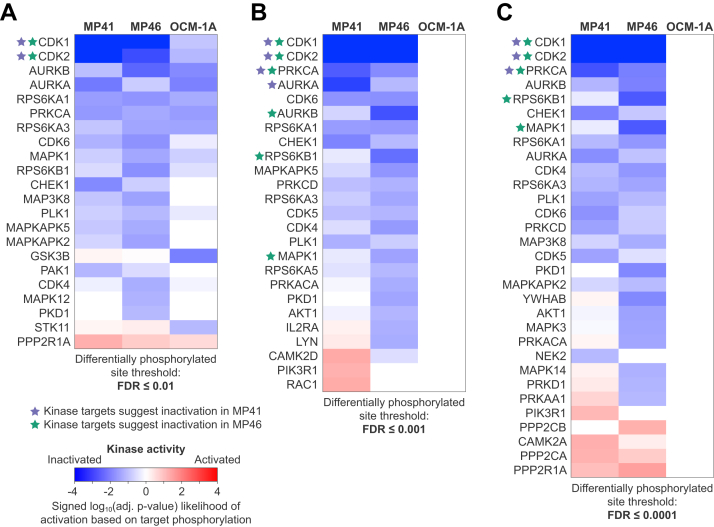
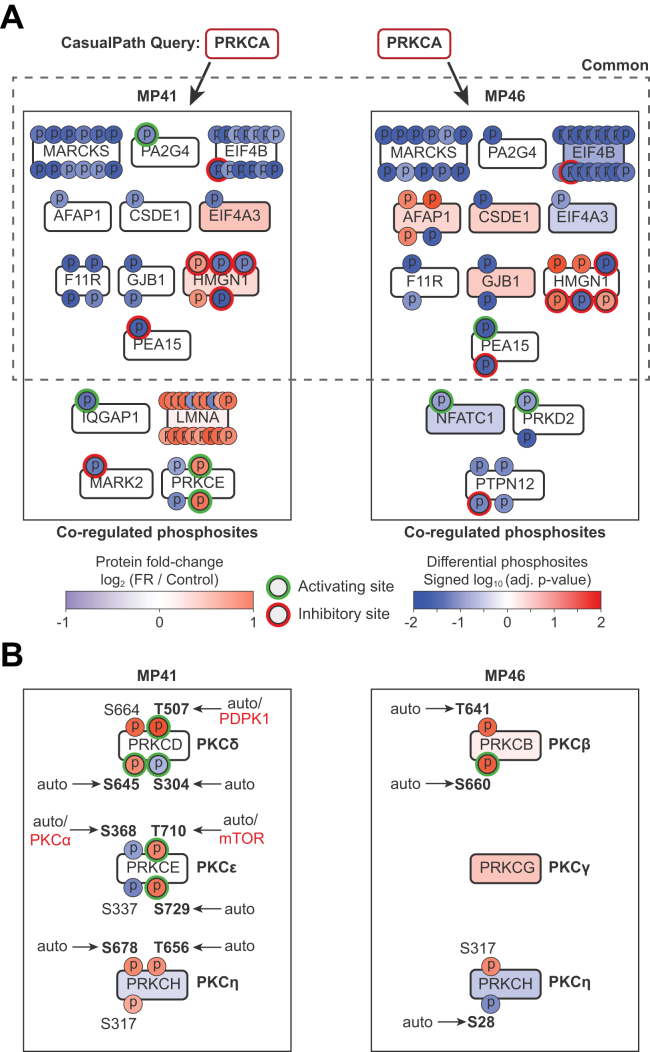
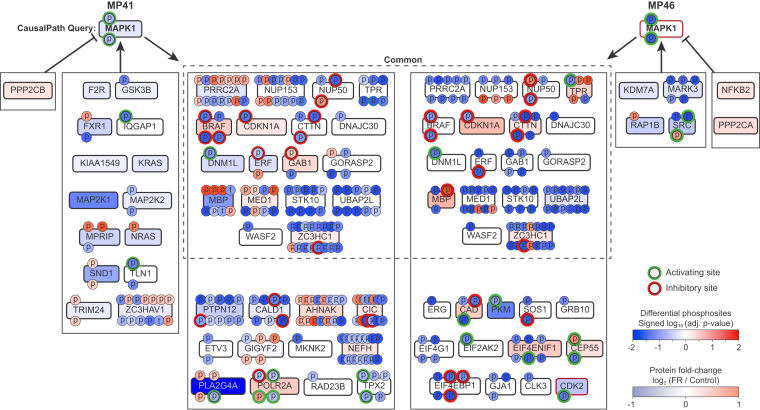
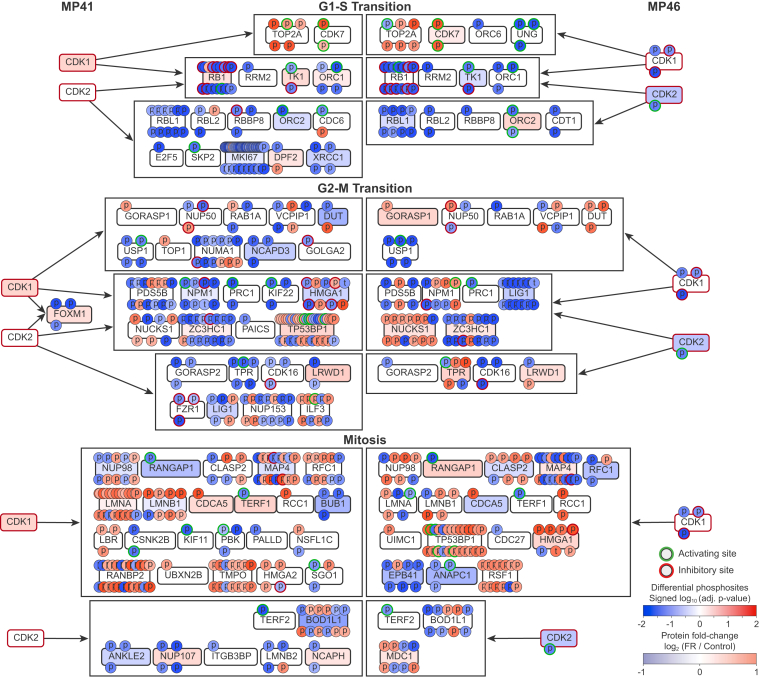
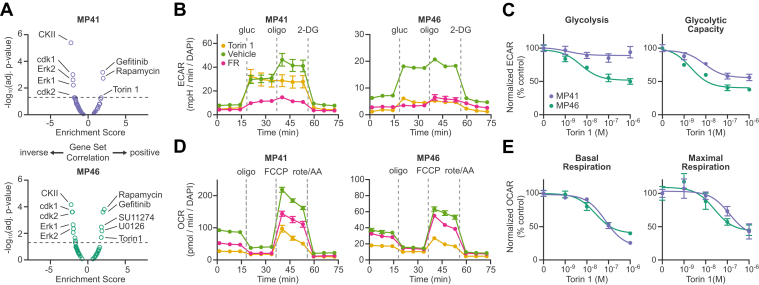
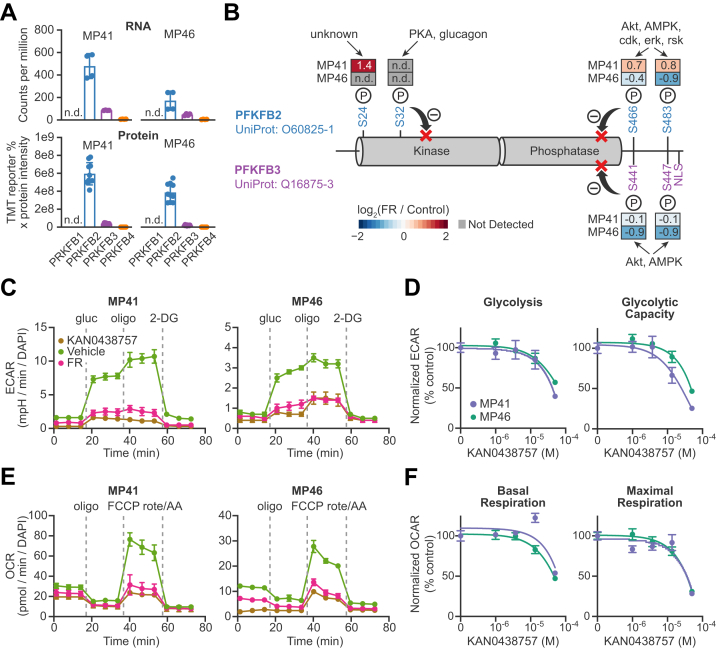
Metastatic uveal melanoma (UM) patients typically survive only 2 to 3 years because effective therapy does not yet exist. Here, to facilitate the discovery of therapeutic targets in UM, we have identified protein kinase signaling mechanisms elicited by the drivers in 90% of UM tumors: mutant constitutively active G protein α-subunits encoded by GNAQ (Gq) or GNA11 (G11). We used the highly specific Gq/11 inhibitor FR900359 (FR) to elucidate signaling networks that drive proliferation, metabolic reprogramming, and dedifferentiation of UM cells. We determined the effects of FR on the proteome and phosphoproteome of UM cells as indicated by bioinformatic analyses with CausalPath and site-specific gene set enrichment analysis. We found that inhibition of oncogenic Gq/11 caused deactivation of PKC, Erk, and the cyclin-dependent kinases CDK1 and CDK2 that drive proliferation. Inhibition of oncogenic Gq/11 in UM cells with low metastatic risk relieved inhibitory phosphorylation of polycomb-repressive complex subunits that regulate melanocytic redifferentiation. Site-specific gene set enrichment analysis, unsupervised analysis, and functional studies indicated that mTORC1 and 6-phosphofructo-2-kinase/fructose-2,6-biphosphatase 2 drive metabolic reprogramming in UM cells. Together, these results identified protein kinase signaling networks driven by oncogenic Gq/11 that regulate critical aspects of UM cell biology and provide targets for therapeutic investigation.
转移性葡萄膜黑色素瘤(UM)患者的平均存活时间仅为 2 至 3 年,因为目前还没有有效的治疗方法。在这里,为了促进在 UM 中发现治疗靶点,我们鉴定了 90%的 UM 肿瘤驱动因素引发的蛋白激酶信号机制:由 GNAQ(Gq)或 GNA11(G11)编码的突变组成型激活的 G 蛋白α亚单位。我们使用高度特异性的 Gq/11 抑制剂 FR900359(FR)来阐明驱动 UM 细胞增殖、代谢重编程和去分化的信号网络。我们通过 CausalPath 和特定基因集富集分析的生物信息学分析确定了 FR 对 UM 细胞蛋白质组和磷酸蛋白质组的影响。我们发现,抑制致癌性 Gq/11 导致 PKC、Erk 和驱动增殖的细胞周期蛋白依赖性激酶 CDK1 和 CDK2 的失活。在具有低转移风险的 UM 细胞中抑制致癌性 Gq/11 可缓解调节黑素细胞再分化的多梳抑制复合物亚基的抑制性磷酸化。特定基因集富集分析、无监督分析和功能研究表明,mTORC1 和 6-磷酸果糖-2-激酶/果糖-2,6-二磷酸酶 2 驱动 UM 细胞的代谢重编程。总之,这些结果确定了由致癌性 Gq/11 驱动的蛋白激酶信号网络,这些网络调节 UM 细胞生物学的关键方面,并为治疗研究提供了目标。