Wang Raymond M, Mesfin Joshua M, Karkanitsa Maria, Ungerleider Jessica L, Zelus Emma, Zhang Yuxue, Kawakami Yu, Kawakami Yuko, Kawakami Toshiaki, Christman Karen L
Shu Chien-Gene Lay Department of Bioengineering, Sanford Consortium of Regenerative Medicine, University of California San Diego, 2880 Torrey Pines Scenic Drive, La Jolla, CA, 92037, USA.
Department of Genitourinary Medical Oncology, The University of Texas MD Anderson Cancer Center, Houston, TX, 77030, USA.
NPJ Regen Med. 2023 Sep 20;8(1):53. doi: 10.1038/s41536-023-00324-0.
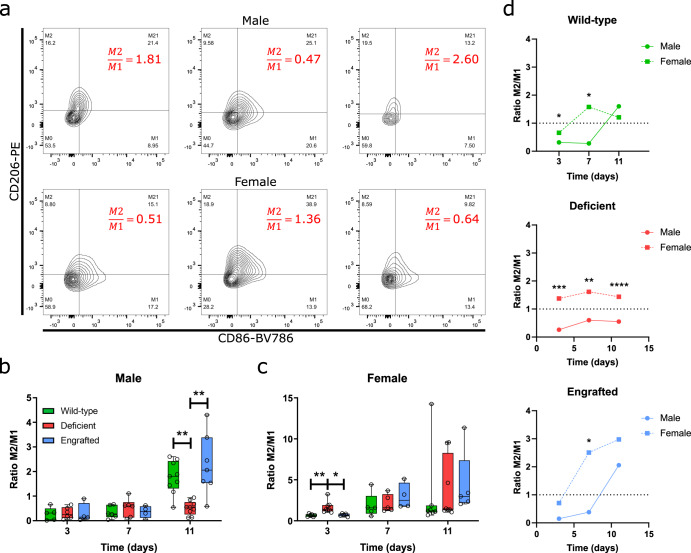
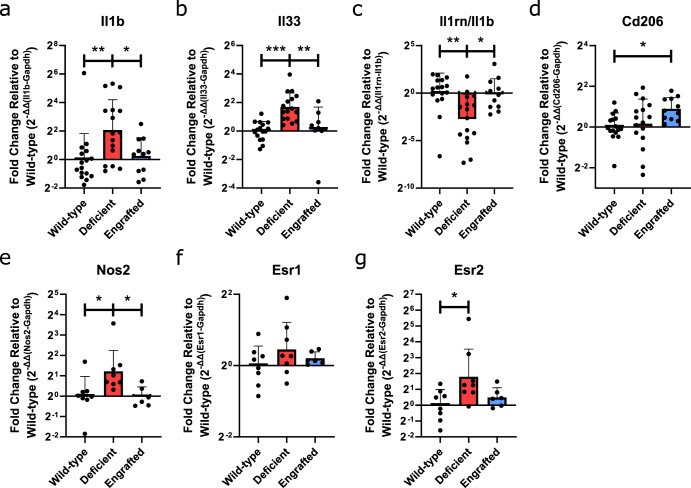
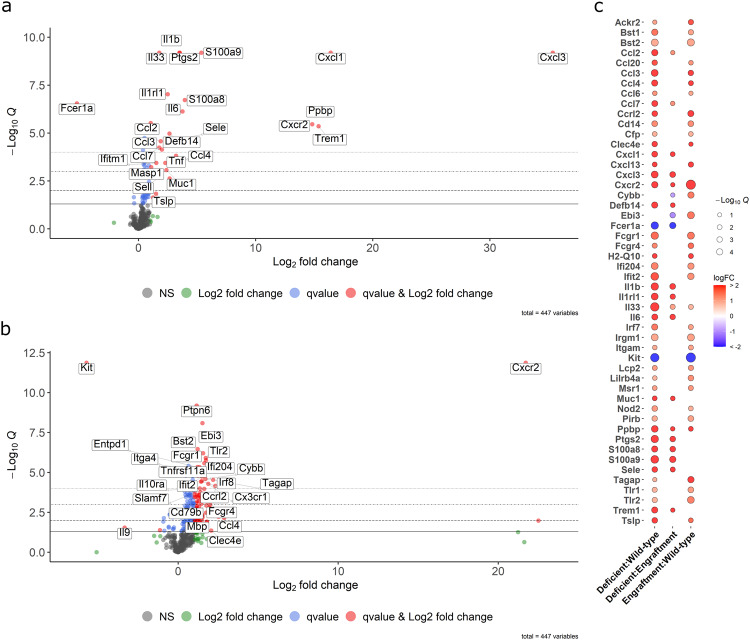
Bioactive immunomodulatory biomaterials have shown promise for influencing the immune response to promote tissue repair and regeneration. Macrophages and T cells have been associated with this response; however, other immune cell types have been traditionally overlooked. In this study, we investigated the role of mast cells in the regulation of the immune response to decellularized biomaterial scaffolds using a subcutaneous implant model. In mast cell-deficient mice, there was dysregulation of the expected M1 to M2 macrophage transition typically induced by the biomaterial scaffold. Polarization progression deviated in a sex-specific manner with an early transition to an M2 profile in female mice, while the male response was unable to properly transition past a pro-inflammatory M1 state. Both were reversed with adoptive mast cell transfer. Further investigation of the later-stage immune response in male mice determined a greater sustained pro-inflammatory gene expression profile, including the IL-1 cytokine family, IL-6, alarmins, and chemokines. These results highlight mast cells as another important cell type that influences the immune response to pro-regenerative biomaterials.
生物活性免疫调节生物材料已显示出有望影响免疫反应以促进组织修复和再生。巨噬细胞和T细胞与这种反应有关;然而,其他免疫细胞类型传统上一直被忽视。在本研究中,我们使用皮下植入模型研究了肥大细胞在调节对脱细胞生物材料支架的免疫反应中的作用。在肥大细胞缺陷小鼠中,通常由生物材料支架诱导的预期M1到M2巨噬细胞转变出现失调。极化进程以性别特异性方式偏离,雌性小鼠早期转变为M2表型,而雄性小鼠的反应无法正常越过促炎M1状态。通过过继性肥大细胞转移两者均得到逆转。对雄性小鼠后期免疫反应的进一步研究确定了更大的持续促炎基因表达谱,包括IL-1细胞因子家族、IL-6、警报素和趋化因子。这些结果突出了肥大细胞作为另一种影响对促再生生物材料免疫反应的重要细胞类型。