Jayaraman Selvaraj, Natarajan Sathan Raj, Veeraraghavan Vishnu Priya, Jasmine Sharmila
Centre of Molecular Medicine and Diagnostics (COMManD), Department of Biochemistry, Saveetha Dental College & Hospitals, Saveetha Institute of Medical & Technical Sciences, Saveetha University, Chennai, 600077, India.
Department of Oral Maxillofacial Surgery, Rajas Dental College and Hospital, Kavalkinaru, Tirunelveli, 627105, Tamil Nadu, India.
J Oral Biol Craniofac Res. 2023 Nov-Dec;13(6):704-713. doi: 10.1016/j.jobcr.2023.09.002. Epub 2023 Sep 14.
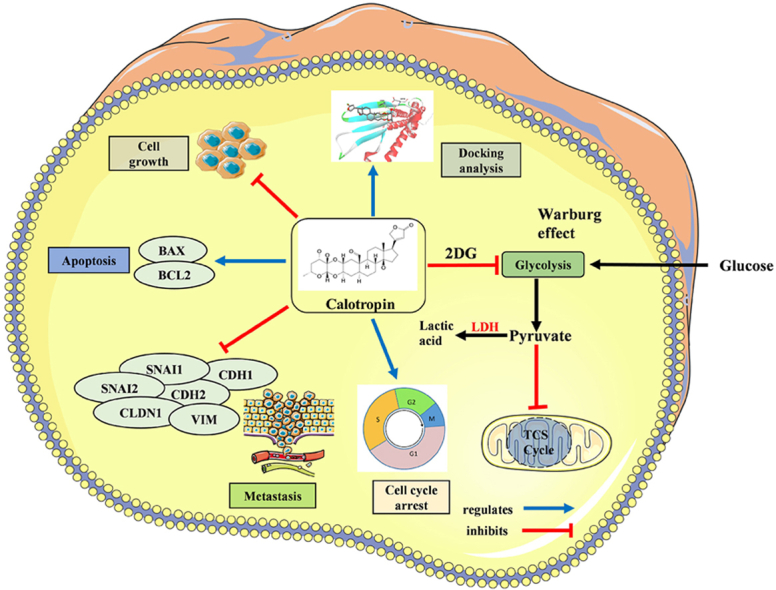
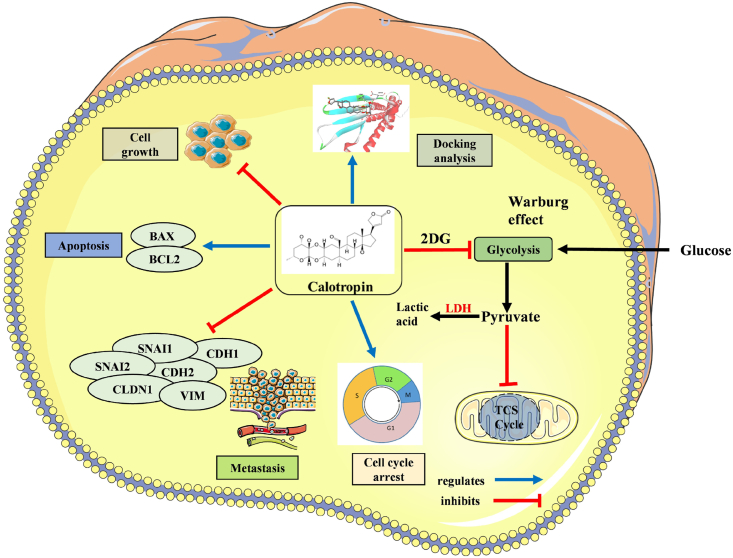
Calotropin, a cardiac glycoside obtained from the plant , has demonstrated promising potential as an anti-tumorigenesis compound.
The main objective of this study was to investigate the potential anti-cancer properties of calotropin against HSC-3 oral squamous cancer cells and to elucidate the underlying mechanisms involved in its action.
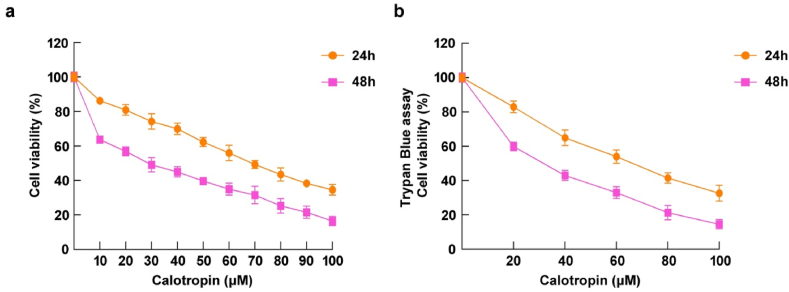
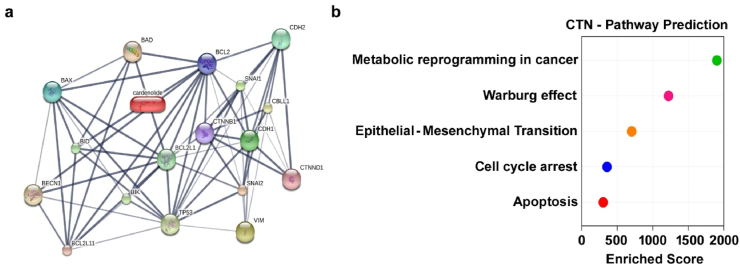
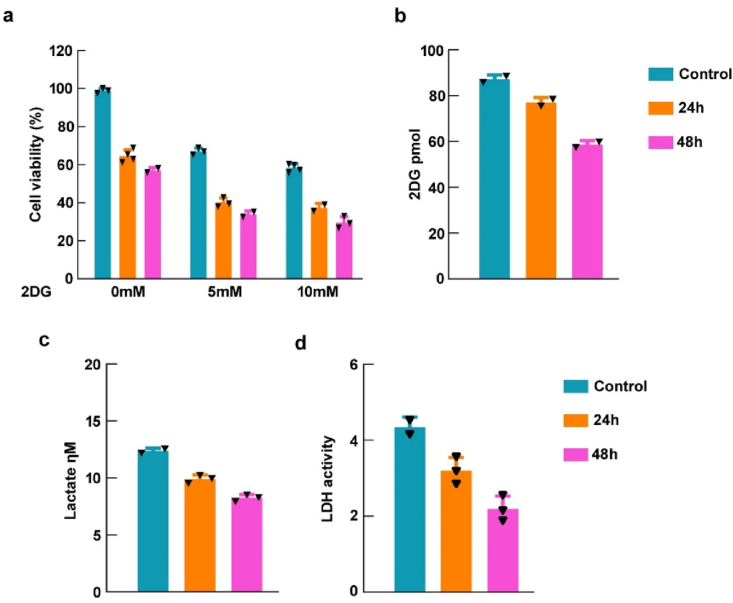
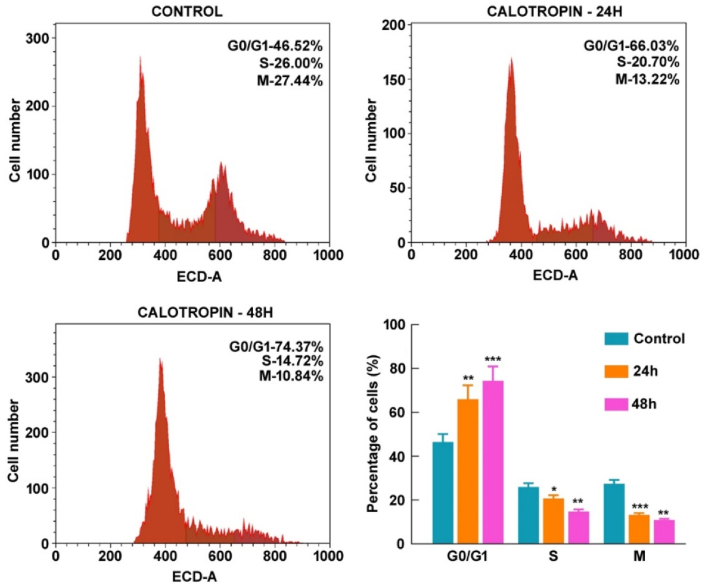
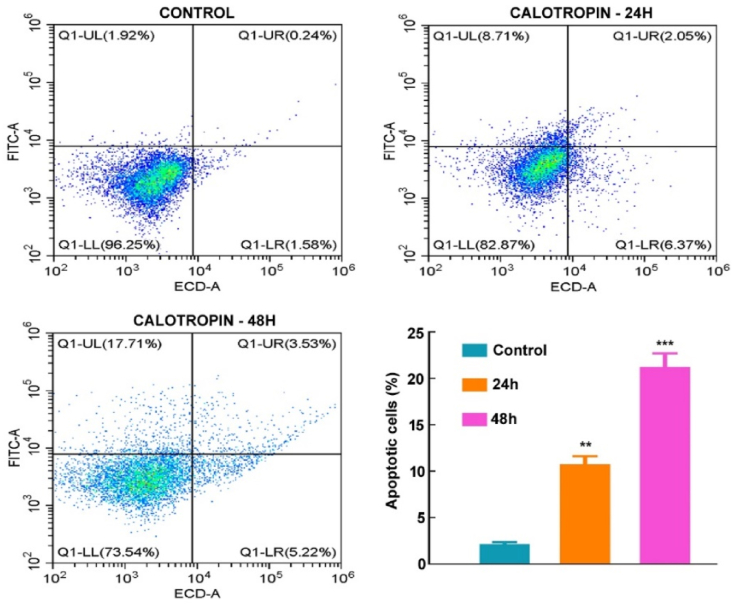
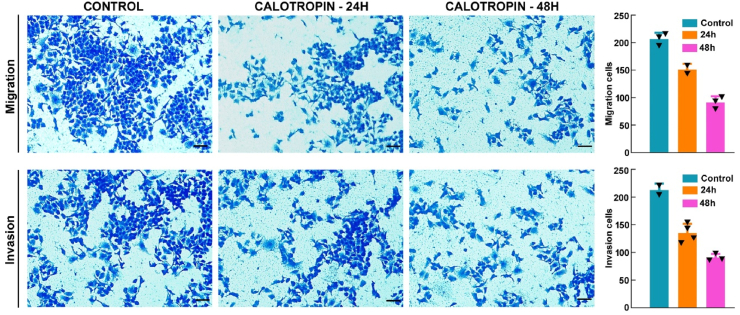
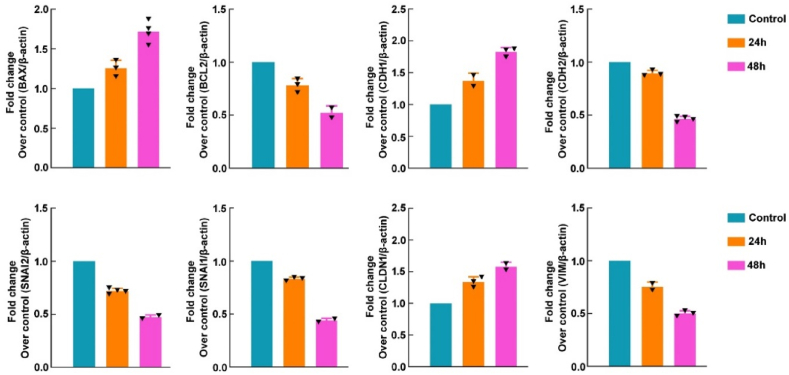
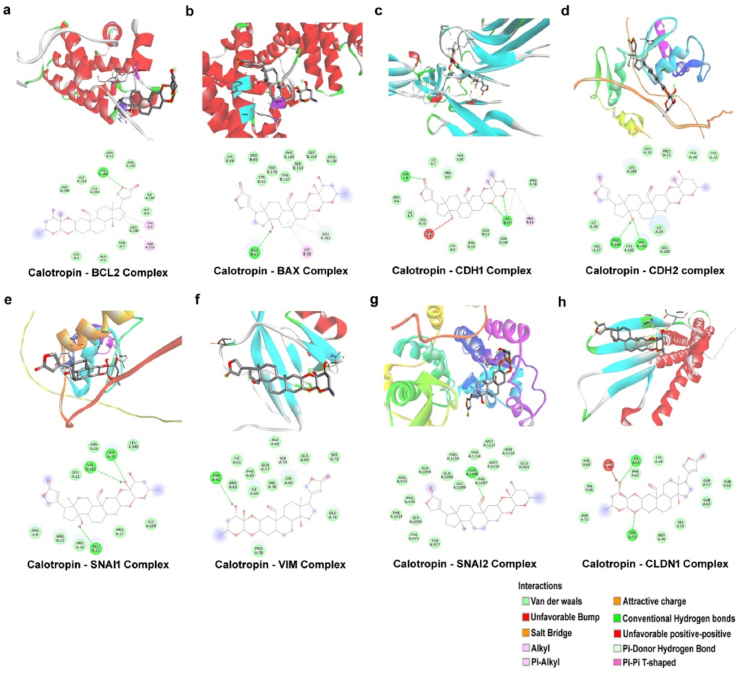
Calotropin were treated in HSC-3 to evaluate cell viability by MTT assay. Flow cytometry analysis divulged that calotropin G0/G1 phase cell cycle arrest and apoptosis in HSC-3 cells. Calotropin displayed inhibitory properties against aerobic glycolysis, a metabolic alteration using glucose uptaken, lactose production and LDHA activity assays. Furthermore, migration and invasion assays help that calotropin has ability to reduce the migratory and invasive of HSC-3 cells, using transwell and Matrigel assay. Validation of mRNA expression through RT-PCR. Molecular docking was implemented to validate the binding association of calotropin with apoptosis and metastatic regulating targets.
The results exemplify that increasing doses of calotropin effectively hold back the HSC-3 cell progression. Migration and invasion assays help that calotropin has ability to reduce the migratory and invasive of HSC-3 cells, indicating its potential to inhibit cancer metastasis. These results imply that calotropin may influence genes linked to metastasis and apoptosis in order to achieve its beneficial effects on cancer. Docking results provided further support, showing a high binding energy between calotropin and metastasis-mediated pathways.
Overall, our findings shed an experimental evidence on how calotropin inhibits the HSC-3 oral squamous cancer cell growth, highlighting the drug's potential as a treatment for oral cancer. Further, investigation on experiment is warranted to explore its potential mechanism of action and to develop a novel drug towards clinical trial.
牛角瓜苷是一种从植物中提取的强心苷,已显示出作为抗肿瘤发生化合物的潜在前景。
本研究的主要目的是研究牛角瓜苷对HSC-3口腔鳞状癌细胞的潜在抗癌特性,并阐明其作用的潜在机制。
用牛角瓜苷处理HSC-3细胞,通过MTT法评估细胞活力。流式细胞术分析表明,牛角瓜苷使HSC-3细胞的细胞周期停滞于G0/G1期并诱导其凋亡。通过葡萄糖摄取、乳酸产生和LDHA活性测定,发现牛角瓜苷对有氧糖酵解具有抑制作用。此外,通过Transwell和基质胶实验,迁移和侵袭实验表明牛角瓜苷有能力降低HSC-3细胞的迁移和侵袭能力。通过RT-PCR验证mRNA表达。进行分子对接以验证牛角瓜苷与凋亡和转移调节靶点的结合关联。
结果表明,随着牛角瓜苷剂量的增加,能有效抑制HSC-3细胞的进展。迁移和侵袭实验表明,牛角瓜苷有能力降低HSC-3细胞的迁移和侵袭能力,表明其具有抑制癌症转移的潜力。这些结果表明,牛角瓜苷可能影响与转移和凋亡相关的基因,从而对癌症产生有益影响。对接结果提供了进一步的支持,显示牛角瓜苷与转移介导途径之间具有高结合能。
总体而言,我们的研究结果为牛角瓜苷如何抑制HSC-3口腔鳞状癌细胞生长提供了实验证据,突出了该药物作为口腔癌治疗药物的潜力。此外,有必要进一步进行实验研究,以探索其潜在的作用机制,并开发一种新的药物用于临床试验。