School of Medical Information and Engineering, Guangdong Pharmaceutical University, Guangzhou, 510006, China.
Guangdong Province Precise Medicine Big Data of Traditional Chinese Medicine Engineering Technology Research Center, Guangzhou, 51006, China.
J Transl Med. 2023 Sep 21;21(1):648. doi: 10.1186/s12967-023-04366-2.
Memory B cells and microRNAs (miRNAs) play important roles in the progression of gastric adenocarcinoma (GAC), also known as stomach adenocarcinoma (STAD). However, few studies have investigated the use of memory B-cell-associated miRNAs in predicting the prognosis of STAD.
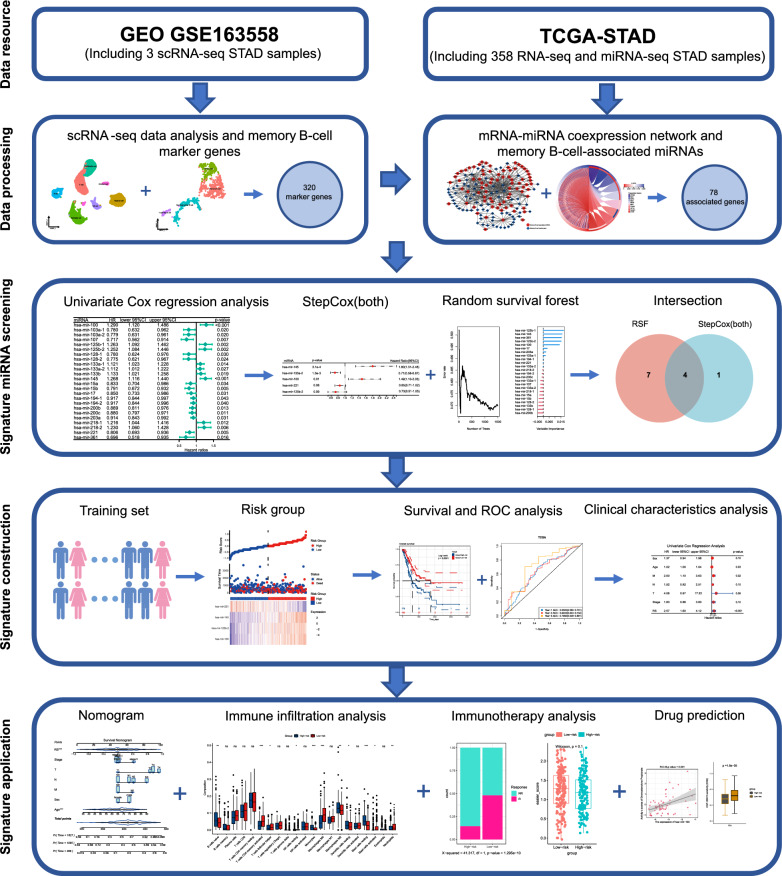
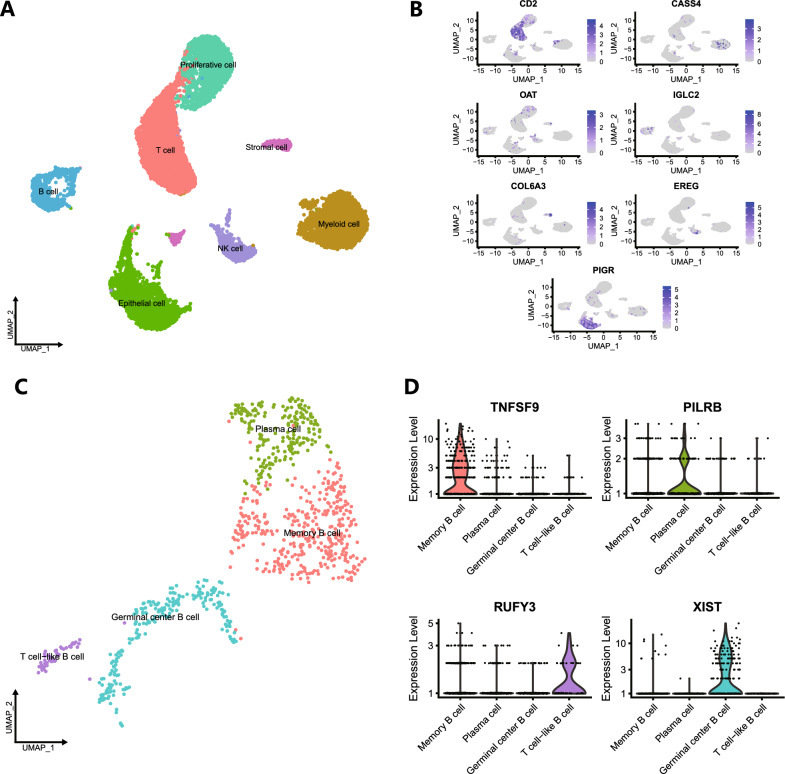
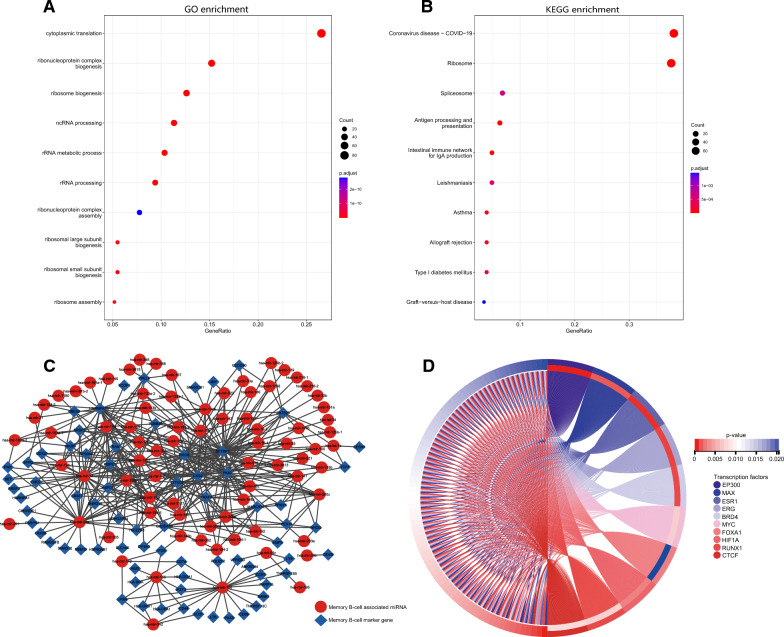
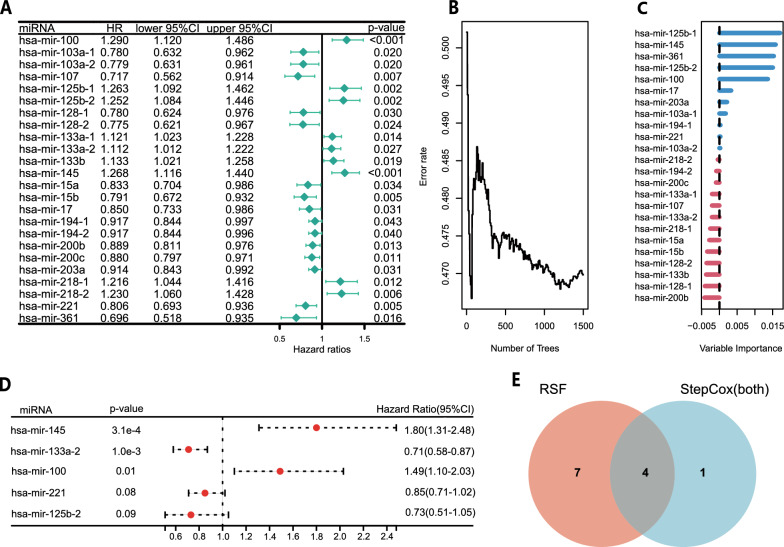
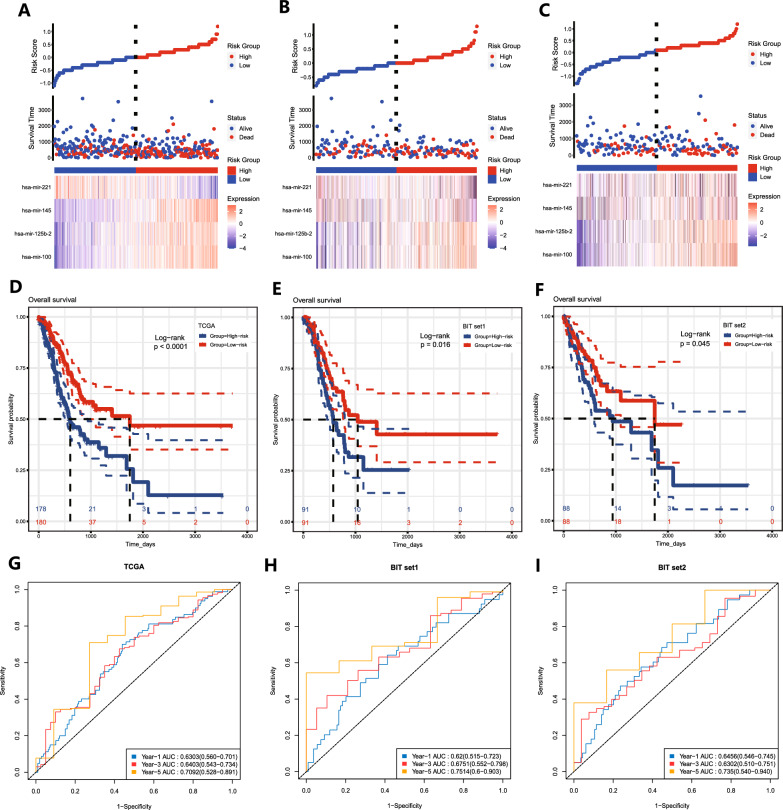
We identified the marker genes of memory B cells by single-cell RNA sequencing (scRNA-seq) and identified the miRNAs associated with memory B cells by constructing an mRNA‒miRNA coexpression network. Then, univariate Cox, random survival forest (RSF), and stepwise multiple Cox regression (StepCox) algorithms were used to identify memory B-cell-associated miRNAs that were significantly related to overall survival (OS). A prognostic risk model was constructed and validated using these miRNAs, and patients were divided into a low-risk group and a high-risk group. In addition, the differences in clinicopathological features, tumour microenvironment, immune blocking therapy, and sensitivity to anticancer drugs in the two groups were analysed.
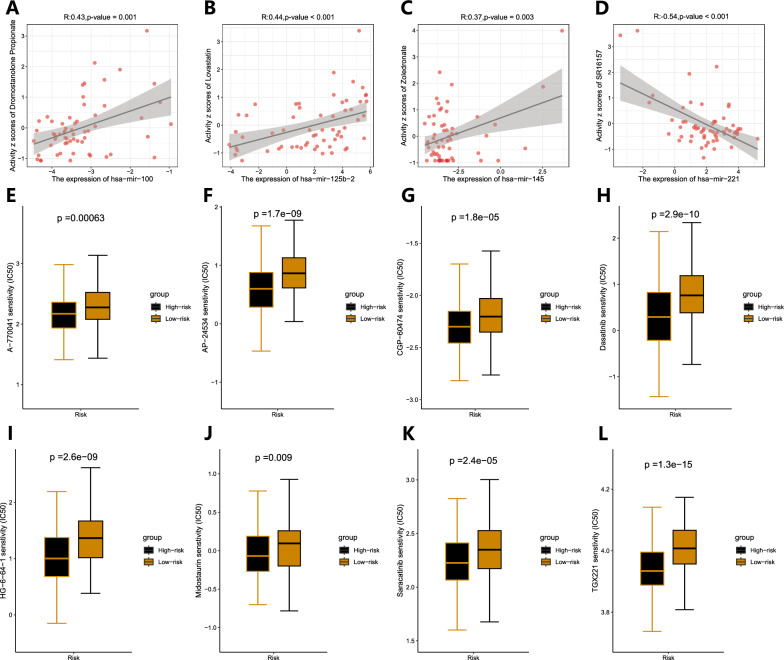
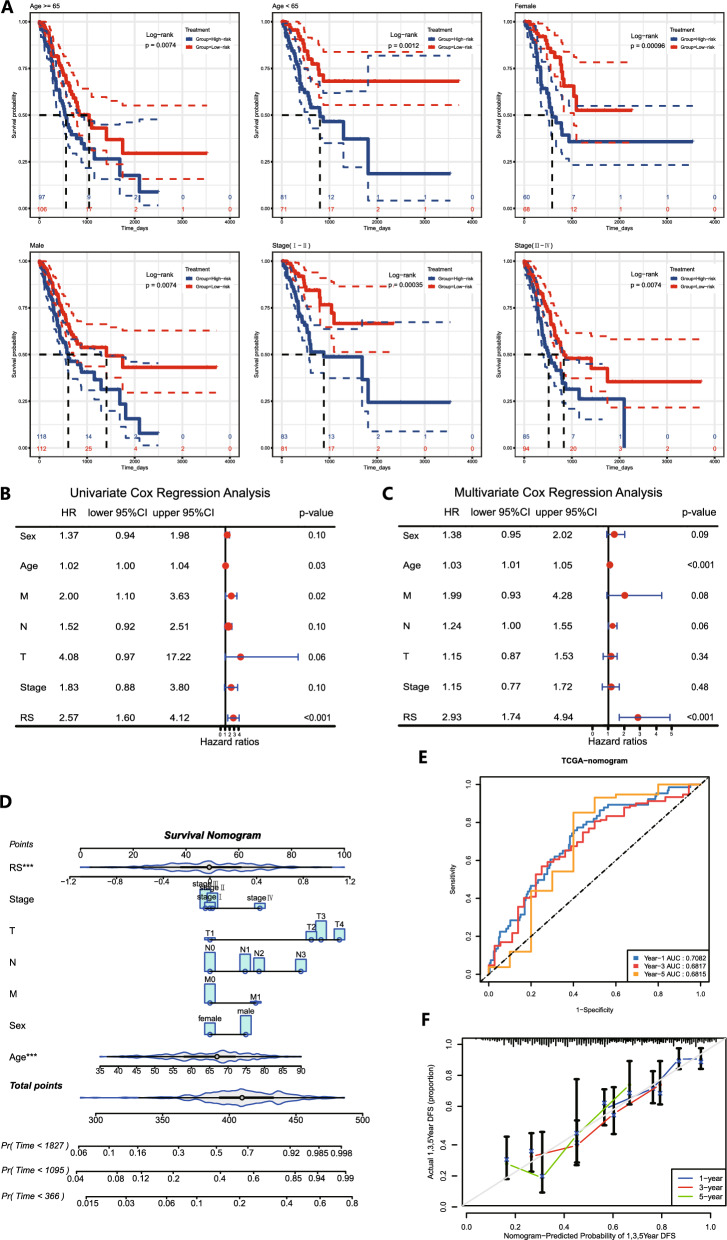
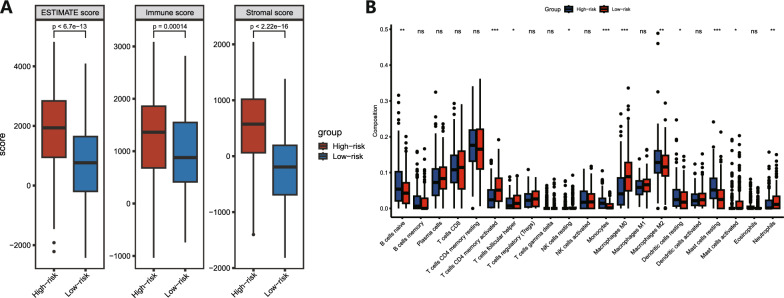
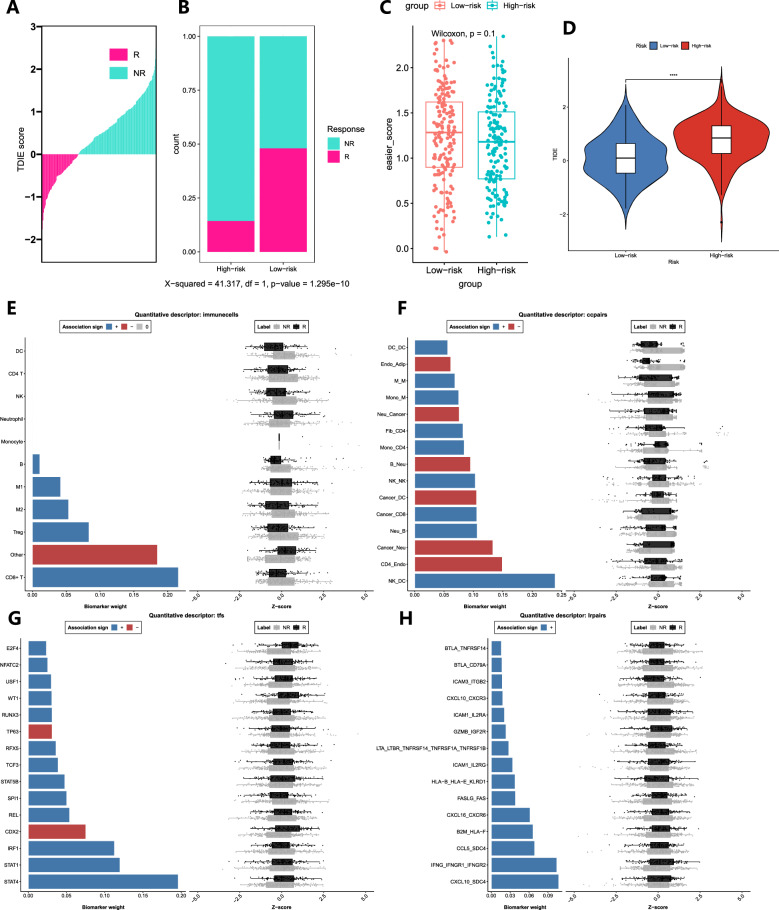
Four memory B-cell-associated miRNAs (hsa-mir-145, hsa-mir-125b-2, hsa-mir-100, hsa-mir-221) with significant correlations to OS were identified and used to construct a prognostic model. Time-dependent receiver operating characteristic (ROC) curve analysis confirmed the feasibility of the model. Kaplan‒Meier (K‒M) survival curve analysis showed that the prognosis was poor in the high-risk group. Comprehensive analysis showed that patients in the high-risk group had higher immune scores, matrix scores, and immune cell infiltration and a poor immune response. In terms of drug screening, we predicted eight drugs with higher sensitivity in the high-risk group, of which CGP-60474 was associated with the greatest sensitivity.
In summary, we identified memory B-cell-associated miRNA prognostic features and constructed a novel risk model for STAD based on scRNA-seq data and bulk RNA-seq data. Among patients in the high-risk group, STAD showed the highest sensitivity to CGP-60474. This study provides prognostic insights into individualized and precise treatment for STAD patients.
记忆 B 细胞和 microRNAs(miRNAs)在胃腺癌(GAC)的进展中发挥重要作用,也称为胃腺癌(STAD)。然而,很少有研究探讨利用记忆 B 细胞相关 miRNAs 来预测 STAD 的预后。
我们通过单细胞 RNA 测序(scRNA-seq)鉴定记忆 B 细胞的标记基因,并通过构建 mRNA-miRNA 共表达网络来鉴定与记忆 B 细胞相关的 miRNAs。然后,使用单变量 Cox、随机生存森林(RSF)和逐步多 Cox 回归(StepCox)算法来识别与总生存期(OS)显著相关的记忆 B 细胞相关 miRNAs。使用这些 miRNAs 构建并验证预后风险模型,并将患者分为低风险组和高风险组。此外,分析两组间临床病理特征、肿瘤微环境、免疫阻断治疗和抗癌药物敏感性的差异。
鉴定出 4 个与 OS 显著相关的记忆 B 细胞相关 miRNAs(hsa-mir-145、hsa-mir-125b-2、hsa-mir-100、hsa-mir-221),并用于构建预后模型。时间依赖性接受者操作特征(ROC)曲线分析证实了该模型的可行性。Kaplan-Meier(K-M)生存曲线分析表明,高风险组预后较差。综合分析表明,高风险组患者的免疫评分、基质评分和免疫细胞浸润更高,免疫反应较差。在药物筛选方面,我们预测了高风险组中 8 种敏感性更高的药物,其中 CGP-60474 与最大敏感性相关。
总之,我们基于 scRNA-seq 数据和批量 RNA-seq 数据鉴定了记忆 B 细胞相关 miRNA 预后特征,并构建了一个新的 STAD 风险模型。在高风险组患者中,STAD 对 CGP-60474 的敏感性最高。这项研究为 STAD 患者的个体化和精准治疗提供了预后见解。