Department of Gastroenterology and Hepatology, Amsterdam UMC, Amsterdam, The Netherlands.
Department of Medicine, Karolinska Institutet, Solna, Sweden.
J Crohns Colitis. 2023 Dec 30;17(12):1897-1909. doi: 10.1093/ecco-jcc/jjad151.
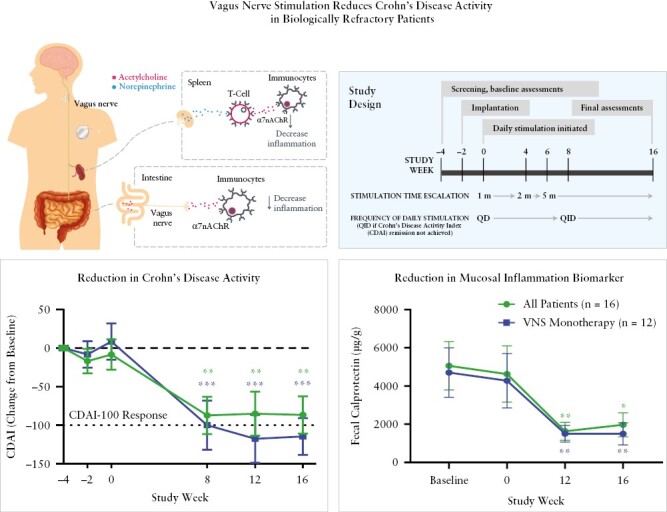
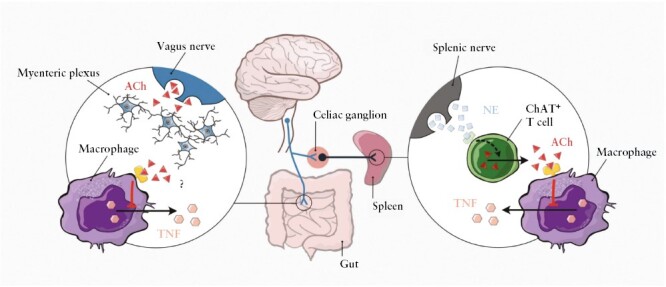
Crohn's disease [CD] is a debilitating, inflammatory condition affecting the gastrointestinal tract. There is no cure and sustained clinical and endoscopic remission is achieved by fewer than half of patients with current therapies. The immunoregulatory function of the vagus nerve, the 'inflammatory reflex', has been established in patients with rheumatoid arthritis and biologic-naive CD. The aim of this study was to explore the safety and efficacy of vagus nerve stimulation in patients with treatment-refractory CD, in a 16-week, open-label, multicentre, clinical trial.
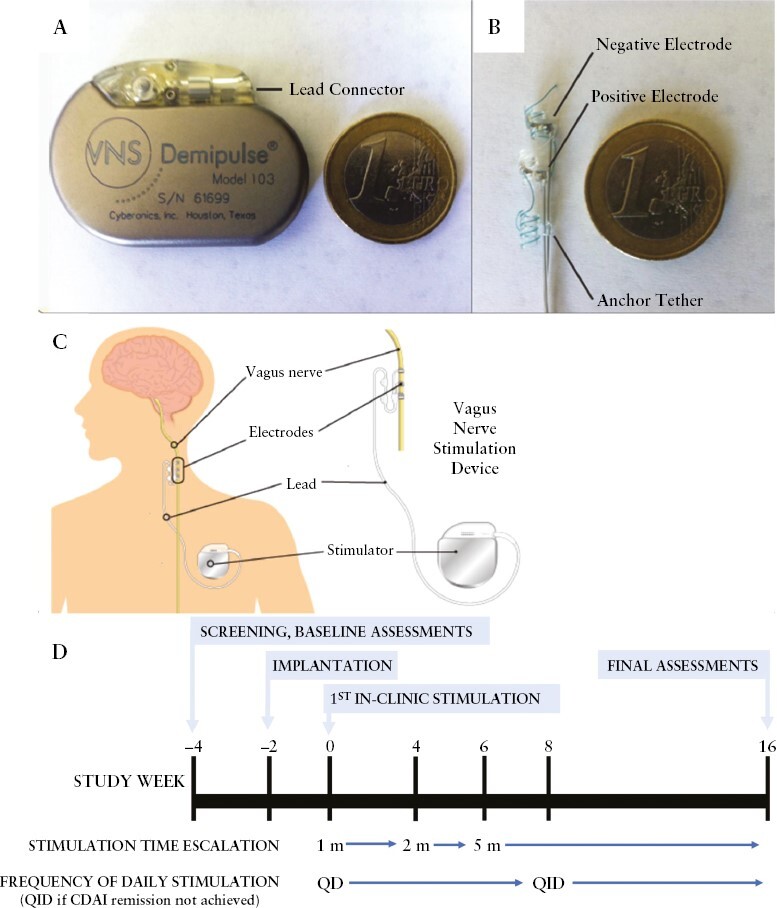
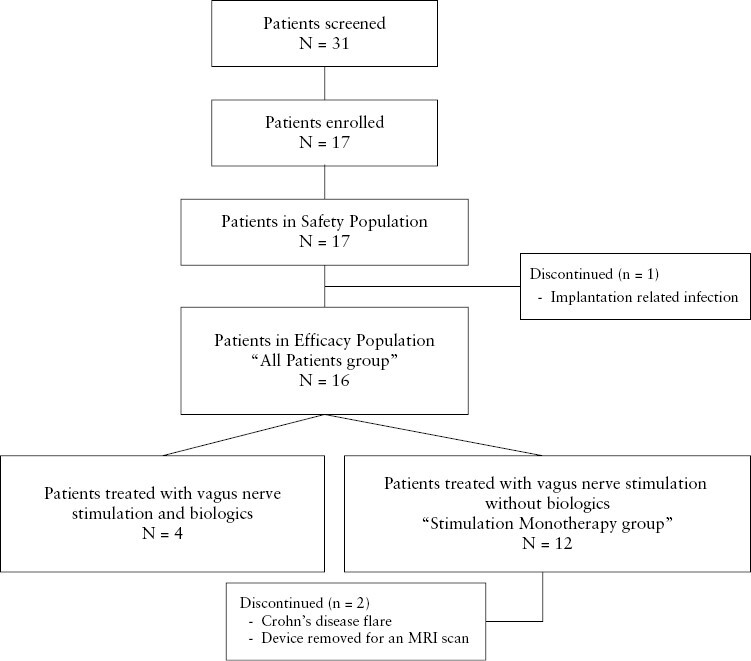
A vagus nerve stimulator was implanted in 17 biologic drug-refractory patients with moderately to severely active CD. One patient exited the study pre-treatment, and 16 patients were treated with vagus nerve stimulation [4/16 receiving concomitant biologics] during 16 weeks of induction and 24 months of maintenance treatment. Endpoints included clinical improvement, patient-reported outcomes, objective measures of inflammation [endoscopic/molecular], and safety.
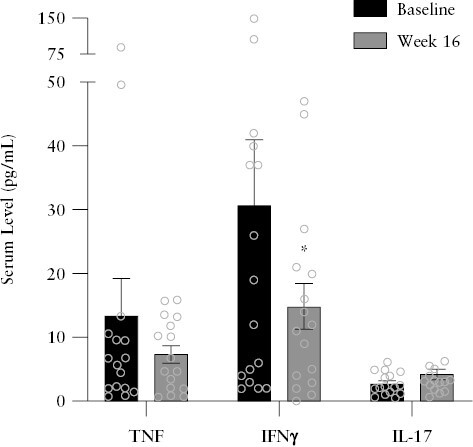
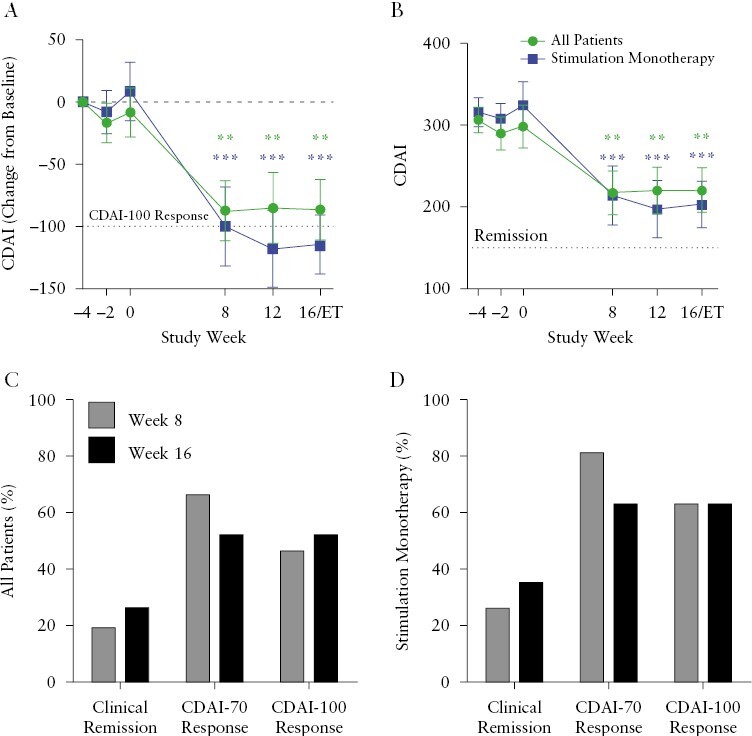
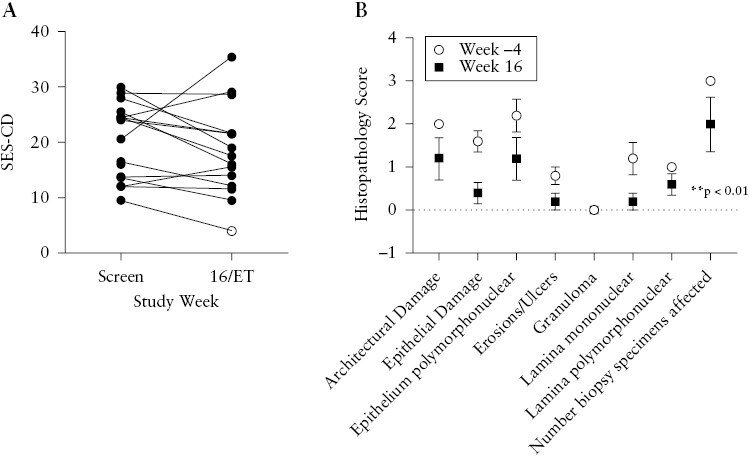
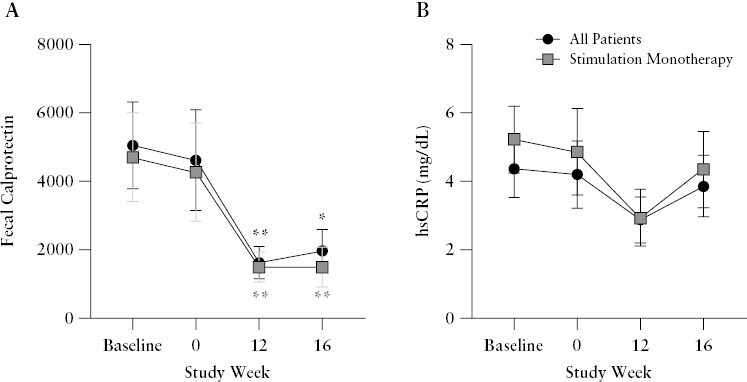
There was a statistically significant and clinically meaningful decrease in CD Activity Index at Week 16 [mean ± SD: -86.2 ± 92.8, p = 0.003], a significant decrease in faecal calprotectin [-2923 ± 4104, p = 0.015], a decrease in mucosal inflammation in 11/15 patients with paired endoscopies [-2.1 ± 1.7, p = 0.23], and a decrease in serum tumour necrosis factor and interferon-γ [46-52%]. Two quality-of-life indices improved in 7/11 patients treated without biologics. There was one study-related severe adverse event: a postoperative infection requiring device explantation.
Neuroimmune modulation via vagus nerve stimulation was generally safe and well tolerated, with a clinically meaningful reduction in clinical disease activity associated with endoscopic improvement, reduced levels of faecal calprotectin and serum cytokines, and improved quality of life.
克罗恩病(CD)是一种使人虚弱的炎症性疾病,影响胃肠道。目前的治疗方法,只有不到一半的患者能达到持续的临床和内镜缓解。迷走神经的免疫调节功能,即“炎症反射”,在类风湿关节炎和初治 CD 患者中已得到证实。本研究旨在探讨迷走神经刺激在生物制剂难治性 CD 患者中的安全性和疗效,这是一项为期 16 周、开放标签、多中心的临床试验。
17 例生物制剂难治性中重度活动期 CD 患者植入迷走神经刺激器。1 例患者在治疗前退出研究,16 例患者接受迷走神经刺激治疗[16 例中的 4 例同时接受生物制剂治疗],在 16 周诱导期和 24 个月维持治疗期间接受治疗。终点包括临床改善、患者报告的结果、炎症的客观指标[内镜/分子]和安全性。
第 16 周时 CD 活动指数有统计学显著和临床显著下降[平均±SD:-86.2±92.8,p=0.003],粪便钙卫蛋白显著下降[-2923±4104,p=0.015],15 例配对内镜检查中有 11 例黏膜炎症减轻[-2.1±1.7,p=0.23],血清肿瘤坏死因子和干扰素-γ下降[46-52%]。11 例未接受生物制剂治疗的患者中有 2 项生活质量指数改善。有 1 例与研究相关的严重不良事件:术后感染导致器械取出。
通过迷走神经刺激进行神经免疫调节通常是安全且耐受良好的,与临床疾病活动的显著减轻相关,内镜改善、粪便钙卫蛋白和血清细胞因子水平降低,生活质量提高。