Department of Anesthesiology, Dalian Municipal Central Hospital, Dalian, Liaoning, China.
China Medical University, Shenyang, China.
J Anesth. 2023 Dec;37(6):914-922. doi: 10.1007/s00540-023-03254-9. Epub 2023 Sep 23.
In the context of the current comfort medicine and enhanced recovery after surgery, there is a demand for a new anesthesia method to reduce adverse reactions and accelerate recovery after surgery. This randomized controlled trial aimed to compare the efficacy and safety between opioid-free anesthesia (OFA) combined with ultrasound-guided intermediate cervical plexus block (ICPB) and opioid-based anesthesia in patients after thyroid surgery.
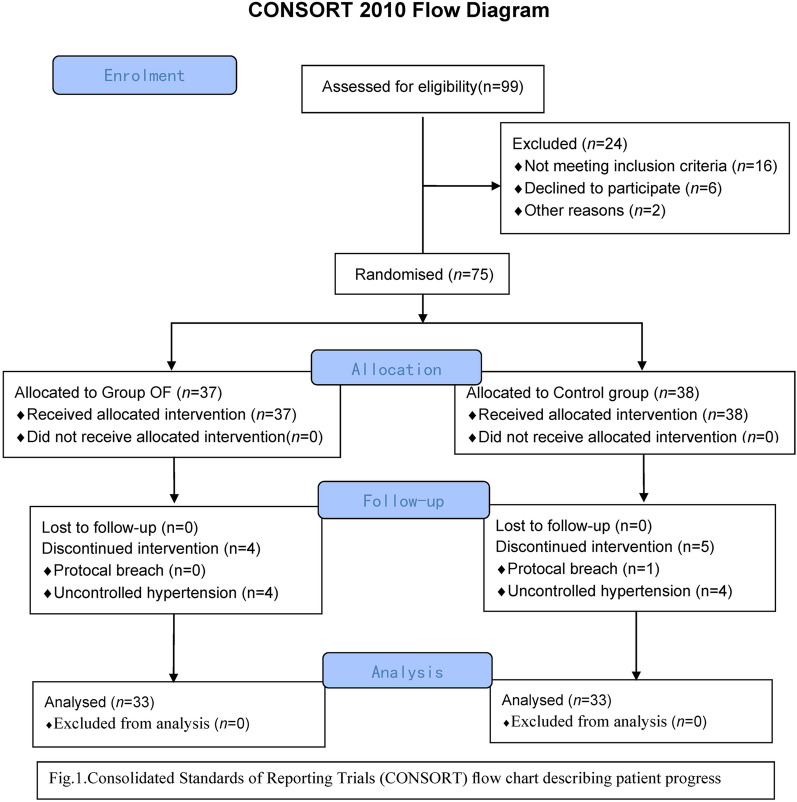
In this study, 75 patients scheduled for thyroid surgery under general anesthesia were randomly allocated into two groups. The primary outcome included the incidence of nausea within 24 h after surgery. The main secondary outcomes included the incidence of vomiting and the visual analog score (VAS) scores within 24 h after surgery as well as the quality of recovery 40 questionnaires (QoR-40) scores 24 h after surgery.
In the OFA group, the incidence of postoperative nausea was 6.1%, compared to 39.4% in the control group (p = 0.001). No patient presented with postoperative vomiting in the OFA group, while 15.2% of patients suffered from postoperative vomiting in the control group (p = 0.063). The VAS scores of patients in the postanesthetic care unit (PACU) and 2 h, 4 h, and 6 h after surgery were lower in the OFA group, and the difference is statistically significant. Besides, the VAS scores of patients at rest (p = 1.000) and during swallowing (p = 1.000) 24 h after surgery were comparable.
Compared with opioid-based anesthesia, the OFA combined with the ultrasound-guided ICPB can better improve patients' postoperative recovery, reduce nausea, and decrease pain scores.
Chinese Clinical Trial Regisrty, ChiCTR2200056344, https://www.chictr.org.cn.
在当前的舒适医疗和手术后加速康复背景下,人们需要一种新的麻醉方法来减少不良反应并加速手术后的康复。本随机对照试验旨在比较无阿片麻醉(OFA)联合超声引导下颈丛神经阻滞(ICPB)与阿片类药物麻醉在甲状腺手术后患者中的疗效和安全性。
本研究将 75 例拟全身麻醉下行甲状腺手术的患者随机分为两组。主要结局包括术后 24 小时内恶心的发生率。主要次要结局包括术后 24 小时内呕吐的发生率和视觉模拟评分(VAS)评分以及术后 24 小时的 QoR-40 评分。
OFA 组术后恶心的发生率为 6.1%,而对照组为 39.4%(p=0.001)。OFA 组无患者出现术后呕吐,而对照组有 15.2%的患者出现术后呕吐(p=0.063)。OFA 组患者在麻醉后恢复室(PACU)以及术后 2、4、6 小时的 VAS 评分较低,差异有统计学意义。此外,OFA 组患者术后 24 小时静息(p=1.000)和吞咽时(p=1.000)的 VAS 评分无差异。
与阿片类药物麻醉相比,OFA 联合超声引导下 ICPB 可更好地改善患者术后恢复,减少恶心,并降低疼痛评分。
中国临床试验注册中心,ChiCTR2200056344,https://www.chictr.org.cn。