HIV and AIDS Malignancy Branch, National Cancer Institute, Bethesda, MD, 20892, USA.
Frederick National Laboratory for Cancer Research, Frederick, MD, USA.
J Transl Med. 2023 Sep 22;21(1):653. doi: 10.1186/s12967-023-04517-5.
Kaposi sarcoma (KS) is a multicentric tumor caused by Kaposi sarcoma herpesvirus (KSHV) that leads to morbidity and mortality among people with HIV worldwide. KS commonly involves the skin but can occur in the gastrointestinal tract (GI) in severe cases.
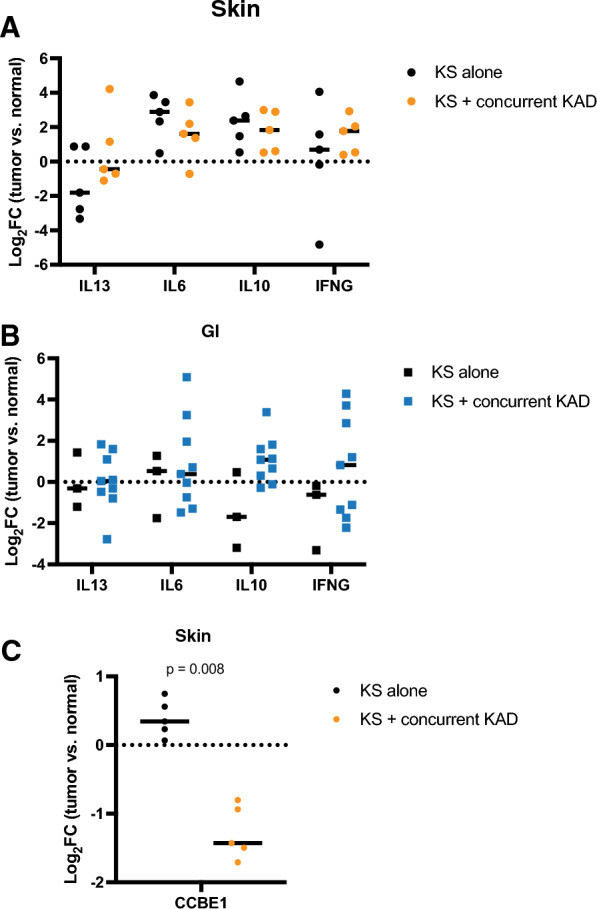
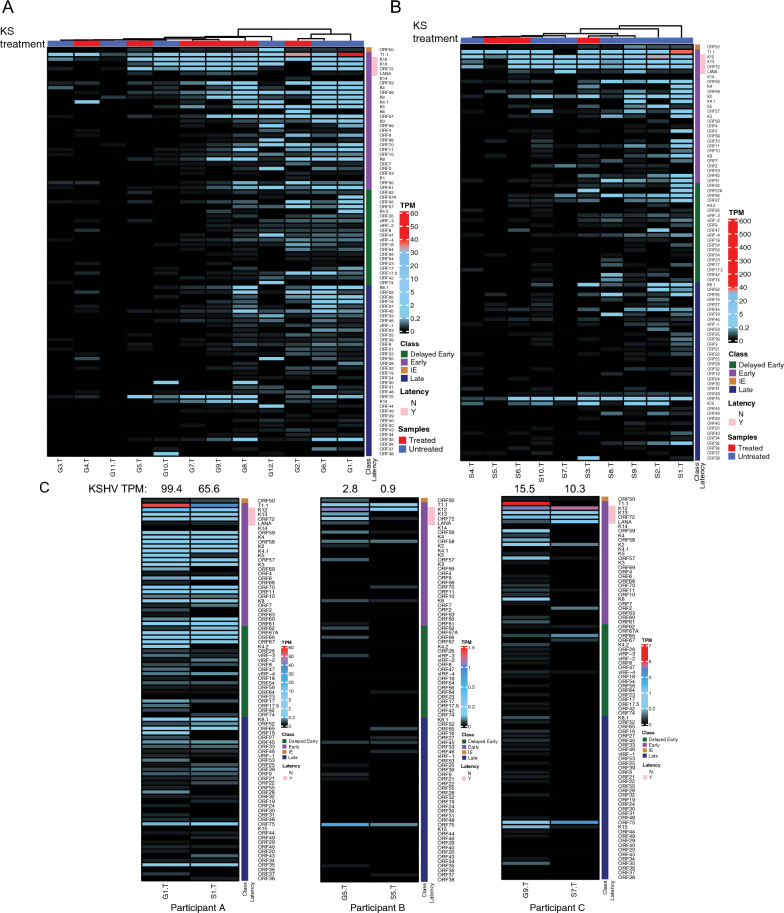
RNA sequencing was used to compare the cellular and KSHV gene expression signatures of skin and GI KS lesions in 44 paired samples from 19 participants with KS alone or with concurrent KSHV-associated diseases. Analyses of KSHV expression from KS lesions identified transcriptionally active areas of the viral genome.
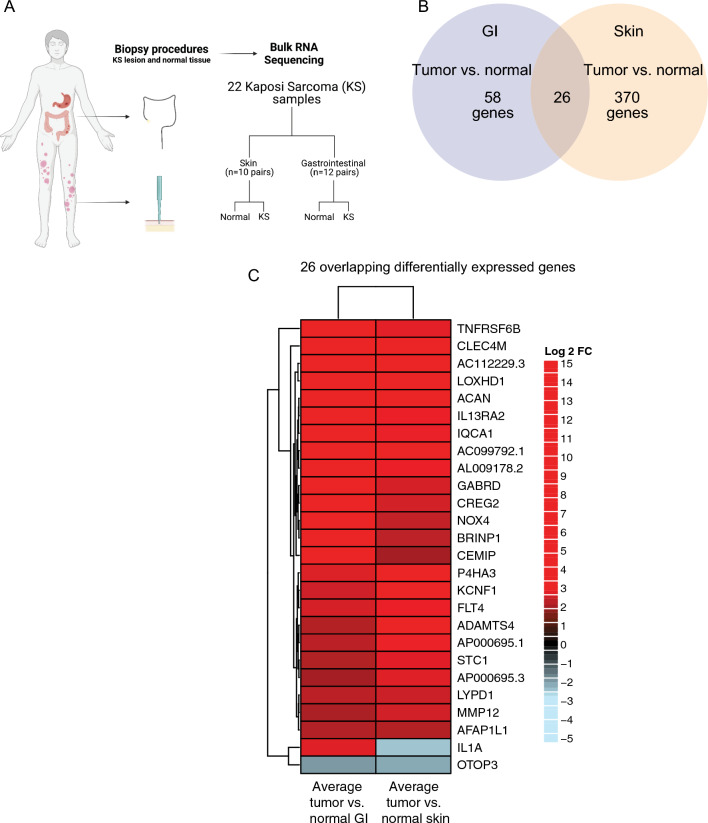
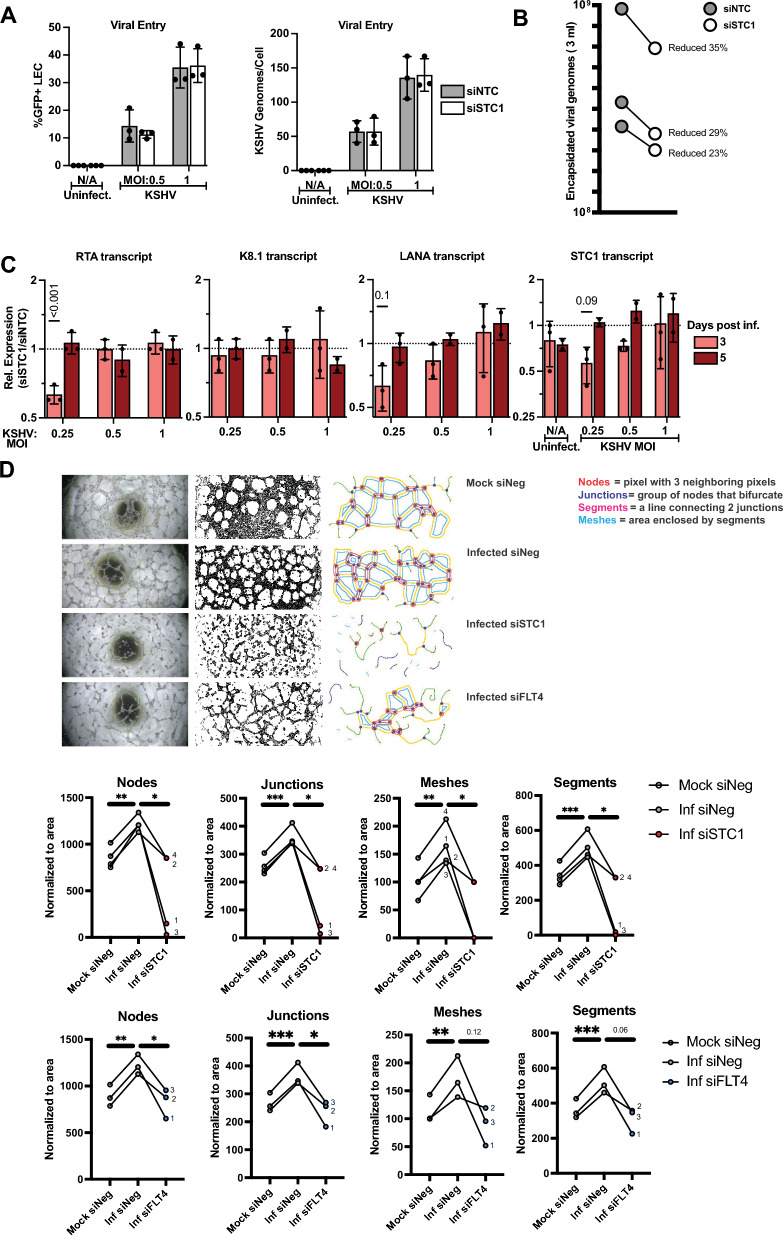
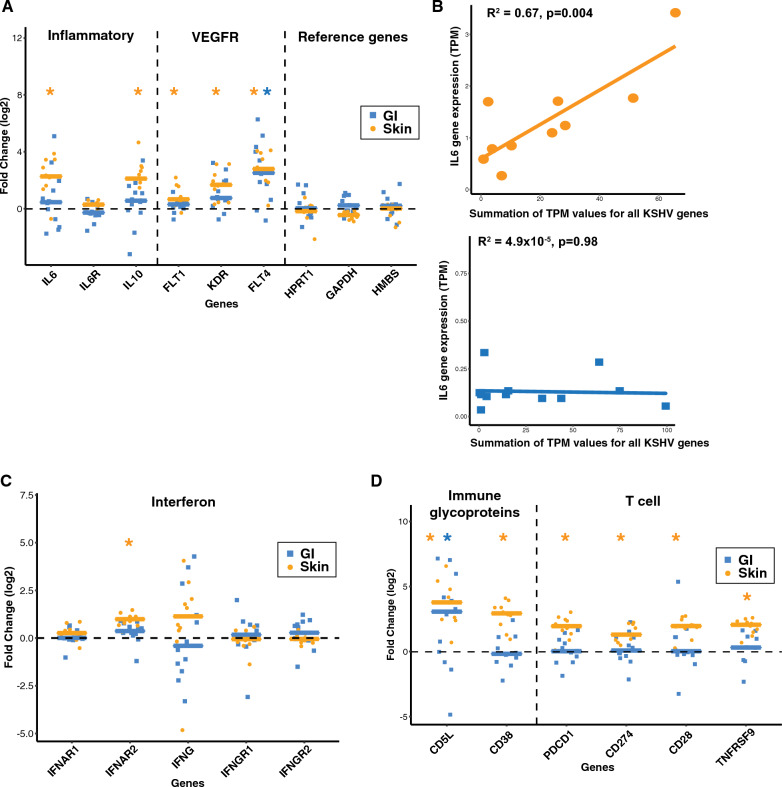
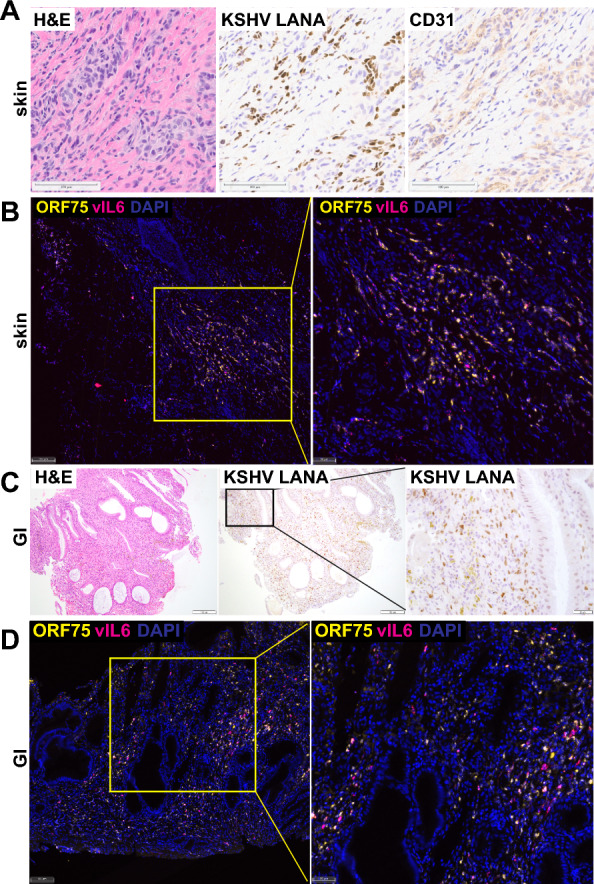
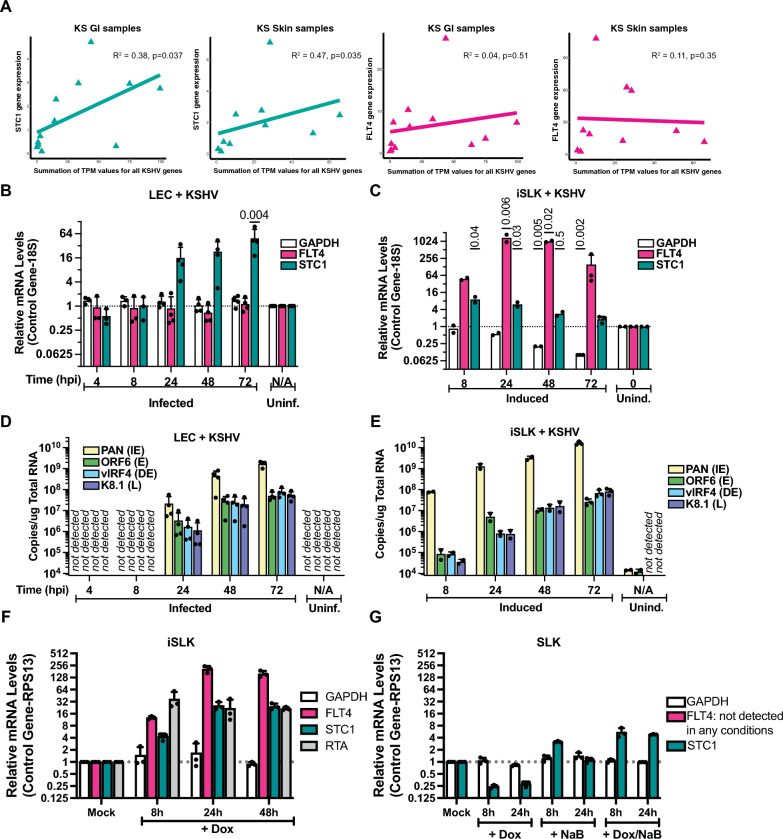
The transcript of an essential viral lytic gene, ORF75, was detected in 91% of KS lesions. Analyses of host genes identified 370 differentially expressed genes (DEGs) unique to skin KS and 58 DEGs unique to GI KS lesions as compared to normal tissue. Interleukin (IL)-6 and IL-10 gene expression were higher in skin lesions as compared to normal skin but not in GI KS lesions. Twenty-six cellular genes were differentially expressed in both skin and GI KS tissues: these included Fms-related tyrosine kinase 4 (FLT4), encoding an angiogenic receptor, and Stanniocalcin 1 (STC1), a secreted glycoprotein. FLT4 and STC1 were further investigated in functional studies using primary lymphatic endothelial cells (LECs). In these models, KSHV infection of LECs led to increased tubule formation that was impaired upon knock-down of STC1 or FLT4.
This study of transcriptional profiling of KS tissue provides novel insights into the characteristics and pathogenesis of this unique virus-driven neoplasm.
卡波西肉瘤(KS)是一种由卡波西肉瘤疱疹病毒(KSHV)引起的多中心肿瘤,导致全球 HIV 感染者的发病率和死亡率。KS 通常涉及皮肤,但在严重情况下也可能发生在胃肠道(GI)中。
使用 RNA 测序比较了 19 名单独患有 KS 或同时患有 KSHV 相关疾病的参与者的 44 对皮肤和 GI KS 病变的细胞和 KSHV 基因表达特征。对 KS 病变中 KSHV 表达的分析确定了病毒基因组转录活跃的区域。
在 91%的 KS 病变中检测到了一种必需的病毒裂解基因 ORF75 的转录本。对宿主基因的分析鉴定出 370 个在皮肤 KS 中特异性表达的差异表达基因(DEG)和 58 个在 GI KS 病变中特异性表达的 DEG,与正常组织相比。与正常皮肤相比,皮肤病变中白细胞介素(IL)-6 和 IL-10 基因的表达更高,但 GI KS 病变中没有。在皮肤和 GI KS 组织中均有 26 个细胞基因差异表达:其中包括编码血管生成受体的 Fms 相关酪氨酸激酶 4(FLT4)和分泌糖蛋白 Stanniocalcin 1(STC1)。在使用原代淋巴内皮细胞(LEC)的功能研究中进一步研究了 FLT4 和 STC1。在这些模型中,KSHV 感染 LEC 导致管腔形成增加,而 STC1 或 FLT4 的敲低则损害了管腔形成。
本研究对 KS 组织的转录谱分析为这种独特的病毒驱动肿瘤的特征和发病机制提供了新的见解。