Duke-NUS Medical School, Programme in Health Services and Systems Research, 8 College Road, Singapore, 169857, Singapore.
Centre for Ageing Research and Education, Duke-NUS Medical School, Singapore, Singapore.
BMC Geriatr. 2023 Sep 22;23(1):586. doi: 10.1186/s12877-023-04294-2.
Falls in older adults are the result of a complex web of interacting causes, that further results in other physical, emotional, and psychological sequelae. A conceptual framework that represents the reciprocal dynamics of these causal factors can enable clinicians, researchers, and policymakers to clarify goals in falls intervention in older adults.
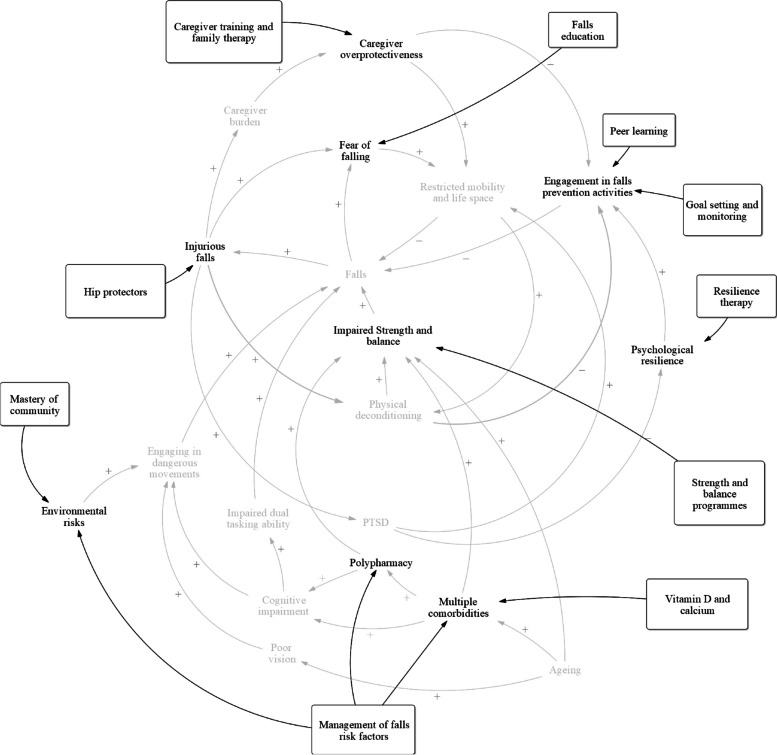
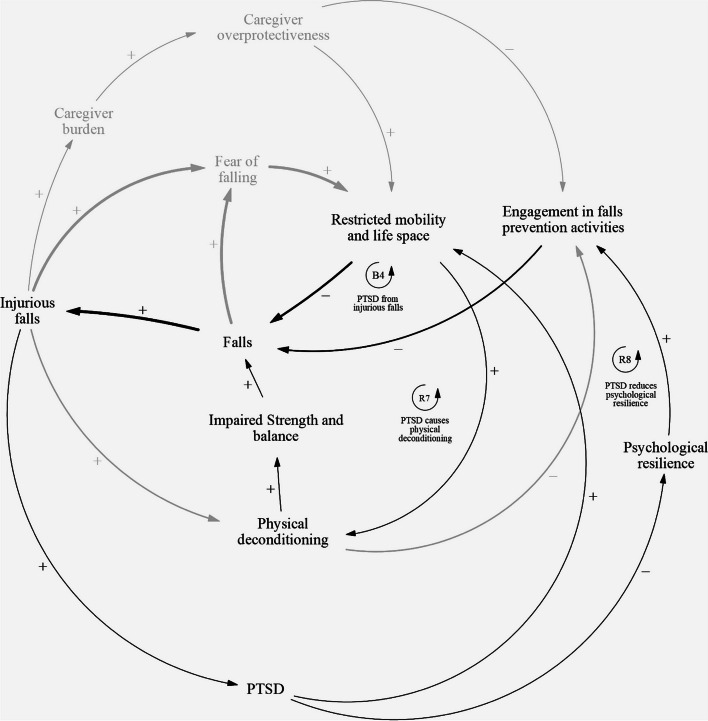
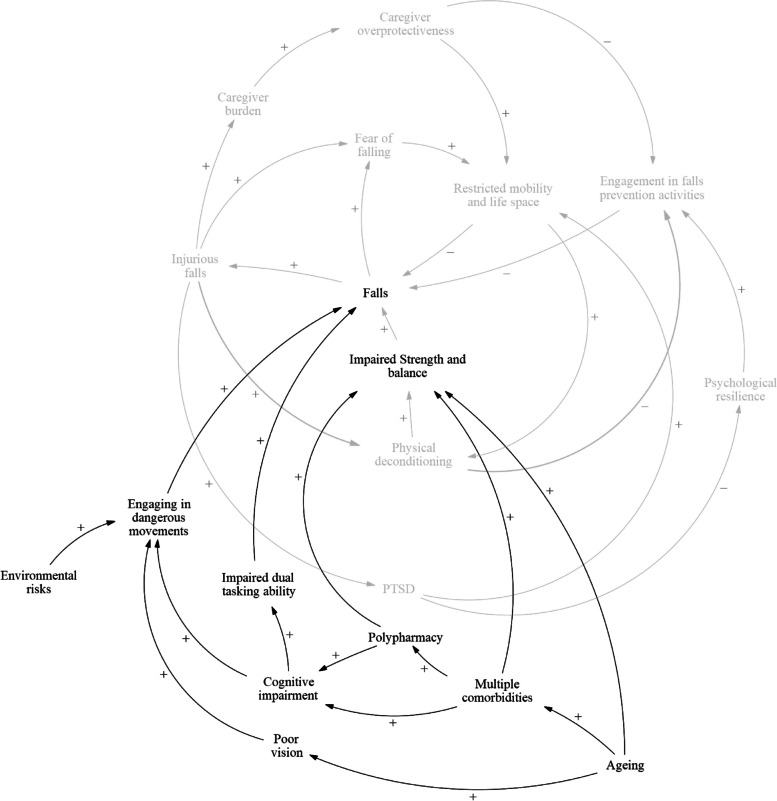
A Group Model Building (GMB) exercise was conducted with researchers and clinicians from academic units and public healthcare institutes in Singapore. The aim of the exercise was to produce a shared visual representation of the causal structure for falls and engage in discussions on how current and future falls intervention programmes can address falls in the older adults, especially in the Asian context. It was conducted in four steps: 1) Outlining and prioritising desirable patient outcomes, 2) Conceptual model building, 3) Identifying key intervention elements of effective falls intervention programmes, 4) Mapping of interventions to outcomes. This causal loop diagram (CLD) was then used to generate insights into the current understanding of falls causal relationships, current efforts in falls intervention in Singapore, and used to identify gaps in falls research that could be further advanced in future intervention studies.
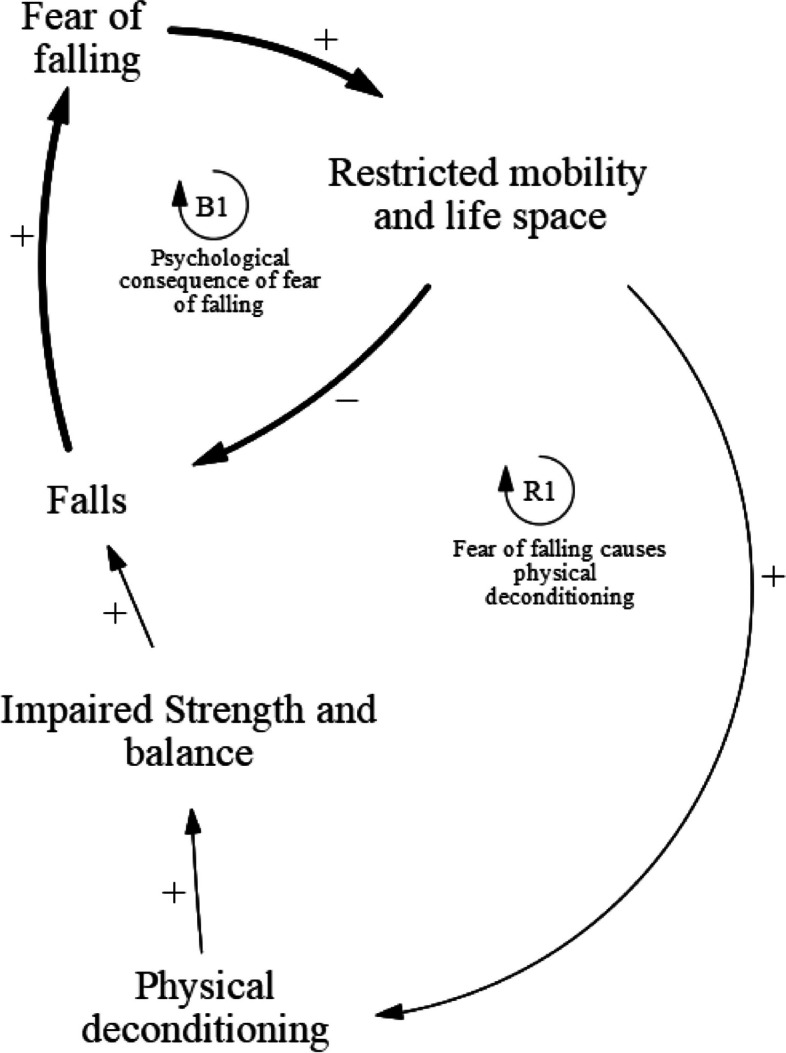
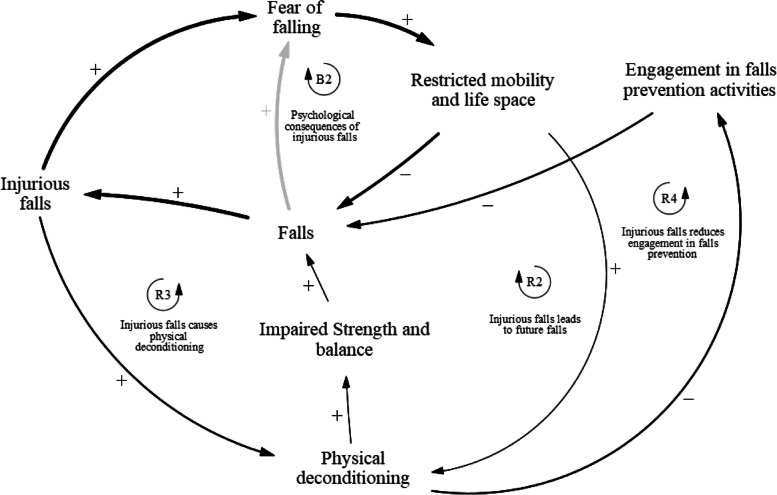
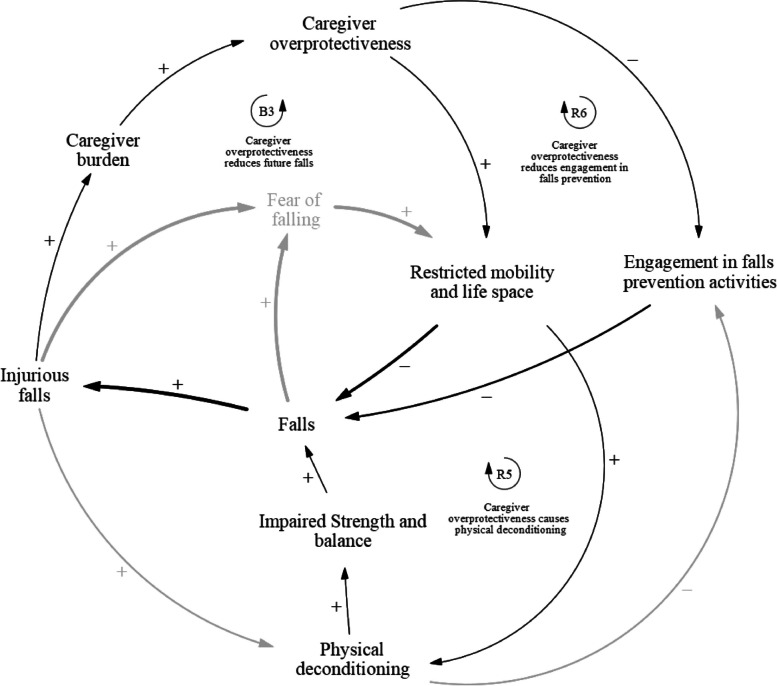
Four patient outcomes were identified by the group as key in falls intervention: 1) Falls, 2) Injurious falls, 3) Fear of falling, and 4) Restricted mobility and life space. A CLD of the reciprocal relationships between risk factors and these outcomes are represented in four sub-models: 1) Fear of falling, 2) Injuries associated with falls, 3) Caregiver overprotectiveness, 4) Post-traumatic stress disorder and psychological resilience. Through this GMB exercise, the group gained the following insights: (1) Psychological sequelae of falls is an important falls intervention outcome. (2) The effects of family overprotectiveness, psychological resilience, and PTSD in exacerbating the consequences of falls are not well understood. (3) There is a need to develop multi-component falls interventions to address the multitude of falls and falls related sequelae.
This work illustrates the potential of GMB to promote shared understanding of complex healthcare problems and to provide a roadmap for the development of more effective preventive actions.
老年人跌倒的原因是一系列相互作用的复杂因素导致的,这些因素还会导致其他身体、情感和心理方面的后果。一个能够代表这些因果因素相互作用的概念框架,可以使临床医生、研究人员和政策制定者能够明确老年人跌倒干预的目标。
在新加坡的学术单位和公共医疗研究所的研究人员和临床医生中进行了小组建模(Group Model Building,GMB)练习。该练习的目的是生成一个关于跌倒的因果结构的共享可视化表示,并就如何针对老年人,特别是亚洲老年人的当前和未来的跌倒干预计划来解决跌倒问题进行讨论。该练习分为四个步骤:1)概述和优先考虑期望的患者结果;2)概念模型构建;3)确定有效的跌倒干预计划的关键干预要素;4)将干预措施映射到结果上。然后,使用该因果关系图(Causal Loop Diagram,CLD)深入了解当前对跌倒因果关系的理解、新加坡目前在跌倒干预方面的努力,并用于确定未来干预研究中可以进一步推进的跌倒研究中的差距。
小组确定了四个关键的患者跌倒干预结果:1)跌倒;2)受伤跌倒;3)恐摔;4)行动受限和生活空间受限。CLD 代表了风险因素与这些结果之间的相互关系,包括四个子模型:1)恐摔;2)跌倒相关伤害;3)照顾者过度保护;4)创伤后应激障碍和心理弹性。通过 GMB 练习,小组获得了以下见解:1)跌倒的心理后果是一个重要的跌倒干预结果;2)家庭过度保护、心理弹性和 PTSD 对加剧跌倒后果的影响尚未得到很好的理解;3)需要开发多组件跌倒干预措施来解决众多的跌倒和与跌倒相关的后果。
这项工作说明了 GMB 在促进对复杂医疗保健问题的共同理解和为制定更有效的预防措施提供路线图方面的潜力。