Di Liberto Giovanni M, Nidiffer Aaron, Crosse Michael J, Zuk Nathaniel J, Haro Stephanie, Cantisani Giorgia, Winchester Martin M, Igoe Aoife, McCrann Ross, Chandra Satwik, Lalor Edmund C, Baruzzo Giacomo
School of Computer Science and Statistics, University of Dublin, Trinity College, Ireland; ADAPT Centre, Trinity College Institute of Neuroscience.
Dept Biomedical Engineering, Dept Neuroscience, Del Monte Institute for Neuroscience, Center for Visual Science, University of Rochester, NY, USA.
ArXiv. 2024 Sep 16:arXiv:2309.07671v4.
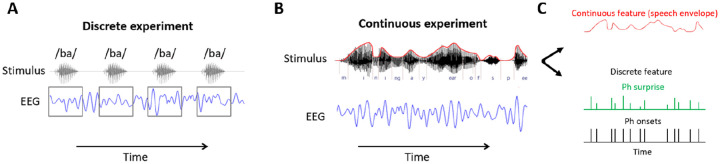
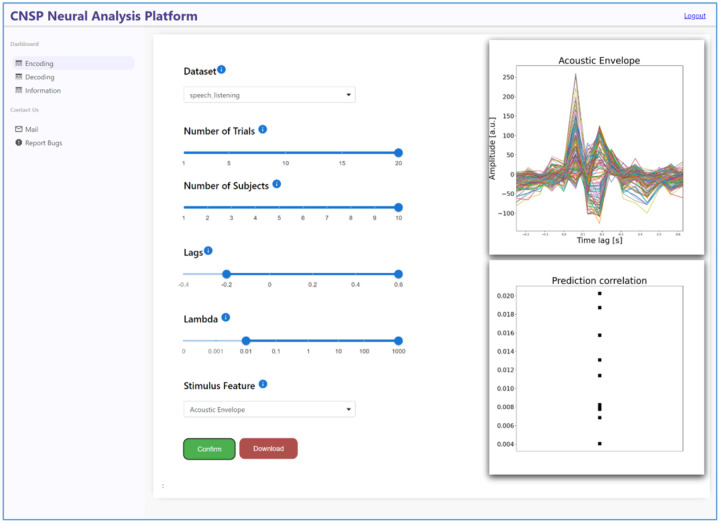
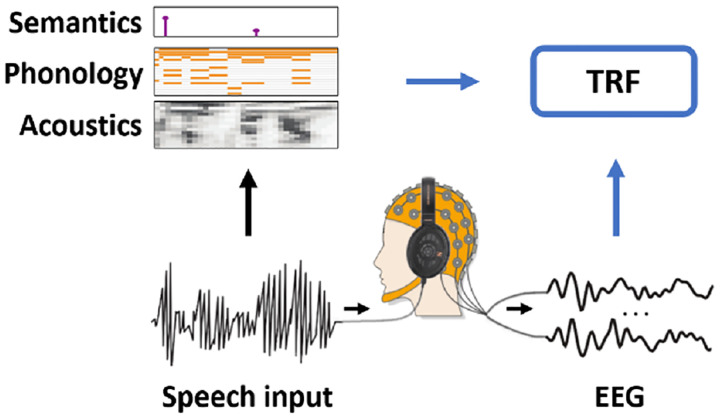
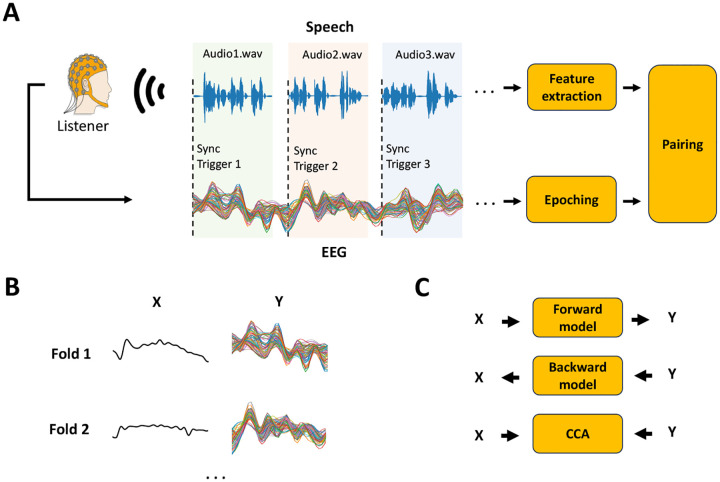
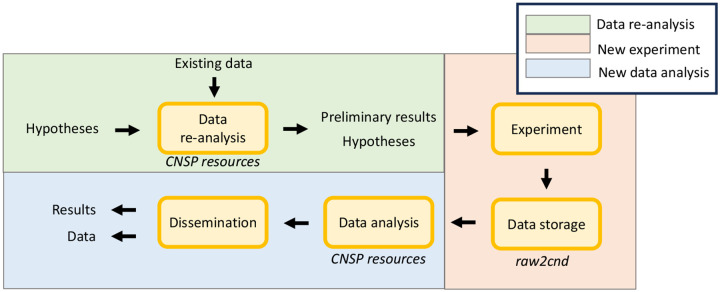
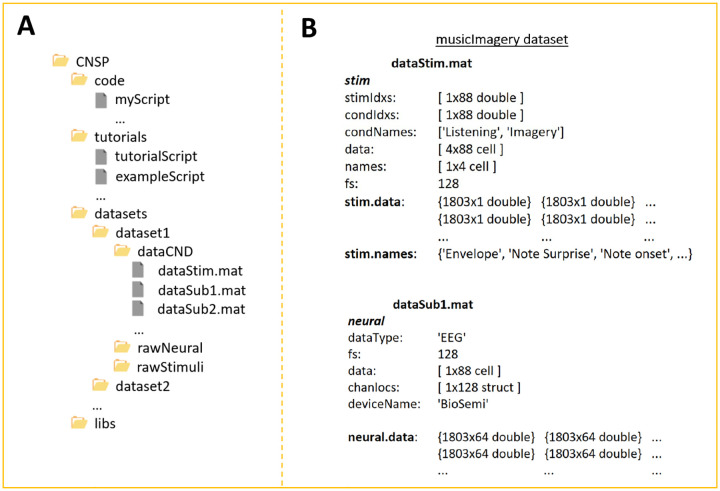
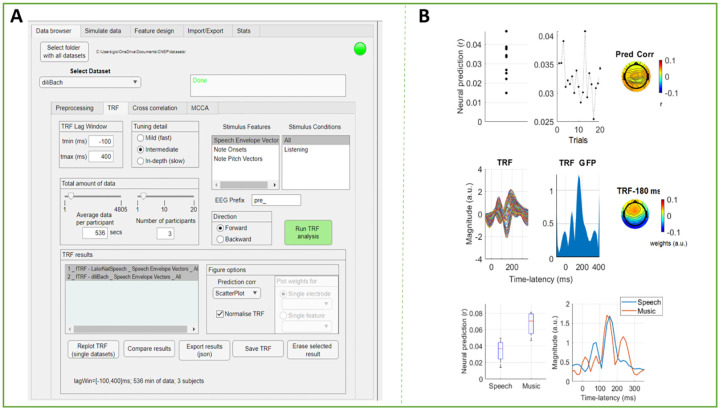
Neurophysiology research has demonstrated that it is possible and valuable to investigate sensory processing in scenarios involving continuous sensory streams, such as speech and music. Over the past 10 years or so, novel analytic frameworks combined with the growing participation in data sharing has led to a surge of publicly available datasets involving continuous sensory experiments. However, open science efforts in this domain of research remain scattered, lacking a cohesive set of guidelines. This paper presents an end-to-end open science framework for the storage, analysis, sharing, and re-analysis of neural data recorded during continuous sensory experiments. We propose a data structure that builds on existing custom structures (Continuous-event Neural Data or CND), providing precise naming conventions and data types, as well as a workflow for storing and loading data in the general-purpose BIDS structure. The framework has been designed to interface with existing EEG/MEG analysis toolboxes, such as Eelbrain, NAPLib, MNE, and mTRF-Toolbox. We present guidelines by taking both the user view (rapidly re-analyse existing data) and the experimenter view (store, analyse, and share), making the process straightforward and accessible. Additionally, we introduce a web-based data browser that enables the effortless replication of published results and data re-analysis.
神经生理学研究表明,在涉及连续感官信息流(如语音和音乐)的场景中研究感官处理是可行且有价值的。在过去大约10年里,新颖的分析框架与越来越多的数据共享参与相结合,导致了大量涉及连续感官实验的公开可用数据集的涌现。然而,该研究领域的开放科学努力仍然分散,缺乏一套连贯的指导方针。本文提出了一个端到端的开放科学框架,用于连续感官实验期间记录的神经数据的存储、分析、共享和重新分析。我们提出了一种基于现有自定义结构(连续事件神经数据或CND)构建的数据结构,提供精确的命名约定和数据类型,以及在通用BIDS结构中存储和加载数据的工作流程。该框架旨在与现有的脑电图/脑磁图分析工具箱(如Eelbrain、NAPLib、MNE和mTRF-Toolbox)接口。我们从用户视角(快速重新分析现有数据)和实验者视角(存储、分析和共享)给出指导方针,使这个过程直接且易于操作。此外,我们引入了一个基于网络的数据浏览器,它能够轻松复制已发表的结果并进行数据重新分析。