Lin Xueying, Wang Feifan, Lu Yuting, Wang Jiarui, Chen Jingwen, Yu Yingxin, Tao Xiaoyu, Xiao Ying, Peng Ye
Faculty of Medicine, Macau University of Science and Technology, Taipa, Macao SAR, 999078, China.
Guangdong-Hong Kong-Macao Joint Laboratory for Contaminants Exposure and Health, Guangdong Key Laboratory of Environmental Catalysis and Health Risk Control, Institute of Environmental Health and Pollution Control, Guangdong University of Technology, Guangzhou, 510006, China.
Curr Res Food Sci. 2023 Sep 16;7:100596. doi: 10.1016/j.crfs.2023.100596. eCollection 2023.
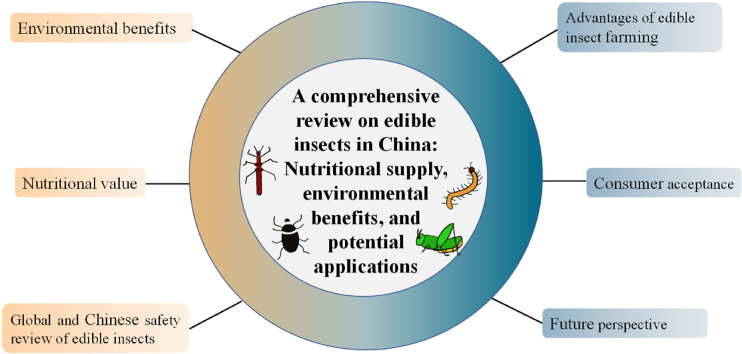
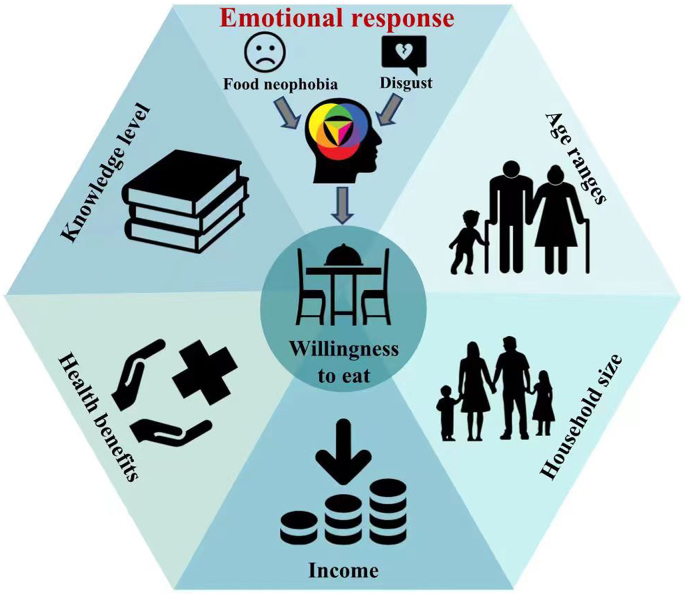
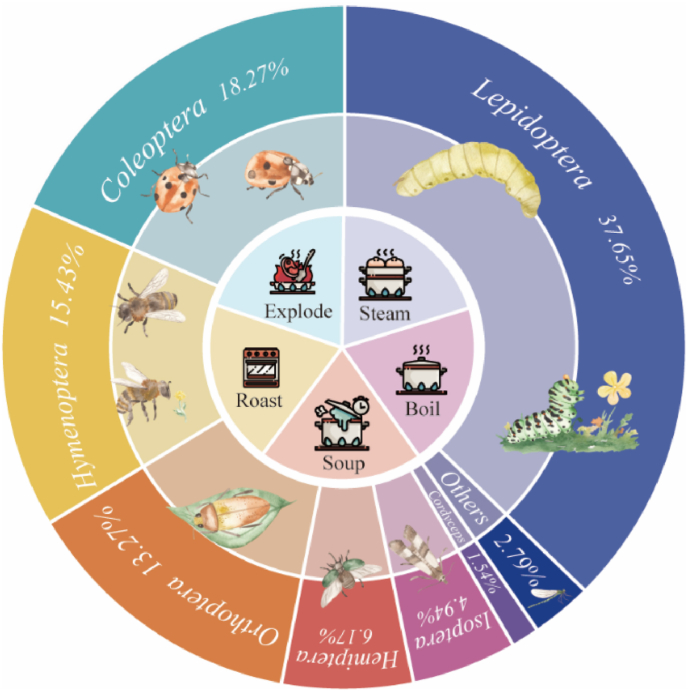
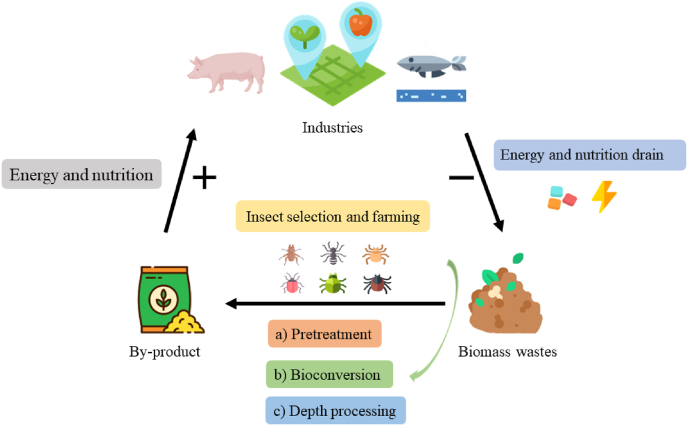
This review explored the potential of edible insects to address the challenges of malnutrition and food security. Although grain production in China has met the Food and Agriculture Organization standards, the shortage of protein supply is still a big issue. Moreover, expanding livestock farming is considered unsustainable and environmentally unfriendly. Edible insects have become an alternative with higher sustainable and ecological properties. There are 324 species of insects currently consumed in China, and they have high nutritional value, with a rich source of protein and unsaturated fatty acids. Insect farming provides numerous benefits, including green feeds for livestock, poultry, and aquaculture, sustainable organic waste management, as well as industrial and pharmaceutical raw materials. The food toxicological evaluations conducted in China indicated that edible insects are safe for general consumption by the Chinese, but allergies and other related food safety issues should not be ignored. Consumer acceptance is another barrier to overcome, with different schemas between China and Western countries. More research on the potential functions of edible insects and their product development may enhance their acceptance in China. Overall, incorporating edible insects into our diet is a promising solution to address challenges related to protein supply and food security. To ensure safety and sustainability, appropriate legislation, quality regulations, large-scale insect farms, and acceptable processing techniques are necessary. Moreover, more scientific research and social awareness are required to promote the culture and utilization of edible insects in China.
本综述探讨了食用昆虫在应对营养不良和粮食安全挑战方面的潜力。尽管中国的粮食产量已达到联合国粮食及农业组织的标准,但蛋白质供应短缺仍是一个大问题。此外,扩大畜牧业被认为是不可持续且对环境不友好的。食用昆虫已成为一种具有更高可持续性和生态特性的替代选择。中国目前有324种昆虫被食用,它们具有很高的营养价值,富含蛋白质和不饱和脂肪酸。昆虫养殖有诸多益处,包括为 livestock、家禽和水产养殖提供绿色饲料、可持续的有机废物管理以及工业和制药原料。中国进行的食品毒理学评估表明,食用昆虫对中国人一般食用是安全的,但过敏和其他相关食品安全问题不容忽视。消费者接受度是另一个需要克服的障碍,中国和西方国家之间存在不同的模式。对食用昆虫潜在功能及其产品开发进行更多研究可能会提高它们在中国的接受度。总体而言,将食用昆虫纳入我们的饮食是应对蛋白质供应和粮食安全相关挑战的一个有前景的解决方案。为确保安全和可持续性,需要适当的立法、质量监管、大规模昆虫养殖场和可接受的加工技术。此外,还需要更多的科学研究和社会意识来促进中国食用昆虫的养殖和利用。