Northwest Institute of Plateau Biology, Chinese Academy of Sciences, Xining, 810008, China.
Qinghai Key Laboratory of Qinghai-Tibet Plateau Biological Resources, Northwest Institute of Plateau Biology, Chinese Academy of Sciences, Xining, 810008, China.
BMC Plant Biol. 2023 Sep 26;23(1):450. doi: 10.1186/s12870-023-04471-w.
Climate fluctuations during the Pleistocene and mountain uplift are vital driving forces affecting geographic distribution. Here, we ask how an annual plant responded to the Pleistocene glacial cycles.
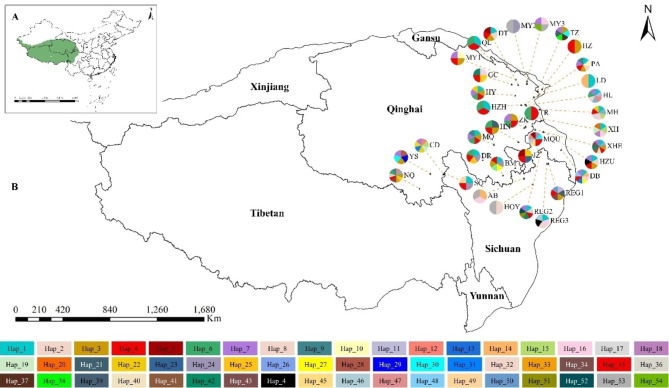
In this study, we analyzed the population demographic history of the annual herb Swertia tetraptera Maxim (Gentianaceae) endemic to Qinghai-Tibetan Plateau (QTP). A total of 301 individuals from 35 populations of S. tetraptera were analyzed based on two maternally inherited chloroplast fragments (trnL-trnF and trnS-trnG). Phylogeographic analysis was combined with species distribution modeling to detect the genetic variations in S. tetraptera.
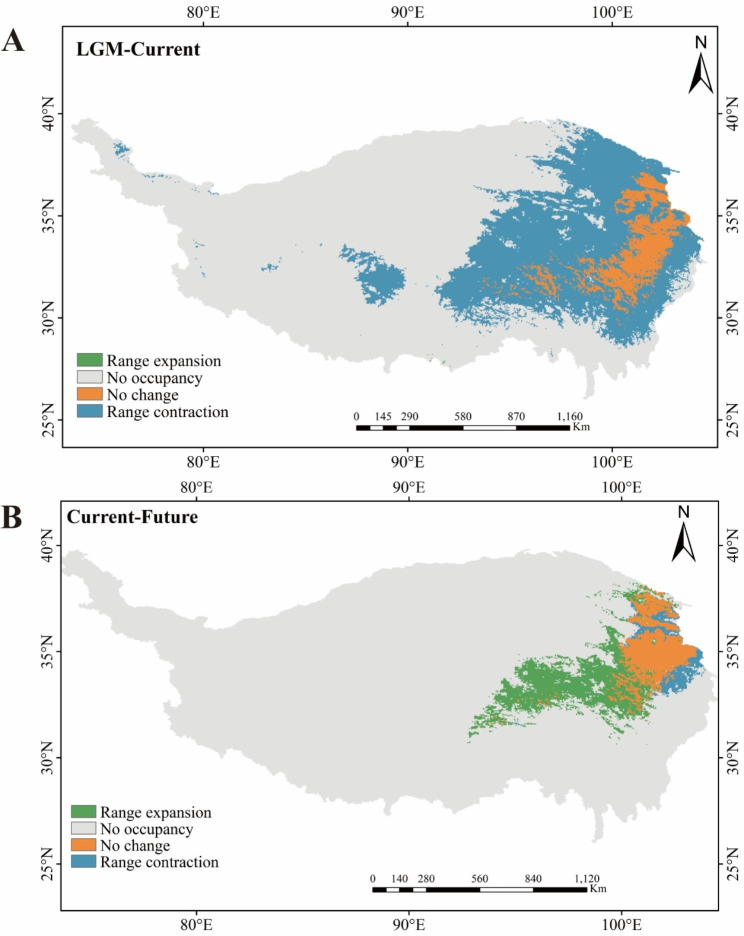
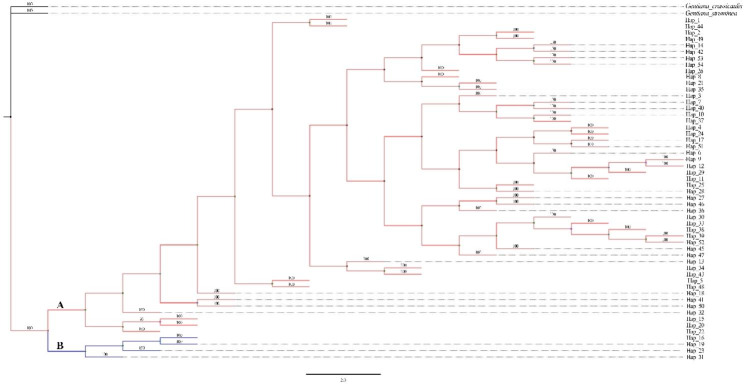
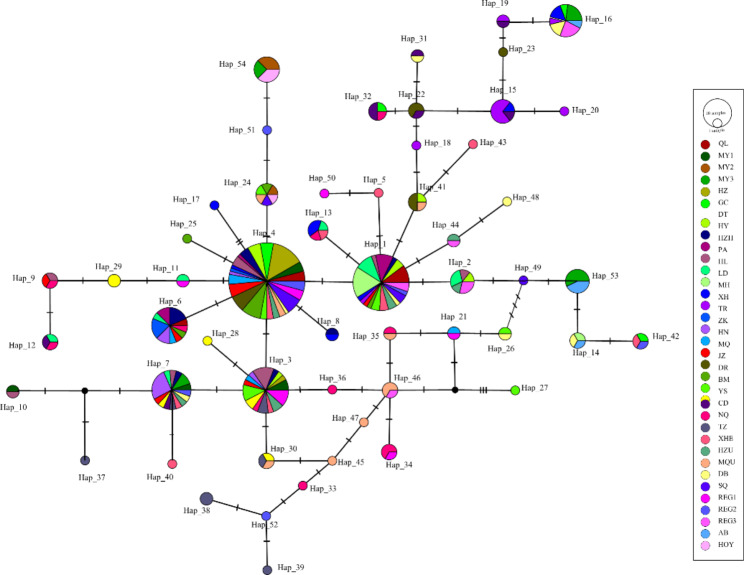
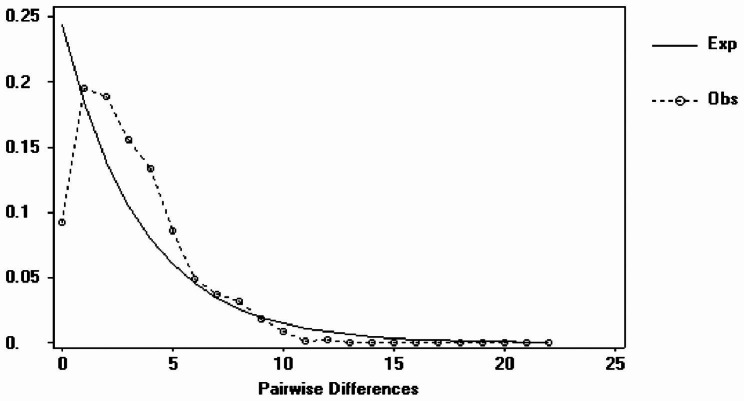
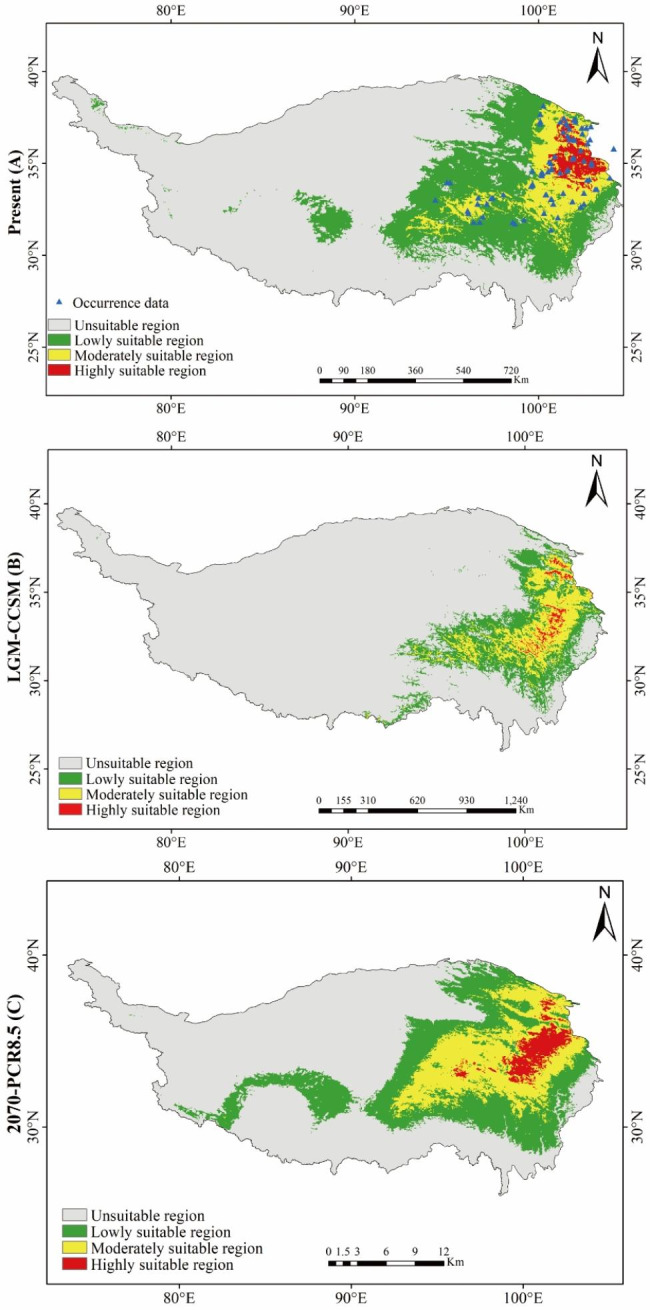
The genetic diversity of S. tetraptera was high, likely due to its wide natural range, high proportion of endemic haplotypes and evolutionary history. Fifty-four haplotypes were identified in S. tetraptera. Only a few haplotypes were widespread (Hap_4, Hap_1, Hap_3), which were dispersed throughout the present geographical range of S. tetraptera, while many haplotypes were confined to single populations. The cpDNA dataset showed that phylogeographic structuring was lacking across the distribution range of S. tetraptera. Analyses of molecular variance showed that most genetic variation was found within populations (70.51%). In addition, the relationships of the haplotypes were almost completely unresolved by phylogenetic reconstruction. Both mismatch distribution analysis and neutrality tests showed a recent expansion across the distribution range of S. tetraptera. The MaxEnt analysis showed that S. tetraptera had a narrow distribution range during the Last Glacial Maximum (LGM) and a wide distribution range during the current time, with predictions into the future showing the distribution range of S. tetraptera expanding.
Our study implies that the current geographic and genetic distribution of S. tetraptera is likely to have been shaped by Quaternary periods. Multiple microrefugia of S. tetraptera existed during Quaternary glaciations. Rapid intraspecific diversification and hybridization and/or introgression may have played a vital role in shaping the current distribution patterns of S. tetraptera. The distribution range of S. tetraptera appeared to have experienced contraction during the LGM; in the future, when the global climate becomes warmer with rising carbon dioxide levels, the distribution of S. tetraptera will expand.
更新世的气候变化和山脉抬升是影响地理分布的重要驱动力。在这里,我们探讨一年生植物如何应对更新世的冰川周期。
本研究分析了青藏高原特有一年生草本獐牙菜(龙胆科)的种群历史动态。基于两个母系遗传的叶绿体片段(trnL-trnF 和 trnS-trnG),对来自 35 个獐牙菜种群的 301 个个体进行了分析。结合物种分布模型进行系统地理学分析,以检测獐牙菜的遗传变异。
獐牙菜的遗传多样性很高,这可能与其广泛的自然分布范围、高比例的特有单倍型和进化历史有关。獐牙菜共鉴定出 54 个单倍型,仅有少数几个单倍型(Hap_4、Hap_1、Hap_3)广泛分布,广泛分布于獐牙菜目前的地理分布范围,而许多单倍型则局限于单个种群。叶绿体数据集显示,獐牙菜的分布范围内不存在系统地理学结构。分子方差分析表明,大多数遗传变异存在于种群内部(70.51%)。此外,通过系统发育重建几乎无法解析单倍型之间的关系。错配分布分析和中性检验均表明,在獐牙菜的分布范围内存在近期扩张。最大熵分析表明,在末次冰期盛期(LGM),獐牙菜的分布范围较窄,而在当前时期分布范围较宽,未来预测表明獐牙菜的分布范围将扩大。
本研究表明,獐牙菜当前的地理和遗传分布可能是由第四纪时期塑造的。在第四纪冰川作用期间,獐牙菜存在多个微避难所。快速的种内多样化和杂交以及/或基因渐渗可能在塑造獐牙菜当前分布模式方面发挥了重要作用。獐牙菜的分布范围在 LGM 期间似乎经历了收缩;在未来,当全球气候随着二氧化碳水平的升高而变暖时,獐牙菜的分布范围将扩大。