Aurora Pallavi, LoSavio Stefanie T, Kimbrel Nathan A, Beckham Jean C, Calhoun Patrick S, Dillon Kirsten H
Durham VA Health Care System, Durham NC, USA.
VA Mid-Atlantic Mental Illness Research, Education and Clinical Center, Durham, NC, USA.
Drug Alcohol Depend Rep. 2023 Jun 15;8:100174. doi: 10.1016/j.dadr.2023.100174. eCollection 2023 Sep.
Shame and guilt are key emotions known to amplify trauma-related symptoms in veterans. Maintenance of symptoms is facilitated by avoidance behaviors, such as substance use. However, limited research has examined the associations between shame, guilt, and substance use in daily life.
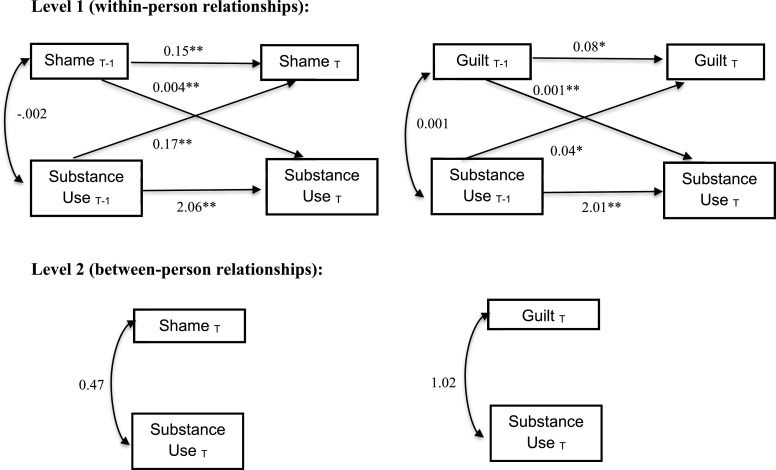
The current study sought to examine the cross-lagged association between shame, guilt, and substance use. Forty veterans completed 28 days of experience sampling reporting on their current emotional experiences and use of substances.
Results suggest a reciprocal relationship among shame and guilt and substance use, such that shame and guilt separately predicted subsequent substance use, and substance use predicted subsequent shame and guilt.
These results highlight the dynamic relationship among shame, guilt, and substance use and suggest the potential value of conceptualizing these clinical targets as mutually reinforcing to inform integrative intervention strategies that can interrupt the in-the-moment cascade of negative consequences.
羞耻感和内疚感是已知会加剧退伍军人创伤相关症状的关键情绪。诸如物质使用等回避行为会促使症状持续存在。然而,仅有有限的研究考察了日常生活中羞耻感、内疚感与物质使用之间的关联。
本研究旨在考察羞耻感、内疚感与物质使用之间的交叉滞后关联。40名退伍军人完成了为期28天的经验抽样,报告他们当前的情绪体验和物质使用情况。
结果表明羞耻感、内疚感与物质使用之间存在相互关系,即羞耻感和内疚感分别预测随后的物质使用,而物质使用则预测随后的羞耻感和内疚感。
这些结果凸显了羞耻感、内疚感与物质使用之间的动态关系,并表明将这些临床靶点概念化为相互强化具有潜在价值,可为能够中断即时负面后果连锁反应的综合干预策略提供信息。