Moiseev Denis, Donskov Sergey, Dubrovin Ivan, Kulyukina Mariya, Vasil'ev Yuriy, Volel Beatrice, Shadieva Shodiya, Babaev Aleksey, Shevelyuk Juliya, Utyuzh Anatolij, Velichko Ellina, Dydykin Sergey, Dydykina Irina, Paramonov Yuri, Faustova Ekaterina
N.I. Pirogov Russian National Research Medical University, Ostrovitianov Str. 1, 117997 Moscow, Russia.
Tver State Medical University, Sovetskaya Str., 4, 170100 Tver, Russia.
Dent J (Basel). 2023 Sep 18;11(9):219. doi: 10.3390/dj11090219.
The prevalence of periodontal diseases is increasing, tends to increase with age and is considered as one of the main causes of tooth loss. To assess the effectiveness of new methods of treatment of periodontal diseases, studies on laboratory animals can be promising.
to develop a new method of accelerated modeling of experimental periodontitis on laboratory animals.
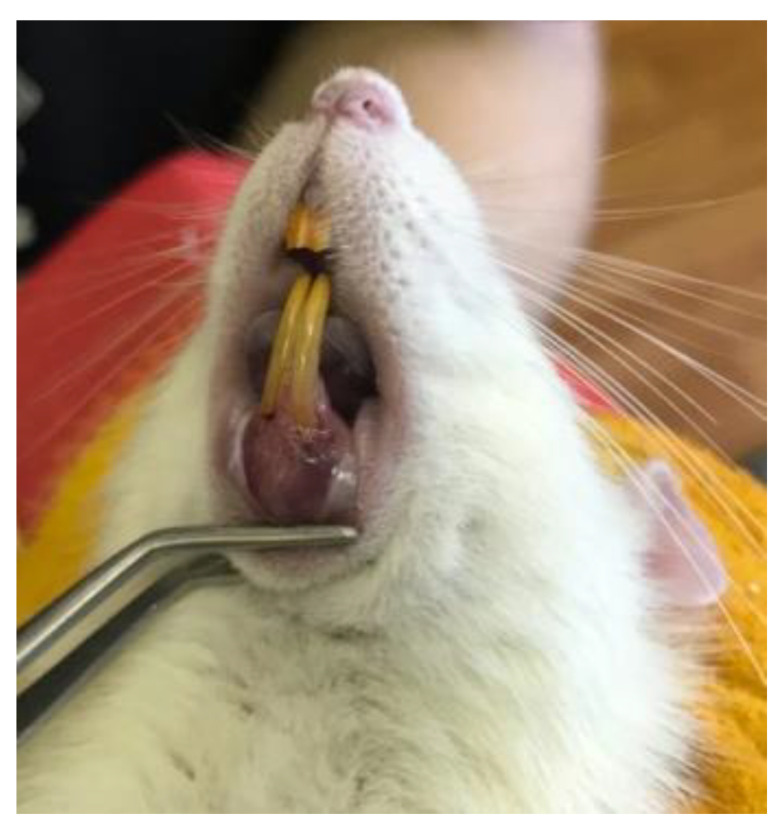
The study was carried out on 22 female rats. A wire ligature was applied to the cervical area of the incisors of the animals in an eight-shaped manner. Plaque obtained from a patient with periodontitis was placed under the wire, and nicotine and ethyl alcohol solutions were injected under the gingival mucosa. A complex index has been proposed to assess inflammation. At the end of the experiment the animals were euthanized, their jaws were dissected into dentoalveolar blocks and further descriptive histologic analysis was performed.
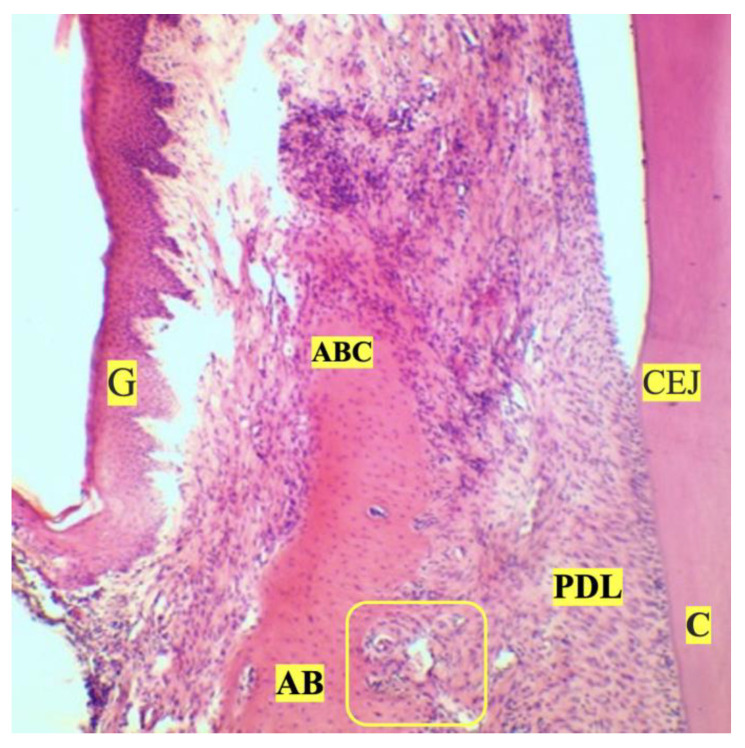
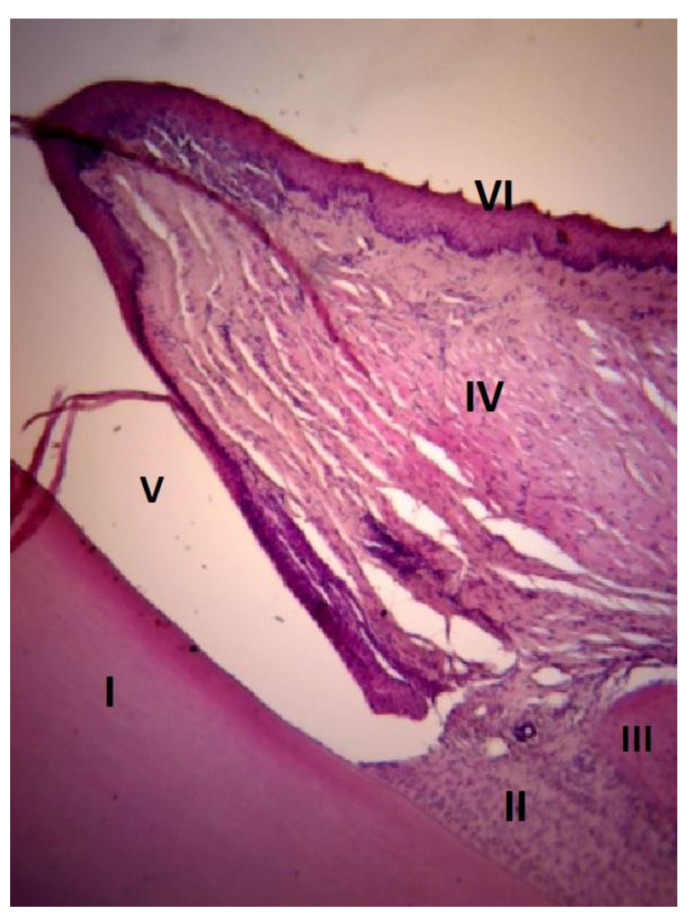
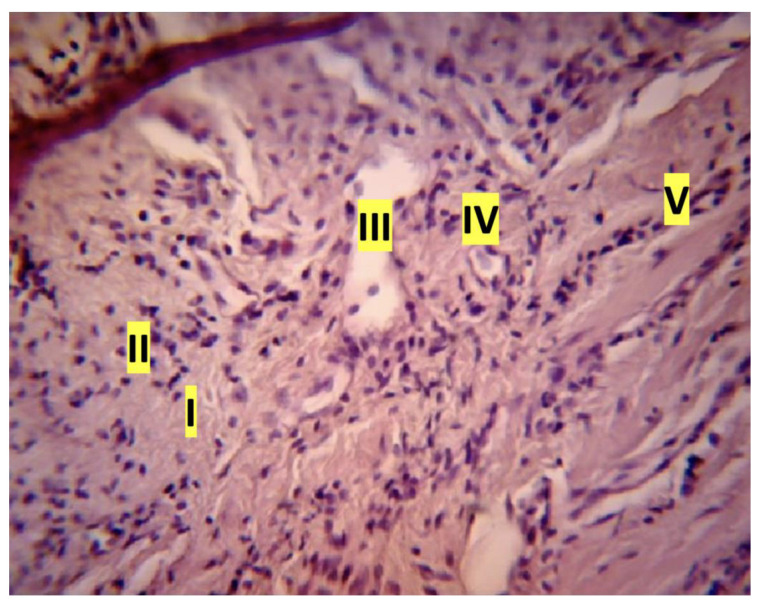
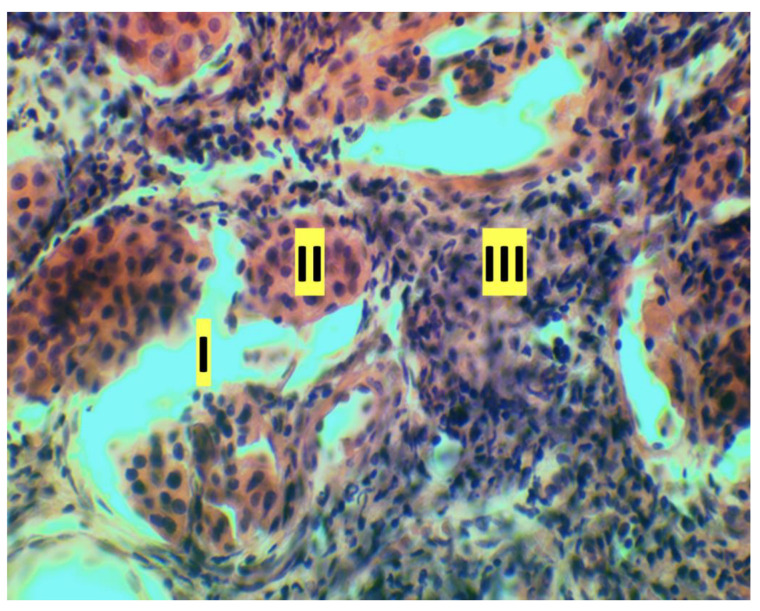
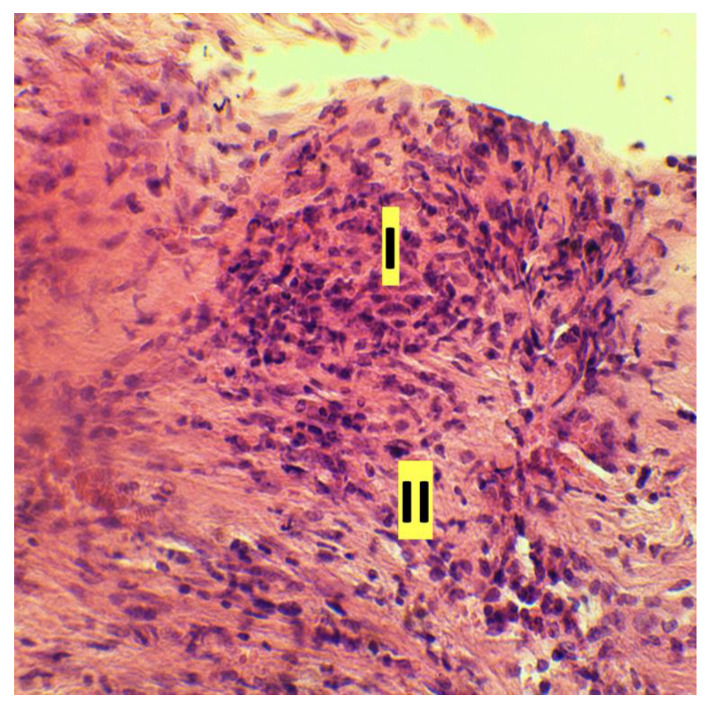
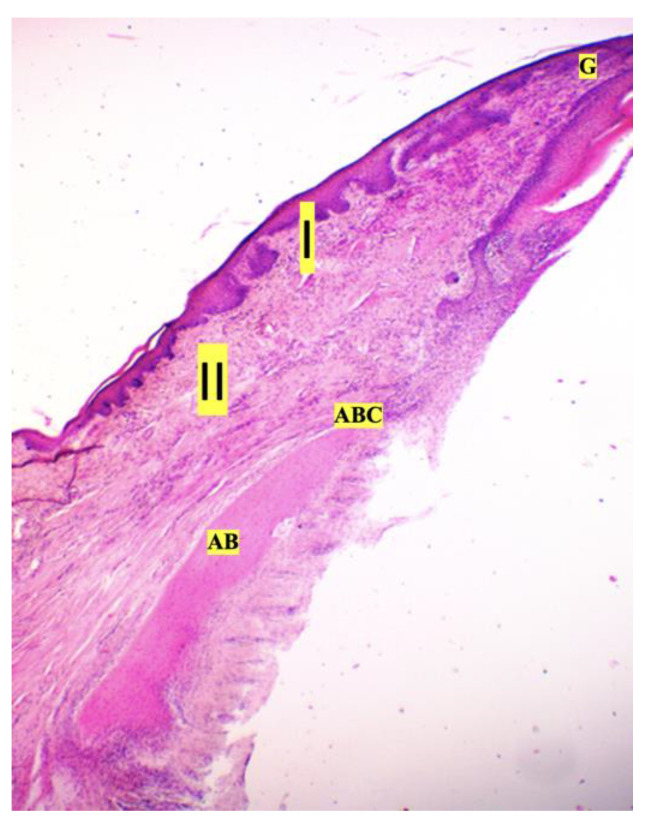
On the second day the gingiva of the rats acquired a cyanotic-pink color, on the fourth day the consistency of the gingiva became friable, mobility appeared in the lower incisors. Complex index of inflammation in animals of the main group: before the study-9, on the 7th day-195. Gingival preparations showed signs of exudative inflammation. In alveolar processes-irreversible resorption of bone structures. The difference of indicators in animals before and after the experiment was statistically significant ( < 0.05).
The new experimental model of periodontitis is reproduced in a short period of time, provides intensive development of inflammation, leads to disruption of the integrity of epithelial and connective tissue attachment, destruction of alveolar bone.
牙周疾病的患病率正在上升,且往往随年龄增长而增加,被认为是牙齿缺失的主要原因之一。为评估牙周疾病新治疗方法的有效性,对实验动物进行研究可能很有前景。
开发一种在实验动物上加速建立实验性牙周炎模型的新方法。
对22只雌性大鼠进行研究。以数字8字形方式将金属丝结扎在动物切牙的颈部区域。将从牙周炎患者处获取的牙菌斑置于金属丝下方,并在牙龈黏膜下注射尼古丁和乙醇溶液。提出了一个综合指数来评估炎症。实验结束时对动物实施安乐死,将其颌骨解剖成牙槽骨块,然后进行进一步的描述性组织学分析。
第二天大鼠牙龈变为蓝紫色至粉红色,第四天牙龈质地变得脆弱,下切牙出现松动。主要实验组动物的炎症综合指数:研究前为9,第7天为195。牙龈标本显示出渗出性炎症迹象。在牙槽突中出现骨结构的不可逆吸收。实验前后动物各项指标的差异具有统计学意义(<0.05)。
新的牙周炎实验模型在短时间内得以重现,炎症发展迅速,导致上皮和结缔组织附着的完整性遭到破坏,牙槽骨被破坏。