Smith Fleur, Perera Sureni, Marella Manjula
Nossal Institute for Global Health, Melbourne School of Population and Global Health, The University of Melbourne, Melbourne 3010, Australia.
Head Office, Frank Hilton Organization, Lot 139 Brown Street, Suva, Fiji.
Int J Environ Res Public Health. 2023 Sep 7;20(18):6732. doi: 10.3390/ijerph20186732.
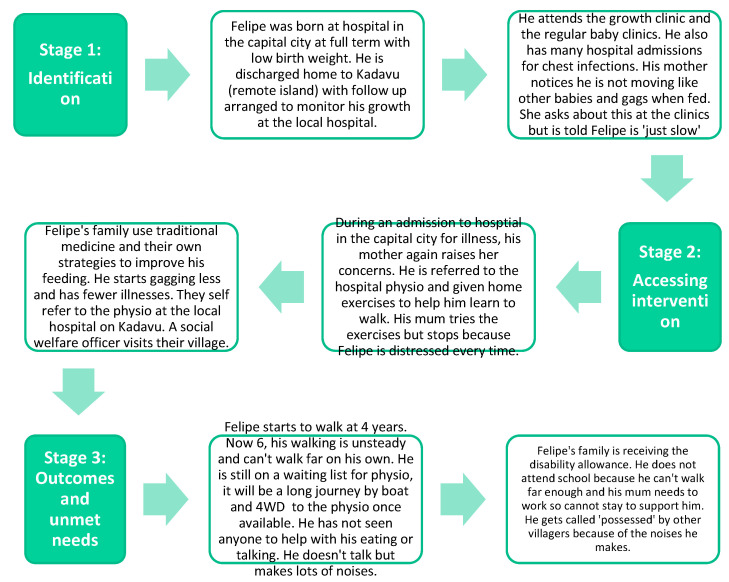
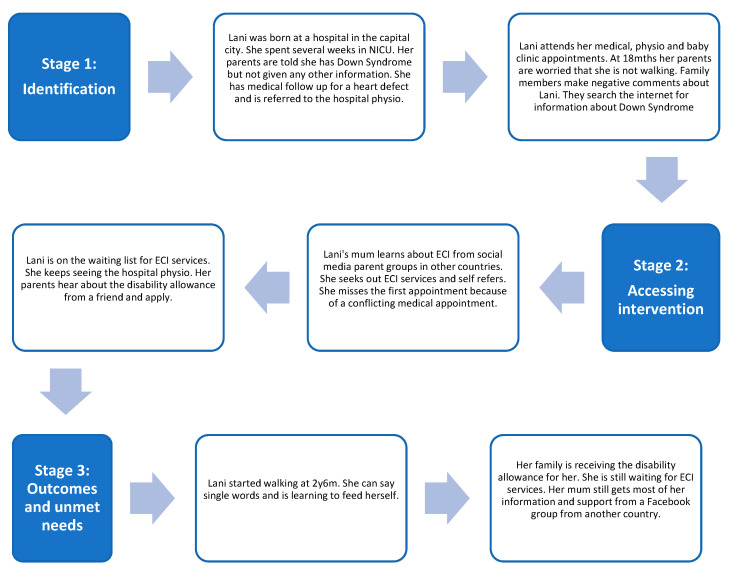
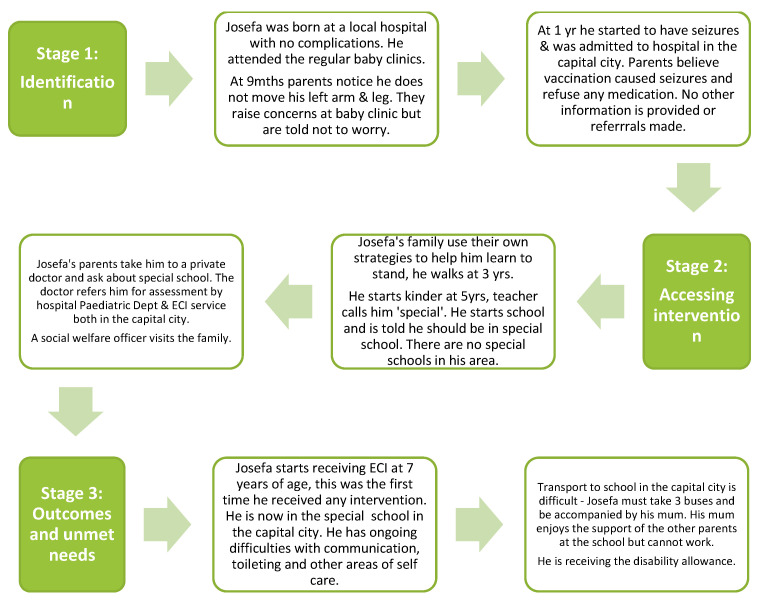
Early identification of developmental delay or disability and access to early intervention improves outcomes for children with disabilities and their families. However, in many low- and middle-income countries, services and systems to enable timely, co-ordinated care and support are lacking. The aim of this research was to explore the experiences of families of children with developmental disabilities in Fiji in accessing services for intervention and support across sectors. This qualitative study involved conducting interviews with caregivers of children with disabilities 12), and relevant key stakeholders from health, education, disability, and social support sectors ( 17). We used journey maps to identify key stages of the families' journeys, identify key barriers and enablers at each stage, and provide multi-sectoral recommendations for each stage. Enablers include proactive help seeking behaviours, the use of informal support networks and an increasingly supportive policy environment. Barriers to identification include a lack of awareness of developmental disabilities and the benefits of early intervention among service providers and the community. A lack of service availability and capacity, workforce issues, family financial constraints and a lack of collaboration between sectors were barriers to intervention once needs were identified, resulting in significant unmet needs and impacting inclusion and participation for children with disabilities. Overcoming these challenges requires a multi-sectoral approach.
早期识别发育迟缓或残疾并获得早期干预,可改善残疾儿童及其家庭的状况。然而,在许多低收入和中等收入国家,缺乏能够提供及时、协调的护理和支持的服务及系统。本研究的目的是探讨斐济发育残疾儿童家庭在获得跨部门干预和支持服务方面的经历。这项定性研究包括对残疾儿童的照料者(12人)以及来自卫生、教育、残疾和社会支持部门的相关关键利益攸关方(17人)进行访谈。我们使用行程图来确定家庭行程的关键阶段,识别每个阶段的关键障碍和促进因素,并为每个阶段提供多部门建议。促进因素包括积极寻求帮助的行为、利用非正式支持网络以及日益支持性的政策环境。识别方面的障碍包括服务提供者和社区对发育残疾以及早期干预益处的认识不足。一旦确定需求,服务的可获得性和能力不足、劳动力问题、家庭经济限制以及部门间缺乏协作是干预方面的障碍,导致大量需求未得到满足,并影响残疾儿童的融入和参与。克服这些挑战需要采取多部门方法。