Department of Clinical Pharmacology, Medical University of Lodz, 90-153 Lodz, Poland.
Department of Nucleic Acid Biochemistry, Medical University of Lodz, 92-213 Lodz, Poland.
Cells. 2023 Sep 7;12(18):2228. doi: 10.3390/cells12182228.
It is well known that oxidative stress plays an important role in the development of non-alcoholic fatty liver disease (NAFLD). It has been suggested that an insufficient antioxidant defense system composed of antioxidant enzymes, including catalase (CAT) and nonenzymatic molecules, is a key factor triggering oxidative damage in the progression of liver disease. Therefore, the aim of our study was to assess whether the level of CAT and -262 C/T polymorphism in the promoter of (rs1001179) are associated with NAFLD.
In total, 281 adults (152/129 female/male, aged 65.61 ± 10.44 years) were included in the study. The patients were assigned to an NAFLD group ( = 139) or a group without NAFLD ( = 142) based on the results of an ultrasound, the Hepatic Steatosis Index, and the Fatty Liver Index (FLI). CAT levels were determined using an ELISA test, and genomic DNA was extracted via the standard phenol/chloroform-based method and genotyped via RFLP-PCR.
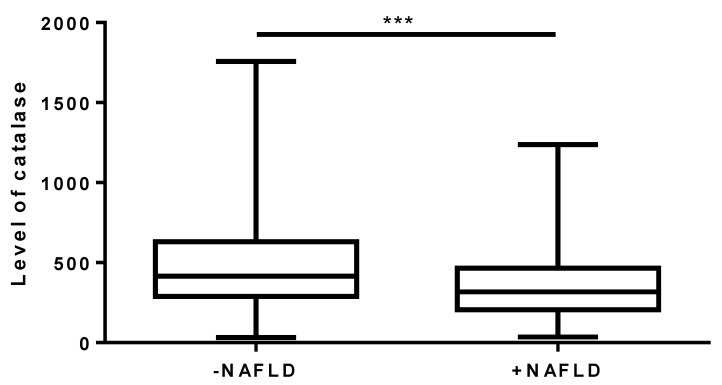
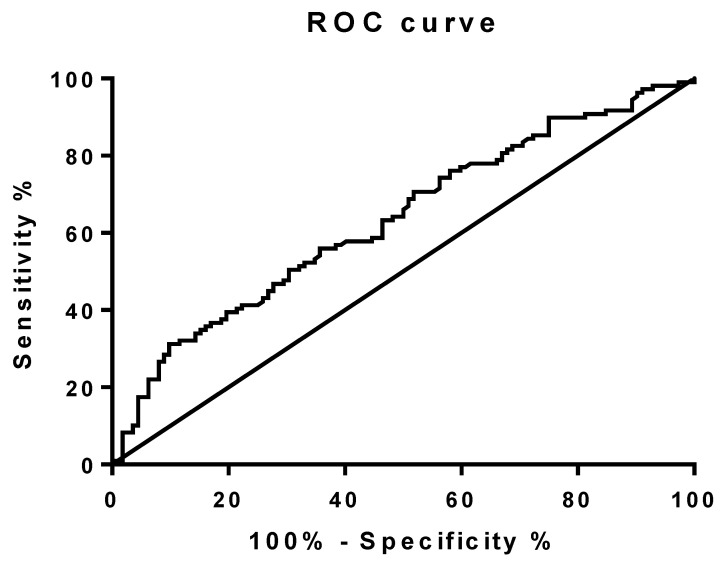
The CAT level was decreased in NAFLD patients ( < 0.001), and an ROC analysis revealed that a CAT level lower than 473.55 U/L significantly increases the risk of NAFLD. In turn, genotyping showed that the CT genotype and the T allele of -262 C/T polymorphism elevate the risk of NAFLD. The diminished CAT level in the NAFLD group correlated with increased FLI, waist circumference and female gender.
The obtained results support observations that oxidative damage associated with NAFLD may be the result of a decreased CAT level as a part of the antioxidant defense system.
众所周知,氧化应激在非酒精性脂肪性肝病(NAFLD)的发展中起着重要作用。有人认为,由抗氧化酶(如过氧化氢酶(CAT))和非酶分子组成的抗氧化防御系统不足是触发肝病进展中氧化损伤的关键因素。因此,我们的研究目的是评估 CAT 水平和启动子中 -262 C/T 多态性(rs1001179)是否与 NAFLD 相关。
共纳入 281 名成年人(152/129 名女性/男性,年龄 65.61±10.44 岁)。根据超声、肝脂肪变性指数和脂肪性肝病指数(FLI)的结果,将患者分为 NAFLD 组(n=139)和非 NAFLD 组(n=142)。使用 ELISA 试验测定 CAT 水平,并通过标准酚/氯仿法提取基因组 DNA,通过 RFLP-PCR 进行基因分型。
NAFLD 患者的 CAT 水平降低(<0.001),ROC 分析显示,CAT 水平低于 473.55 U/L 显著增加了 NAFLD 的风险。相反,基因分型显示-262 C/T 多态性的 CT 基因型和 T 等位基因增加了 NAFLD 的风险。NAFLD 组中 CAT 水平降低与 FLI、腰围和女性性别增加相关。
所得结果支持这样的观察结果,即与 NAFLD 相关的氧化损伤可能是抗氧化防御系统中 CAT 水平降低的结果。