Mohammed Yousef, Ye Ding, He Mudan, Wang Houpeng, Zhu Zuoyan, Sun Yonghua
State Key Laboratory of Freshwater Ecology and Biotechnology, Key Laboratory of Breeding Biotechnology and Sustainable Aquaculture, Institute of Hydrobiology, Chinese Academy of Sciences, Wuhan 430072, China.
College of Advanced Agricultural Sciences, University of Chinese Academy of Sciences, Beijing 100049, China.
Bioengineering (Basel). 2023 Sep 11;10(9):1073. doi: 10.3390/bioengineering10091073.
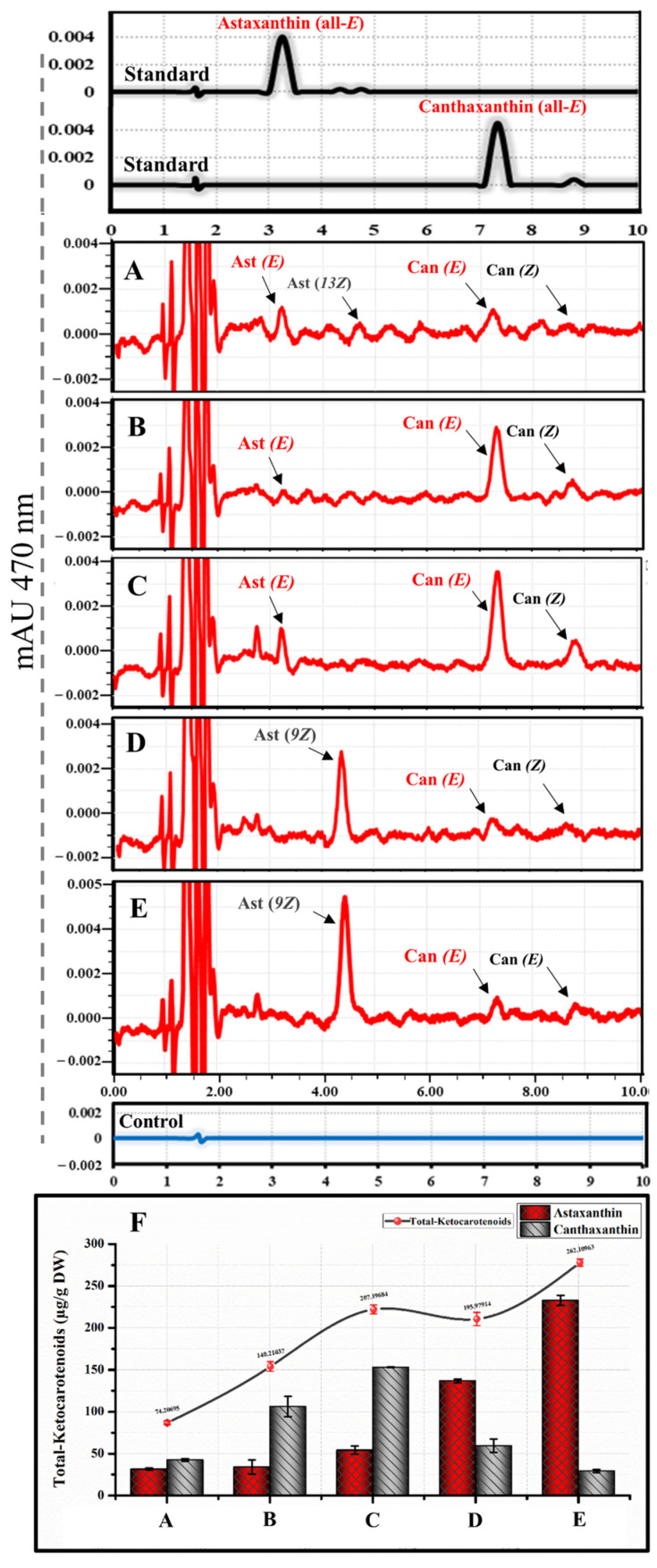
Astaxanthin is a fascinating molecule with powerful antioxidant activity, synthesized exclusively by specific microorganisms and higher plants. To expand astaxanthin production, numerous studies have employed metabolic engineering to introduce and optimize astaxanthin biosynthetic pathways in microorganisms and plant hosts. Here, we report the metabolic engineering of animal cells in vitro to biosynthesize astaxanthin. This was accomplished through a two-step study to introduce the entire astaxanthin pathway into human embryonic kidney cells (HEK293T). First, we introduced the astaxanthin biosynthesis sub-pathway (Ast subp) using several genes encoding β-carotene ketolase and β-carotene hydroxylase enzymes to synthesize astaxanthin directly from β-carotene. Next, we introduced a β-carotene biosynthesis sub-pathway (β-Car subp) with selected genes involved in Ast subp to synthesize astaxanthin from geranylgeranyl diphosphate (GGPP). As a result, we unprecedentedly enabled HEK293T cells to biosynthesize free astaxanthin from GGPP with a concentration of 41.86 µg/g dry weight (DW), which represented 66.19% of the total ketocarotenoids (63.24 µg/g DW). Through optimization steps using critical factors in the astaxanthin biosynthetic process, a remarkable 4.14-fold increase in total ketocarotenoids (262.10 µg/g DW) was achieved, with astaxanthin constituting over 88.82%. This pioneering study holds significant implications for transgenic animals, potentially revolutionizing the global demand for astaxanthin, particularly within the aquaculture sector.
虾青素是一种具有强大抗氧化活性的迷人分子,仅由特定微生物和高等植物合成。为了扩大虾青素的生产,众多研究采用代谢工程在微生物和植物宿主中引入并优化虾青素生物合成途径。在此,我们报告了体外动物细胞代谢工程以生物合成虾青素。这是通过两步研究实现的,即将完整的虾青素途径引入人胚肾细胞(HEK293T)。首先,我们使用几个编码β-胡萝卜素酮酶和β-胡萝卜素羟化酶的基因引入虾青素生物合成子途径(Ast子途径),以直接从β-胡萝卜素合成虾青素。接下来,我们引入一个β-胡萝卜素生物合成子途径(β-Car子途径),其中包含参与Ast子途径的选定基因,以从香叶基香叶基二磷酸(GGPP)合成虾青素。结果,我们首次使HEK293T细胞能够从GGPP生物合成游离虾青素,其浓度为41.86μg/g干重(DW),占总酮类胡萝卜素(63.24μg/g DW)的66.19%。通过利用虾青素生物合成过程中的关键因素进行优化步骤,总酮类胡萝卜素显著增加了4.14倍(262.10μg/g DW),其中虾青素占比超过88.82%。这项开创性研究对转基因动物具有重要意义,可能会彻底改变全球对虾青素的需求,尤其是在水产养殖领域。