Institute of Microbiology, Universität Stuttgart, Stuttgart, Germany.
Microb Cell Fact. 2011 Apr 26;10:29. doi: 10.1186/1475-2859-10-29.
The xanthophyll astaxanthin is a high-value compound with applications in the nutraceutical, cosmetic, food, and animal feed industries. Besides chemical synthesis and extraction from naturally producing organisms like Haematococcus pluvialis, heterologous biosynthesis in non-carotenogenic microorganisms like Escherichia coli, is a promising alternative for sustainable production of natural astaxanthin. Recent achievements in the metabolic engineering of E. coli strains have led to a significant increase in the productivity of carotenoids like lycopene or β-carotene by increasing the metabolic flux towards the isoprenoid precursors. For the heterologous biosynthesis of astaxanthin in E. coli, however, the conversion of β-carotene to astaxanthin is obviously the most critical step towards an efficient biosynthesis of astaxanthin.
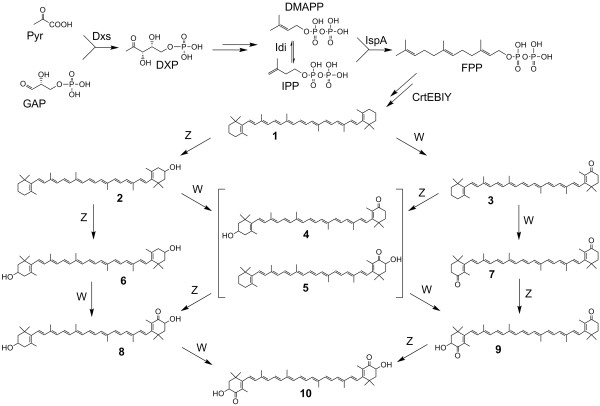
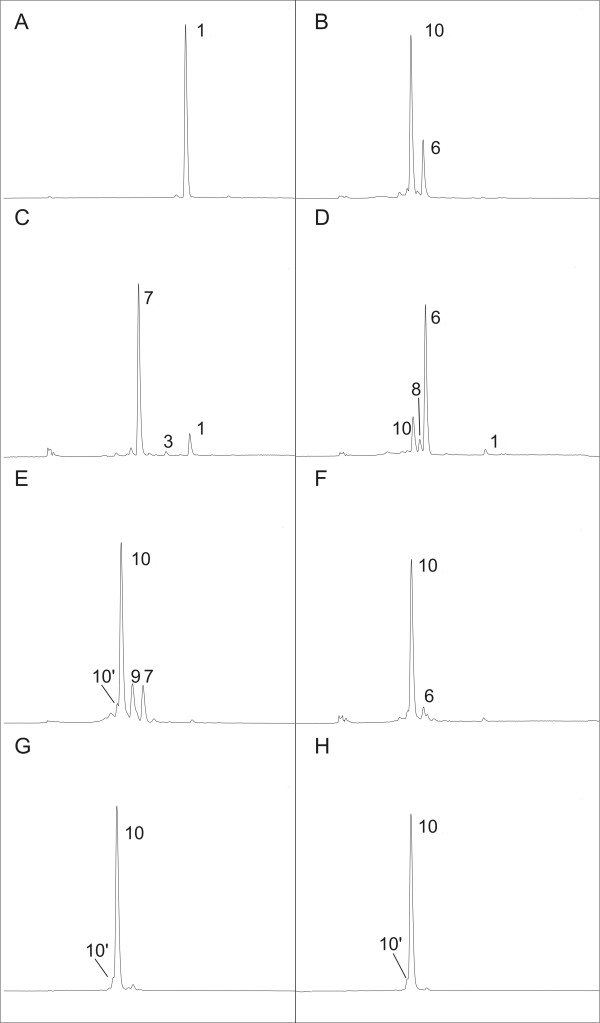
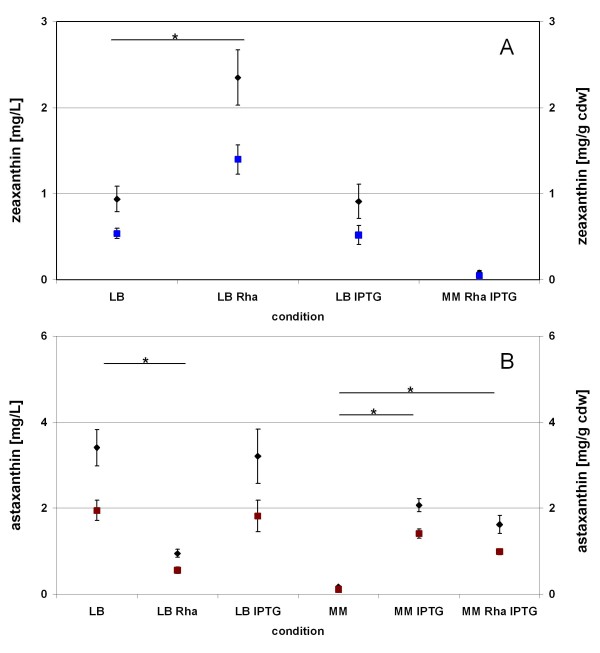
Here we report the construction of the first plasmid-free E. coli strain that produces astaxanthin as the sole carotenoid compound with a yield of 1.4 mg/g cdw (E. coli BW-ASTA). This engineered E. coli strain harbors xanthophyll biosynthetic genes from Pantoea ananatis and Nostoc punctiforme as individual expression cassettes on the chromosome and is based on a β-carotene-producing strain (E. coli BW-CARO) recently developed in our lab. E. coli BW-CARO has an enhanced biosynthesis of the isoprenoid precursor isopentenyl diphosphate (IPP) and produces β-carotene in a concentration of 6.2 mg/g cdw. The expression of crtEBIY along with the β-carotene-ketolase gene crtW148 (NpF4798) and the β-carotene-hydroxylase gene (crtZ) under controlled expression conditions in E. coli BW-ASTA directed the pathway exclusively towards the desired product astaxanthin (1.4 mg/g cdw).
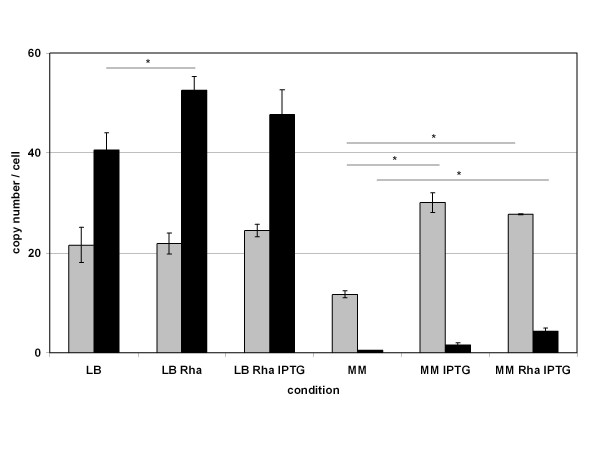
By using the λ-Red recombineering technique, genes encoding for the astaxanthin biosynthesis pathway were stably integrated into the chromosome of E. coli. The expression levels of chromosomal integrated recombinant biosynthetic genes were varied and adjusted to improve the ratios of carotenoids produced by this E. coli strain. The strategy presented, which combines chromosomal integration of biosynthetic genes with the possibility of adjusting expression by using different promoters, might be useful as a general approach for the construction of stable heterologous production strains synthesizing natural products. This is the case especially for heterologous pathways where excessive protein overexpression is a hindrance.
叶黄素虾青素是一种高附加值的化合物,应用于营养保健品、化妆品、食品和动物饲料行业。除了通过化学合成和从雨生红球藻等天然产生的生物体中提取外,在非产类胡萝卜素的微生物如大肠杆菌中进行异源生物合成,是可持续生产天然虾青素的一种很有前途的替代方法。大肠杆菌菌株代谢工程的最新成果导致通过增加异戊烯焦磷酸前体的代谢通量,显著提高了番茄红素或β-胡萝卜素等类胡萝卜素的生产力。然而,对于大肠杆菌中虾青素的异源生物合成,β-胡萝卜素转化为虾青素显然是虾青素高效生物合成的最关键步骤。
本文报告了第一个无质粒大肠杆菌菌株的构建,该菌株以虾青素为唯一类胡萝卜素化合物,产量为 1.4mg/gcdw(大肠杆菌 BW-ASTA)。该工程大肠杆菌菌株在染色体上携带来自 Pantoea ananatis 和 Nostoc punctiforme 的叶黄素生物合成基因作为单个表达盒,并且基于我们实验室最近开发的一种β-胡萝卜素生产菌株(大肠杆菌 BW-CARO)。大肠杆菌 BW-CARO 增强了异戊烯焦磷酸(IPP)的生物合成,并产生 6.2mg/gcdw 的β-胡萝卜素。在大肠杆菌 BW-ASTA 中,crtEBIY 的表达以及β-胡萝卜酮酶基因 crtW148(NpF4798)和β-胡萝卜素羟化酶基因 crtZ 的受控表达条件下,该途径被专门导向所需产物虾青素(1.4mg/gcdw)。
通过使用 λ-Red 重组技术,将编码虾青素生物合成途径的基因稳定整合到大肠杆菌的染色体中。染色体整合的重组生物合成基因的表达水平是多样化的,并进行了调整,以提高该大肠杆菌菌株产生的类胡萝卜素的比例。所提出的策略,将生物合成基因的染色体整合与使用不同启动子来调整表达的可能性相结合,可能作为构建稳定的异源生产菌株合成天然产物的一般方法有用。对于异源途径来说尤其如此,其中过度的蛋白质过表达是一个障碍。