Mauro Aurelio, Mazza Stefano, Scalvini Davide, Lusetti Francesca, Bardone Marco, Quaretti Pietro, Cobianchi Lorenzo, Anderloni Andrea
Gastroenterology and Endoscopy Unit, Fondazione IRCCS Policlinico San Matteo, 27100 Pavia, Italy.
Department of Internal Medicine, University of Pavia, 27100 Pavia, Italy.
Diagnostics (Basel). 2023 Sep 13;13(18):2933. doi: 10.3390/diagnostics13182933.
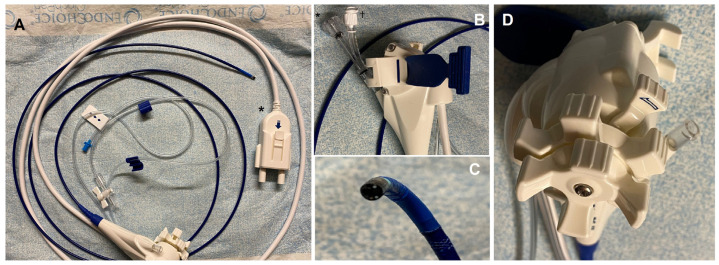
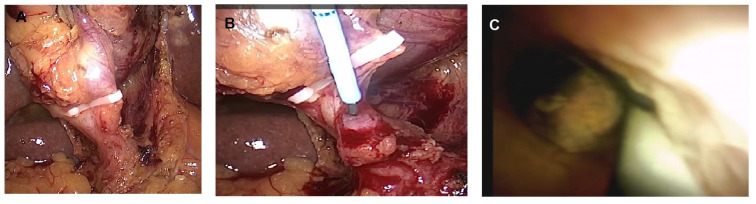
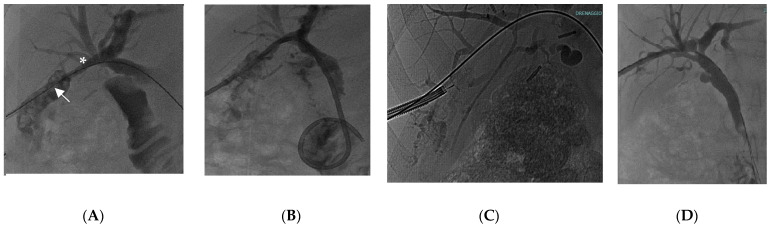
Endoscopy plays a central role in diagnostic and therapeutic approaches to biliary disease in both benign and malignant conditions. A cholangioscope is an endoscopic instrument that allows for the direct exploration of the biliary tree. Over the years, technology has improved endoscopic image quality and allowed for the development of an operative procedure that can be performed during cholangioscopy. Different types of instruments are available in this context, and they can be used in different anatomical access points according to the most appropriate clinical indication. The direct visualization of biliary mucosa is essential in the presence of biliary strictures of unknown significance, allowing for the appropriate allocation of patients to surgery or conservative treatments. Cholangioscopy has demonstrated excellent performance in discriminating malignant conditions (such as colangiocarcinoma) from benign inflammatory strictures, and more recent advances (e.g., artificial intelligence and confocal laser endomicroscopy) could further increase its diagnostic accuracy. Cholangioscopy also plays a primary role in the treatment of benign conditions such as difficult bile stones (DBSs). In this case, it may not be possible to achieve complete biliary drainage using standard ERCP. Therapeutic cholangioscopy-guided lithotripsy allows for stone fragmentation and complete biliary drainage. Indeed, other complex clinical situations, such as patients with intra-hepatic lithiasis and patients with an altered anatomy, could benefit from the therapeutic role of cholangioscopy. The aim of the present review is to explore the most recent diagnostic and therapeutic advances in the roles of cholangioscopy in the management of biliary diseases.
在内镜诊断和治疗良性及恶性胆道疾病的方法中,内镜检查起着核心作用。胆管镜是一种内镜器械,可直接探查胆道系统。多年来,技术提升了内镜图像质量,并推动了可在胆管镜检查期间实施的手术操作的发展。在此背景下有不同类型的器械可供使用,它们可根据最恰当的临床指征用于不同的解剖入路点。在存在意义不明的胆道狭窄时,直接观察胆道黏膜至关重要,有助于将患者合理分配至手术或保守治疗。胆管镜检查在鉴别恶性疾病(如胆管癌)与良性炎性狭窄方面表现出色,而最新进展(如人工智能和共聚焦激光内镜显微镜检查)可能会进一步提高其诊断准确性。胆管镜检查在治疗诸如难取性胆结石(DBS)等良性疾病方面也发挥着主要作用。在这种情况下,使用标准内镜逆行胰胆管造影(ERCP)可能无法实现完全胆道引流。治疗性胆管镜引导下碎石术可使结石破碎并实现完全胆道引流。事实上,其他复杂的临床情况,如肝内结石患者和解剖结构改变的患者,也可从胆管镜检查的治疗作用中获益。本综述的目的是探讨胆管镜检查在胆道疾病管理中的作用方面的最新诊断和治疗进展。