
线粒体DNA拷贝数驱动急性间歇性卟啉症的外显率。
Mitochondrial DNA Copy Number Drives the Penetrance of Acute Intermittent Porphyria.
作者信息
Di Pierro Elena, Perrone Miriana, Franco Milena, Granata Francesca, Duca Lorena, Lattuada Debora, De Luca Giacomo, Graziadei Giovanna
机构信息
Foundation IRCCS Ca' Granda Ospedale Maggiore Policlinico, 20122 Milan, Italy.
Department of Molecular Medicine, University of Pavia, 27100 Pavia, Italy.
出版信息
Life (Basel). 2023 Sep 15;13(9):1923. doi: 10.3390/life13091923.
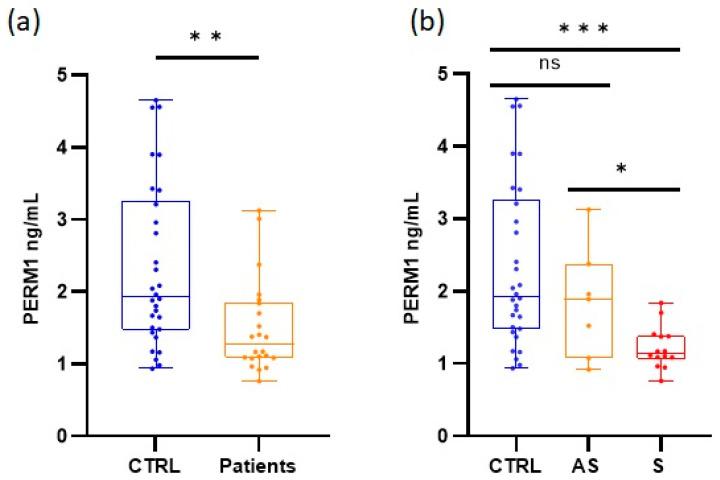
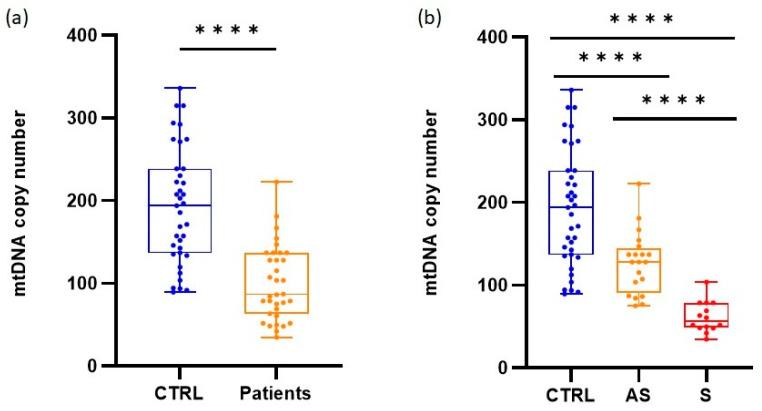
No published study has investigated the mitochondrial count in patients suffering from acute intermittent porphyria (AIP). In order to determine whether mitochondrial content can influence the pathogenesis of porphyria, we measured the mitochondrial DNA (mtDNA) copy number in the peripheral blood cells of 34 patients and 37 healthy individuals. We found that all AIP patients had a low number of mitochondria, likely as a result of a protective mechanism against an inherited heme synthesis deficiency. Furthermore, we identified a close correlation between disease penetrance and decreases in the mitochondrial content and serum levels of PERM1, a marker of mitochondrial biogenesis. In a healthy individual, mitochondrial count is usually modulated to fit its ability to respond to various environmental stressors and bioenergetic demands. In AIP patients, coincidentally, the phenotype only manifests in response to endogenous and exogenous triggers factors. Therefore, these new findings suggest that a deficiency in mitochondrial proliferation could affect the individual responsiveness to stimuli, providing a new explanation for the variability in the clinical manifestations of porphyria. However, the metabolic and/or genetic factors responsible for this impairment remain to be identified. In conclusion, both mtDNA copy number per cell and mitochondrial biogenesis seem to play a role in either inhibiting or promoting disease expression. They could serve as two novel biomarkers for porphyria.
尚无已发表的研究对急性间歇性卟啉病(AIP)患者的线粒体数量进行调查。为了确定线粒体含量是否会影响卟啉病的发病机制,我们测量了34例患者和37名健康个体外周血细胞中的线粒体DNA(mtDNA)拷贝数。我们发现,所有AIP患者的线粒体数量均较低,这可能是针对遗传性血红素合成缺陷的一种保护机制的结果。此外,我们发现疾病外显率与线粒体含量的降低以及线粒体生物发生标志物PERM1的血清水平之间存在密切相关性。在健康个体中,线粒体数量通常会进行调节,以适应其对各种环境应激源和生物能量需求的反应能力。巧合的是,在AIP患者中,该表型仅在对内源性和外源性触发因素作出反应时才会显现。因此,这些新发现表明线粒体增殖缺陷可能会影响个体对刺激的反应能力,为卟啉病临床表现的变异性提供了新的解释。然而,导致这种损伤的代谢和/或遗传因素仍有待确定。总之,每个细胞的mtDNA拷贝数和线粒体生物发生似乎在抑制或促进疾病表达方面都发挥了作用。它们可作为卟啉病的两种新型生物标志物。


 Zotero 插件