
通过动态投影扫描光刻技术实现大尺寸物体的高分辨率三维打印。
Three-Dimensional Printing of Large Objects with High Resolution by Dynamic Projection Scanning Lithography.
作者信息
Lin Chunbo, Xu Wenbin, Liu Bochao, Wang He, Xing Haiping, Sun Qiang, Xu Jia
机构信息
Research and Development Center of Precision Instruments and Equipment, Changchun Institute of Optics, Fine Mechanics and Physics, Chinese Academy of Sciences, Changchun 130033, China.
University of Chinese Academy of Sciences, Beijing 100049, China.
出版信息
Micromachines (Basel). 2023 Aug 30;14(9):1700. doi: 10.3390/mi14091700.
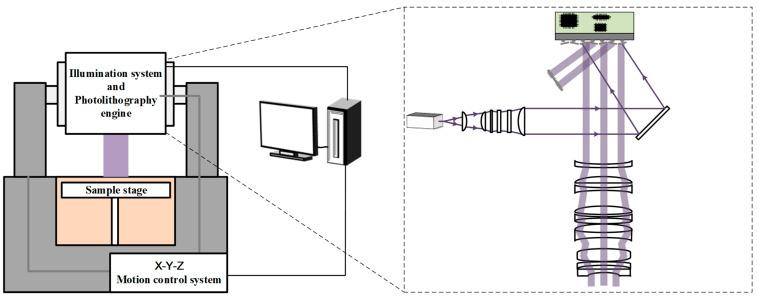
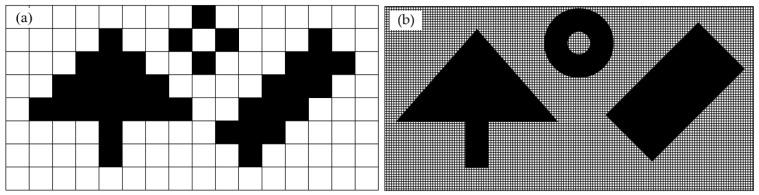
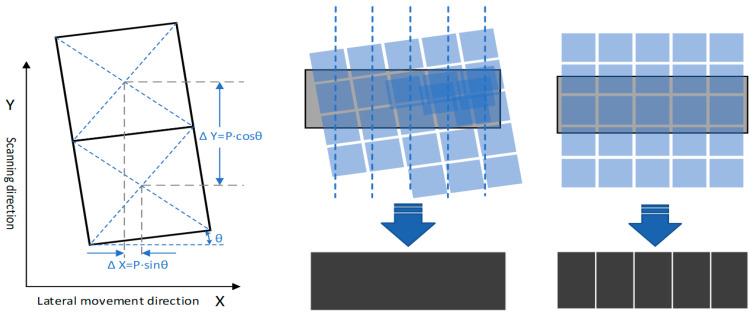
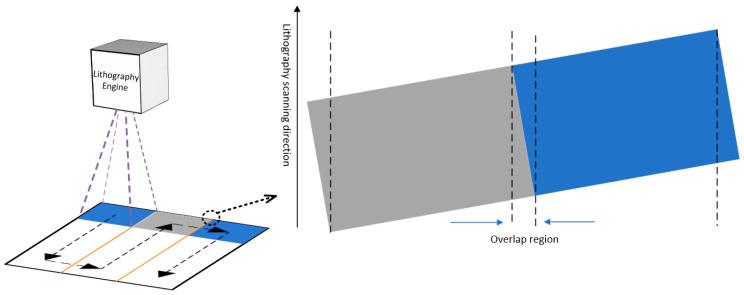
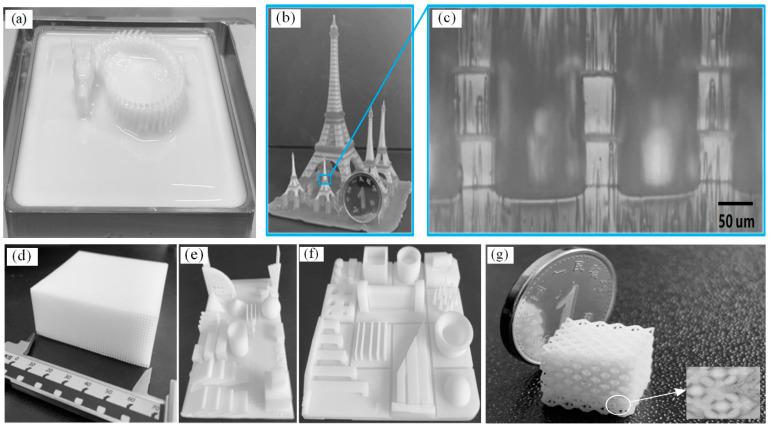
Due to the development of printing materials, light-cured 3D printing is playing an increasingly important role in industrial and consumer markets for prototype manufacturing and conceptual design due to its advantages in high-precision and high-surface finish. Despite its widespread use, it is still difficult to achieve the 3D printing requirements of large volume, high resolution, and high speed. Currently, traditional light-cured 3D printing technologies based on stereolithography, such as regular DLP and SLA, can no longer meet the requirements of the processing size and processing rate. This paper introduces a dynamic projection of 3D printing technology utilizing a digital micro-mirror device (DMD). By projecting the ultraviolet light pattern in the form of "animation", the printing resin is continuously cured in the exposure process to form the required three-dimensional structure. To print large-size objects, the three-dimensional model is sliced into high-resolution sectional images, and each layer of the sectional image is further divided into sub-regional images. These images are dynamically exposed to the light-curing material and are synchronized with the scanning motion of the projection lens to form a static exposure pattern in the construction area. Combined with the digital super-resolution, this system can achieve the layering and fine printing of large-size objects up to 400 × 400 × 200 mm, with a minimum feature size of 45 μm. This technology can achieve large-size, high-precision structural printing in industrial fields such as automobiles and aviation, promoting structural design, performance verification, product pre-production, and final part processing. Its printing speed and material bending characteristics are superior to existing DLP light-curing 3D printing methods.
由于打印材料的发展,光固化3D打印凭借其在高精度和高表面光洁度方面的优势,在工业和消费市场的原型制造和概念设计中发挥着越来越重要的作用。尽管其应用广泛,但仍难以满足大尺寸、高分辨率和高速度的3D打印要求。目前,基于立体光刻的传统光固化3D打印技术,如常规数字光处理(DLP)和立体光刻(SLA),已无法满足加工尺寸和加工速度的要求。本文介绍了一种利用数字微镜器件(DMD)的3D打印动态投影技术。通过以“动画”形式投射紫外光图案,使打印树脂在曝光过程中持续固化,从而形成所需的三维结构。为打印大尺寸物体,将三维模型切片成高分辨率的截面图像,且每层截面图像进一步划分为子区域图像。这些图像动态曝光于光固化材料,并与投影镜头的扫描运动同步,在构建区域形成静态曝光图案。结合数字超分辨率技术,该系统能够实现最大尺寸达400×400×200毫米的大尺寸物体的分层精细打印,最小特征尺寸为45微米。该技术可在汽车和航空等工业领域实现大尺寸、高精度的结构打印,推动结构设计、性能验证、产品预生产及最终零件加工。其打印速度和材料弯曲特性优于现有的DLP光固化3D打印方法。




 Zotero 插件