Aziz Mirette M, El-Gazzar Amira F
Department of Public Health and Community Medicine, Assiut University, Assiut, Egypt.
Department of Public Health and Community Medicine, Badr University in Cairo, Badr City, Egypt.
J Egypt Public Health Assoc. 2023 Oct 1;98(1):19. doi: 10.1186/s42506-023-00144-6.
Provider bias is a main barrier that extensively violates the right of free family planning method choice. Egypt is one of the countries that shows skewness in its method mix. Provider bias and insufficiency of alternative methods are identified as potential factors underlying this phenomenon which contributes to high unmet needs and discontinuation rates. Provider bias may be influenced by cultural beliefs and societal trends and is usually overlooked as a possible cause of this skewed method mix. This study aims to explore the presence of provider bias in rural Upper Egypt and its potential causes, a community with conservative cultural beliefs and least contraceptive prevalence rates.
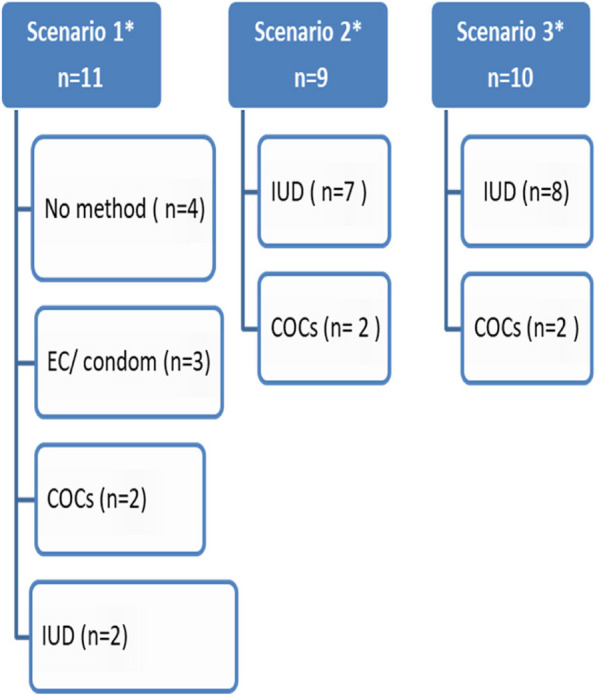
This is a qualitative study using the "simulated client's approach." The study was conducted in 16 villages in Assiut and Sohag governorates in Egypt. The simulated clients visited 30 clinics, 15 in each governorate, including primary healthcare units and private clinics. Three scenarios were used to explore the physicians-imposed restrictions for contraceptive use with different clients' eligibility criteria. Data was analyzed using the grounded theory methodology.
Recommending a contraceptive method for the mystery clients was not based on informed choice. Most providers had method or client bias. Copper IUD was the most favorable contraceptive method recommended by providers, with negative attitude towards using hormonal contraception. Nulliparous and young clients were discouraged to use contraception before proving fertility or offered temporary methods as emergency contraception or condoms. Providers have shown misconceptions related to infertility-associated complications of contraceptive use, especially for the young and nulliparous women.
In this study, providers had a clear bias towards recommending IUD rather than all other contraceptive methods, which was hindered in some cases by the lack of insertion skills. Interventions to reduce provider bias should go beyond technical training. Moreover, training on reproductive rights should be a main component of routine training. Providers should regularly receive research results and be oriented toward recent medical eligibility criteria of contraceptive methods use. Moreover, the sociocultural beliefs of providers that may affect their practice should be explored and addressed.
提供者偏见是广泛侵犯计划生育方法自由选择权利的主要障碍。埃及是方法组合存在偏差的国家之一。提供者偏见和替代方法不足被认为是导致这一现象的潜在因素,这一现象导致了高未满足需求率和停用率。提供者偏见可能受文化信仰和社会趋势影响,通常被忽视是这种方法组合偏差的一个可能原因。本研究旨在探讨埃及上埃及农村地区提供者偏见的存在及其潜在原因,该地区文化信仰保守,避孕普及率最低。
这是一项采用“模拟客户法”的定性研究。该研究在埃及艾斯尤特省和索哈杰省的16个村庄进行。模拟客户走访了30家诊所,每个省15家,包括初级卫生保健单位和私人诊所。使用三种情景来探讨医生对不同客户资格标准下避孕使用的限制。数据采用扎根理论方法进行分析。
为神秘客户推荐避孕方法并非基于知情选择。大多数提供者存在方法或客户偏见。铜宫内节育器是提供者推荐的最受欢迎的避孕方法,对使用激素避孕持消极态度。未生育和年轻客户在证明生育能力之前被劝阻使用避孕方法,或者提供临时方法作为紧急避孕或避孕套。提供者对避孕使用与不孕相关并发症存在误解,尤其是对年轻和未生育女性。
在本研究中,提供者在推荐宫内节育器而非其他所有避孕方法方面存在明显偏见,在某些情况下,这受到缺乏插入技能的阻碍。减少提供者偏见的干预措施应超越技术培训。此外,生殖权利培训应成为常规培训的主要组成部分。提供者应定期接收研究结果,并了解避孕方法使用的最新医学资格标准。此外,应探索并解决可能影响其执业的提供者的社会文化信仰问题。