Wang Yuemeng, Li Xin, Gao Na, Wang Xiaojun, Sun Shengqian
School of Food and Biological Engineering, Yantai Institute of Technology, Yantai, Shandong 264003, PR China.
Yantai Key Laboratory of Special Medical Food, Industrial Research Institute of Special Food, Yantai 264003, PR China.
Food Chem X. 2023 Jul 31;19:100817. doi: 10.1016/j.fochx.2023.100817. eCollection 2023 Oct 30.
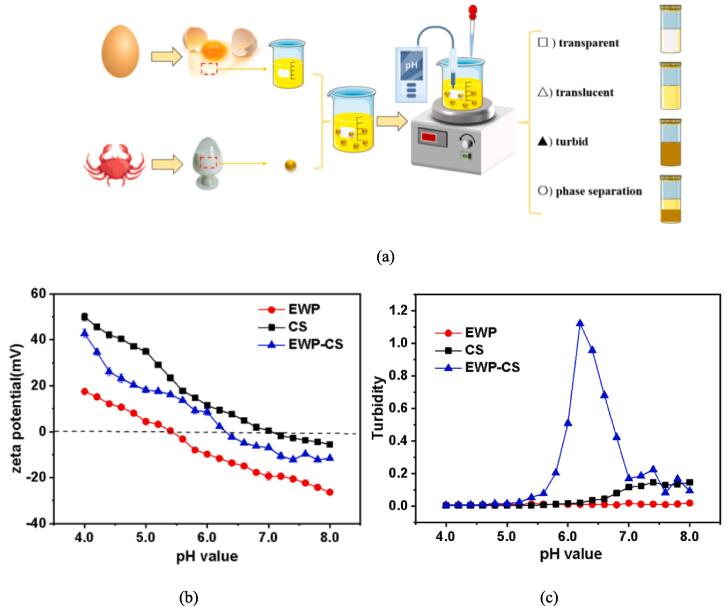
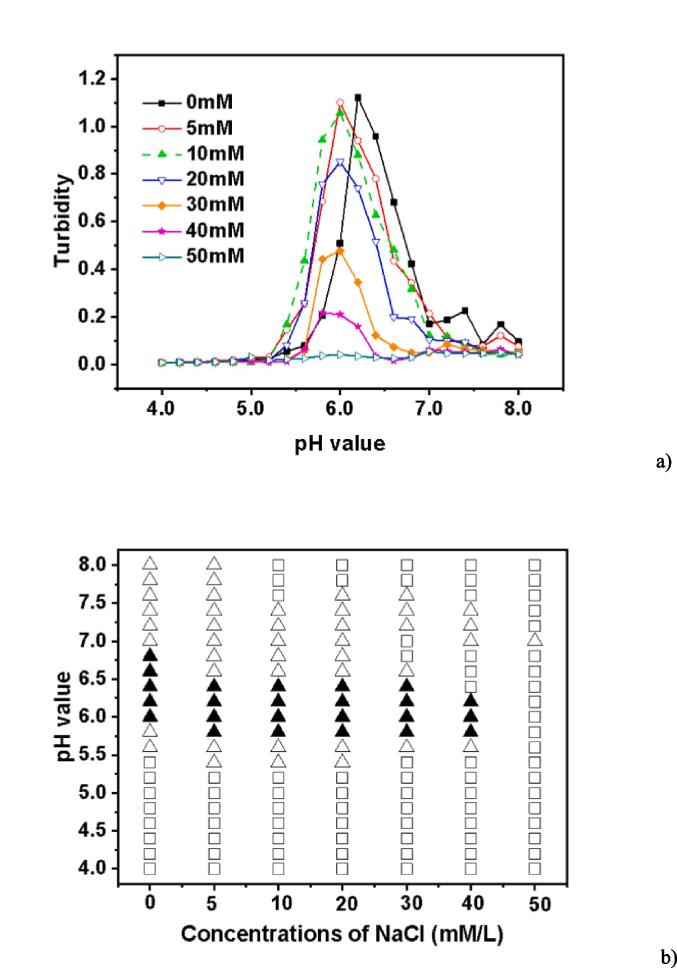
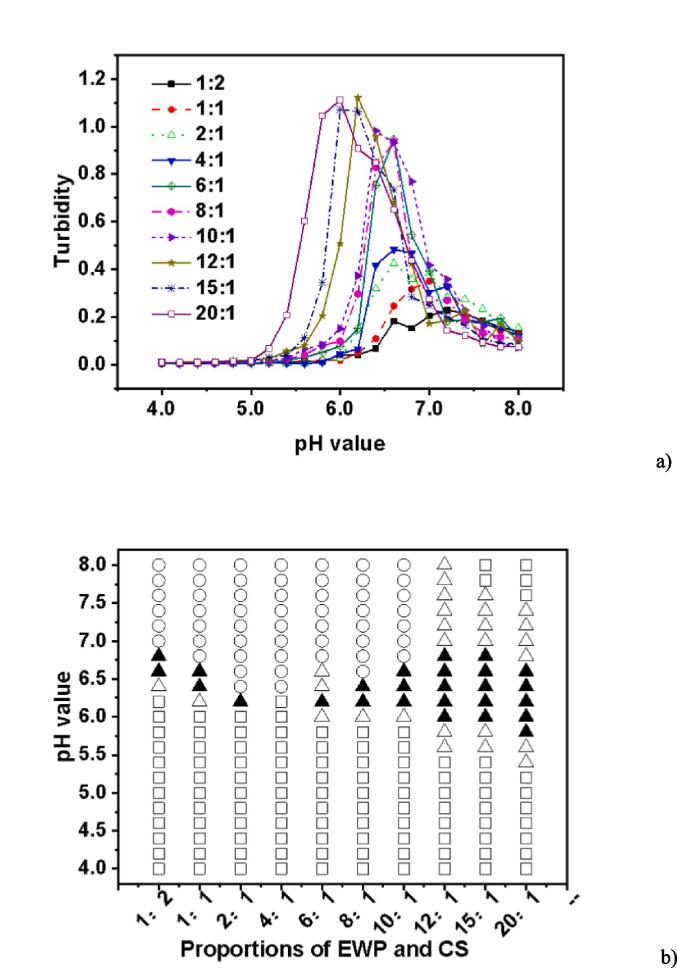
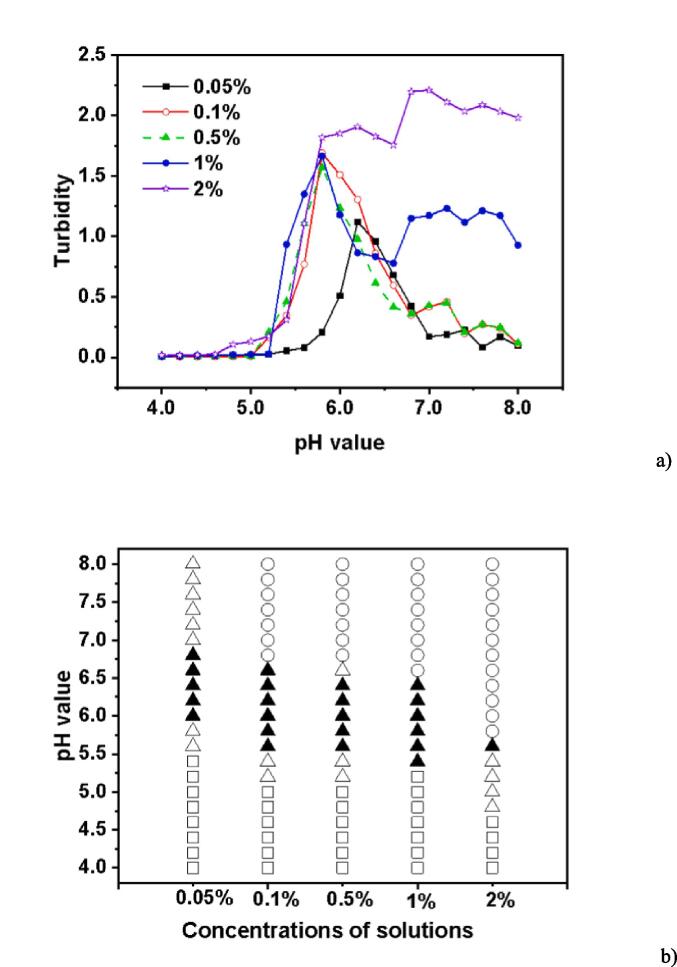
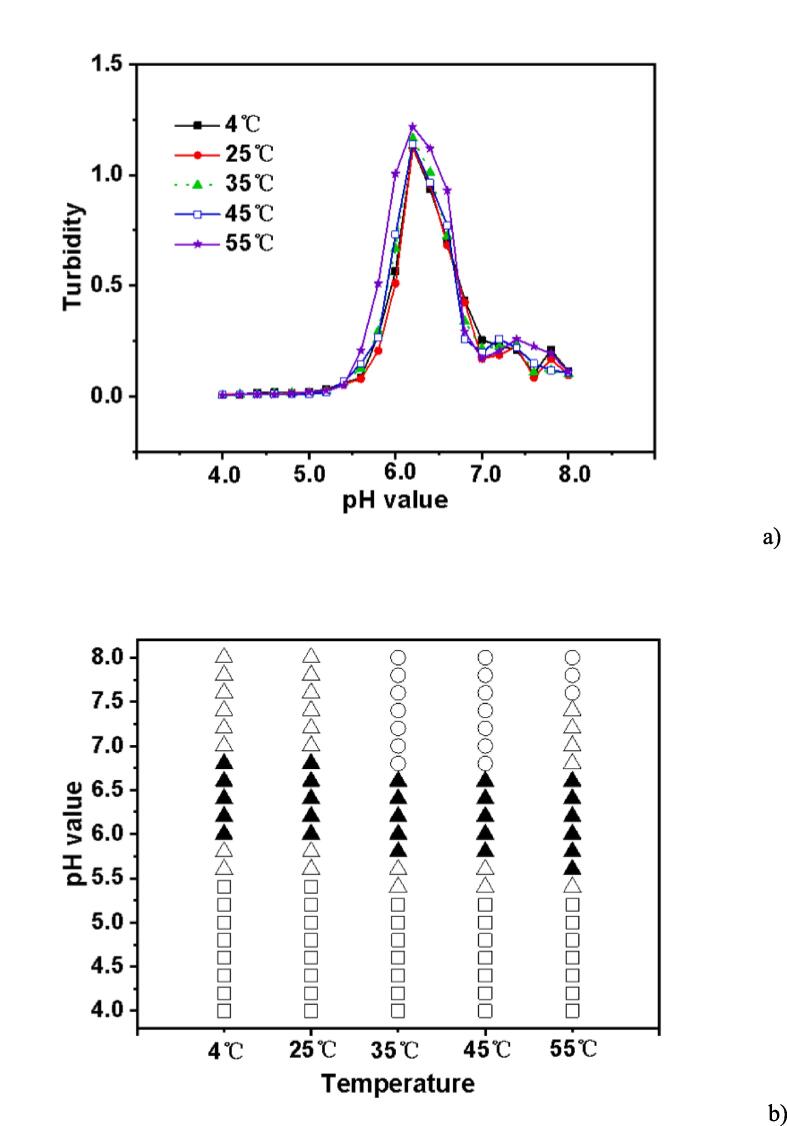
The influence of pH, temperature, biopolymer ratio, total concentration, and ionic concentration on the interaction between egg white protein (EWP) and chitosan (CS) was investigated through turbidity, zeta potential, and state diagram in our research. In addition, phase behavior was observed under various conditions. The turbidity of EWP remained low (turbidity < 0.03) and basically unchanged at a wide range of pH (4.0-8.0), while the turbidity of CS was slightly higher (turbidity < 0.2) after pH 7.0 than before. Moreover, under the same conditions, a sharply rising peak pattern was observed for the complex between EWP and CS. The maximum turbidity value was observed at 55 °C, and the temperature had a mild effect on turbidity. The optimum EWP to CS ratio was found to be 12:1 based on the turbidity curves and state diagrams influenced by different biopolymer mixing ratios. With the enhanced concentrations of total biopolymer, the maximum turbidity rose insignificantly above 0.1%.
在我们的研究中,通过浊度、zeta电位和状态图研究了pH值、温度、生物聚合物比例、总浓度和离子浓度对蛋清蛋白(EWP)与壳聚糖(CS)之间相互作用的影响。此外,在各种条件下观察了相行为。EWP的浊度在较宽的pH范围(4.0 - 8.0)内保持较低水平(浊度 < 0.03)且基本不变,而CS的浊度在pH 7.0之后比之前略高(浊度 < 0.2)。此外,在相同条件下,EWP与CS之间的复合物呈现出急剧上升的峰值模式。在55°C时观察到最大浊度值,温度对浊度有轻微影响。根据受不同生物聚合物混合比例影响的浊度曲线和状态图,发现EWP与CS的最佳比例为12:1。随着总生物聚合物浓度的增加,最大浊度在超过0.1%时上升不显著。