Maghfira Tusty Nadia, Krisnadhi Adila Alfa, Basaruddin T, Pudjiati Sri Redatin Retno
Computer Science Department, Universitas Indonesia, Depok 16424 Indonesia.
Psychology Department, Universitas Indonesia, Depok 16424 Indonesia.
Data Brief. 2023 Sep 21;50:109599. doi: 10.1016/j.dib.2023.109599. eCollection 2023 Oct.
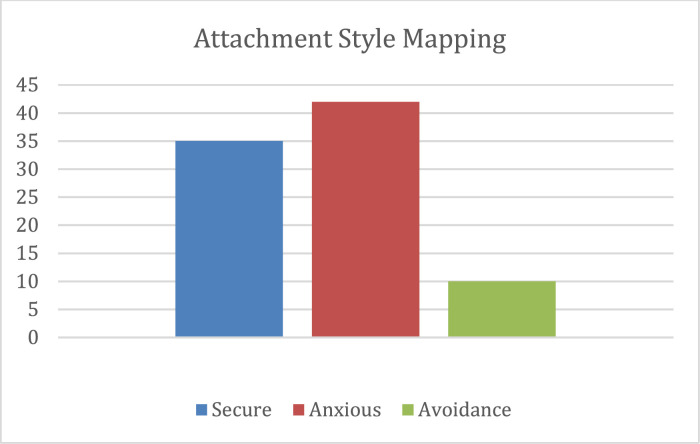
The attachment system is an innate human instinct to gain a sense of security as a form of self-defense from threats. Adults with secure attachment can maintain the balance of their relationships with themselves and significant others such as parents, romantic partners, and close friends. Generally, the adult attachment assessment data are collected primarily from subjective responses through questionnaires or interviews, which are closed to the research community. Attachment assessment from behavioral traits has also not been studied in depth because attachment-related behavioral data are still not openly available for research. This limits the scope of attachment assessment to new alternative innovations, such as the application of machine learning and deep learning-based approaches. This paper presents the Indonesian Young Adult Attachment (IYAA) dataset, a facial expression and speech audio dataset of Indonesian young adults in attachment projective-based assessment. The assessment contains two stages: exposure and response of 14 attachment-based stimuli. IYAA consists of audio-video data from age groups between 18-29 years old, with 20 male and 67 female subjects. It contains 1216 exposure videos, 1217 response videos, and 1217 speech response audios. Each data has a varying duration; the duration for exposure video ranges from 25 seconds to 1 minute 39 seconds, while for response video and speech response audio ranges from 40 seconds to 8 minutes and 25 seconds. The IYAA dataset is annotated into two kinds of labels: emotion and attachment. First, emotion labeling is annotated on each stimulus for all subject data (exposure videos, response videos, speech response audios). Each data is annotated into one or more labels among eight basic emotion categories (neutral, happy, sad, contempt, anger, disgust, surprised, fear) since each attachment-related event involves unconscious mental processes characterized by emotional changes. Second, each subject is annotated into one among three attachment style labels: secure, insecure-anxious, and insecure-avoidance. Given these two kinds of labeling, the IYAA dataset supports several research purposes, either using one kind of label separately or using them together for attachment classification research. It also supports innovative approaches to build automatic attachment classification through collaboration between the study of Behavioral, Developmental, and Social Psychology with Social Signal Processing.
依恋系统是人类的一种本能,旨在获得安全感,作为一种抵御威胁的自我防御形式。具有安全依恋的成年人能够维持自身与重要他人(如父母、浪漫伴侣和亲密朋友)之间关系的平衡。一般来说,成人依恋评估数据主要通过问卷调查或访谈中的主观回答来收集,这在研究领域中存在局限性。基于行为特征的依恋评估也尚未得到深入研究,因为与依恋相关的行为数据仍未公开用于研究。这限制了依恋评估的范围,促使人们寻求新的替代创新方法,如应用基于机器学习和深度学习的方法。本文介绍了印度尼西亚青年成人依恋(IYAA)数据集,这是一个基于依恋投射评估的印度尼西亚青年成人面部表情和语音音频数据集。该评估包含两个阶段:对14种基于依恋的刺激的暴露和反应。IYAA由18至29岁年龄组的视听数据组成,有20名男性和67名女性受试者。它包含1216个暴露视频、1217个反应视频和1217个语音反应音频。每个数据的时长各不相同;暴露视频的时长从25秒到1分39秒不等,而反应视频和语音反应音频的时长从40秒到8分25秒不等。IYAA数据集被标注为两种标签:情感和依恋。首先,对所有受试者数据(暴露视频、反应视频、语音反应音频)的每个刺激进行情感标注。每个数据被标注为八个基本情感类别(中性、快乐、悲伤、轻蔑、愤怒、厌恶、惊讶、恐惧)中的一个或多个标签,因为每个与依恋相关的事件都涉及以情绪变化为特征的无意识心理过程。其次,每个受试者被标注为三种依恋风格标签之一:安全型、不安全-焦虑型和不安全-回避型。鉴于这两种标注,IYAA数据集支持多种研究目的,既可以单独使用一种标签,也可以将它们一起用于依恋分类研究。它还支持通过行为、发展和社会心理学研究与社会信号处理之间的合作来构建自动依恋分类的创新方法。