Shao Hongyi, Zhou Yixin
Department of Orthopaedic Surgery, Beijing Jishuitan Hospital, Capital Medical University, Fourth Clinical College of Peking University, No. 31 Xinjiekou East Street, Xicheng District, Beijing, 100035, China.
Arthroplasty. 2023 Oct 3;5(1):52. doi: 10.1186/s42836-023-00205-3.
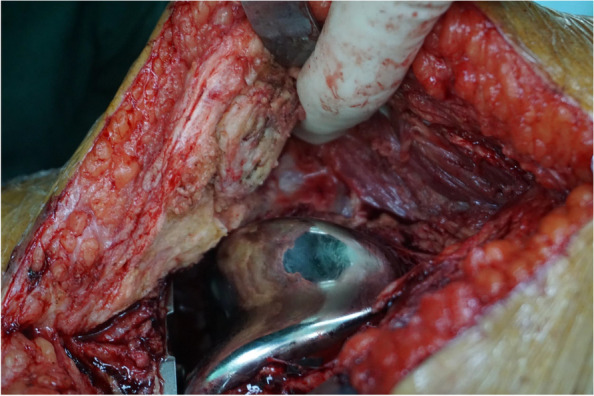
Appropriate soft tissue management represents a critical step in treating periprosthetic joint infection (PJI). This review discusses relevant guidelines that surgeons should follow in the management of soft tissues in PJI treatment. BODY: It is imperative for arthroplasty surgeons to thoroughly debride and rebuild soft tissue with a good blood supply. Relevant guidelines that surgeons should follow rigorously include preoperative evaluation of soft tissue status and plan-making, adequate surgical area exposure, intraoperative removal of all necrotic and infected soft tissues, adequate coverage of soft tissue defects, timely postoperative assessment and management of soft tissues, wound management and proper rehabilitation.
Soft tissue management plays a critical role in the treatment of PJI. To improve the infection control rate and postoperative joint function, surgeons should be familiar with these general principles and rigorously practice them in PJI management.
合适的软组织处理是治疗人工关节周围感染(PJI)的关键步骤。本综述讨论了外科医生在PJI治疗中处理软组织时应遵循的相关指南。
关节置换外科医生必须彻底清创并重建血供良好的软组织。外科医生应严格遵循的相关指南包括术前软组织状况评估与规划制定、充分暴露手术区域、术中切除所有坏死和感染的软组织、充分覆盖软组织缺损、术后及时评估与处理软组织、伤口管理以及适当的康复治疗。
软组织处理在PJI治疗中起着关键作用。为提高感染控制率和术后关节功能,外科医生应熟悉这些一般原则,并在PJI管理中严格践行。