
寄生虫诱导的免疫对细菌或病毒感染的影响。
The impact of helminth-induced immunity on infection with bacteria or viruses.
机构信息
State Key Laboratory for Zoonotic Diseases, Key Laboratory for Zoonosis Research, Ministry of Education, Institute of Zoonosis, College of Veterinary Medicine, Jilin University, Changchun, China.
State Key Laboratory of Virology, Key Laboratory of Special Pathogens and Biosafety, Wuhan Institute of Virology, Chinese Academy of Sciences, Wuhan, 430071, China.
出版信息
Vet Res. 2023 Oct 3;54(1):87. doi: 10.1186/s13567-023-01216-3.
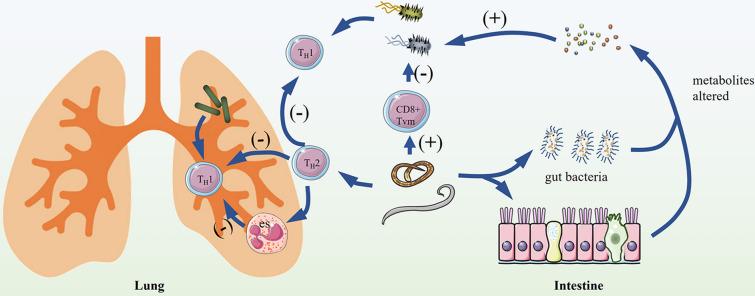
Different human and animal pathogens trigger distinct immune responses in their hosts. The infection of bacteria or viruses can trigger type I pro-inflammatory immune responses (e.g., IFN-γ, TNF-α, T1 cells), whereas infection by helminths typically elicits a type II host resistance and tolerizing immune response (e.g., IL-4, IL-5, IL-13, T2 cells). In some respects, the type I and II immune responses induced by these different classes of pathogens are antagonistic. Indeed, recent studies indicate that infection by helminths differentially shapes the response and outcome of subsequent infection by viruses and bacteria. In this review, we summarize the current knowledge on how helminth infections influence concurrent or subsequent microbial infections and also discuss the implications for helminth-mediated immunity on the outcome of SARS-CoV-2 disease.
不同的人类和动物病原体在宿主中引发不同的免疫反应。细菌或病毒的感染会引发 I 型促炎免疫反应(例如,IFN-γ、TNF-α、T1 细胞),而寄生虫的感染通常会引发 II 型宿主抵抗和耐受免疫反应(例如,IL-4、IL-5、IL-13、T2 细胞)。在某些方面,这些不同类别的病原体引起的 I 型和 II 型免疫反应是拮抗的。事实上,最近的研究表明,寄生虫的感染会以不同的方式影响随后的病毒和细菌感染的反应和结果。在这篇综述中,我们总结了目前关于寄生虫感染如何影响同时或随后的微生物感染的知识,还讨论了寄生虫介导的免疫对 SARS-CoV-2 疾病结果的影响。

 Zotero 插件