Zhao Ruixia, Wang Linlin, Liu Yibing, Shao Mingyi, Yang Wei, Fu Yu, Gao Qilong, Feng Jun'an, Xing Yunfei, Xiang Xinghua
The First Affiliated Hospital of Henan University of Chinese Medicine, Zhengzhou, Henan, China.
The First Clinical Medical College, Henan University of Traditional Chinese Medicine, Zhengzhou, Henan, China.
Front Pharmacol. 2023 Sep 18;14:1231933. doi: 10.3389/fphar.2023.1231933. eCollection 2023.
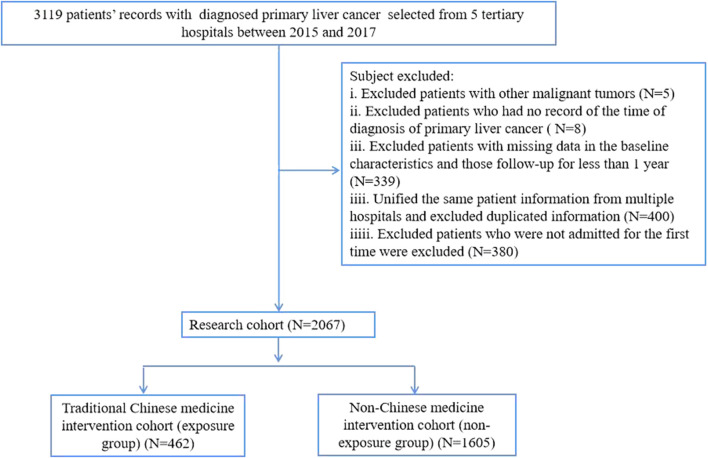
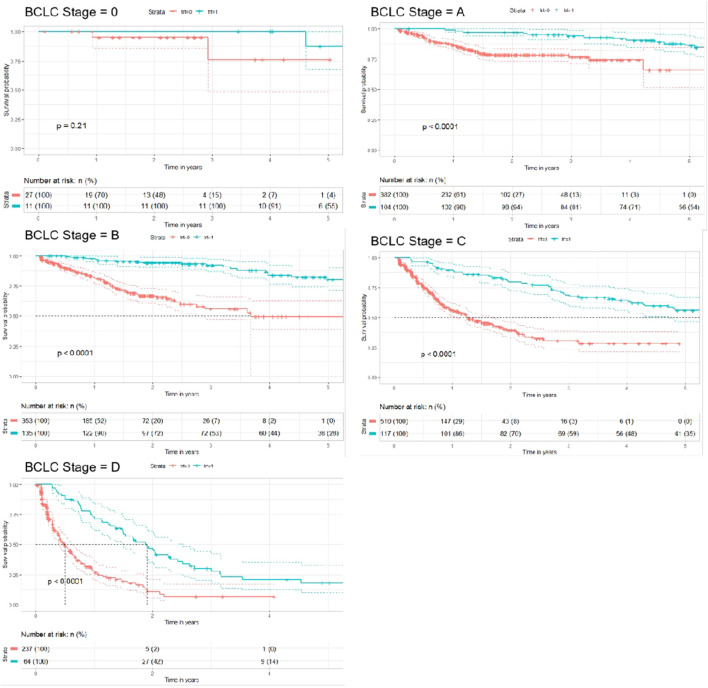
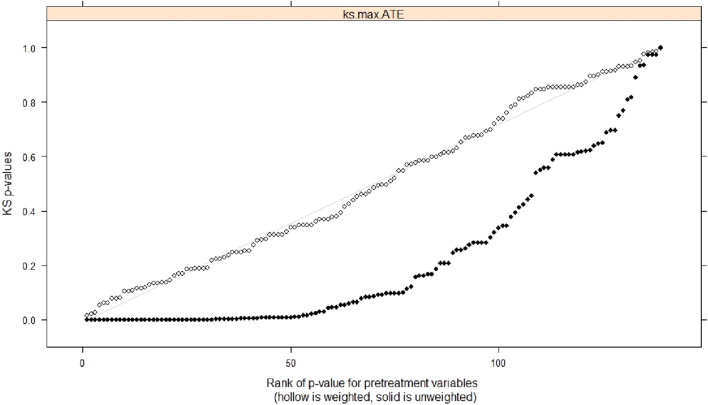
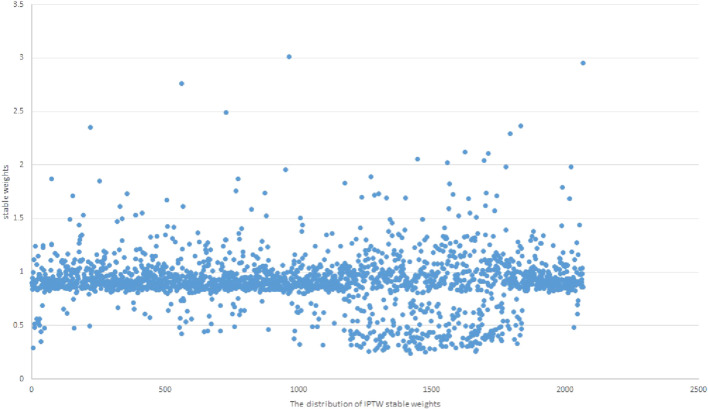
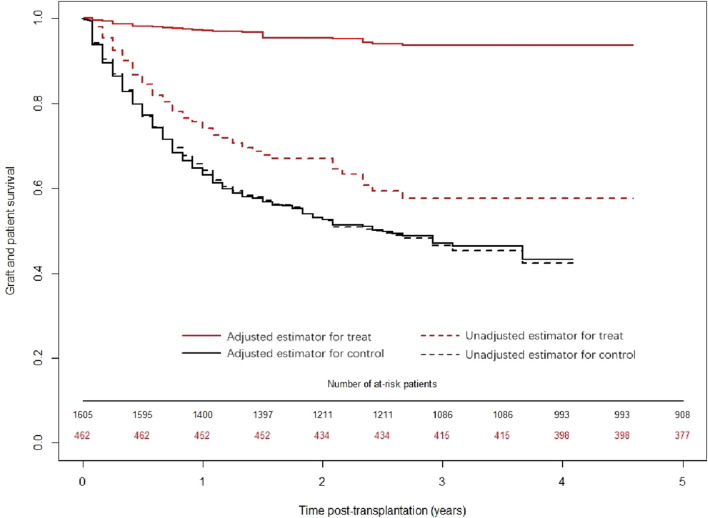
Traditional Chinese medicine (TCM) effectively improves the survival rate and quality of life of primary liver cancer patients, but high-level evidence is lacking. Patients were selected from 5 tertiary hospitals in Henan Province, China. Two thousand sixty-seven patients with primary liver cancer were included in the study. The electronic medical records (EMRs) of the patients were collected. Patients who received adjunctive TCM treatment and underwent treatment cumulative time for more than 1 month were classified as the TCM intervention cohort. Patients who did not receive adjunctive TCM treatment or underwent treatment cumulative time for less than 1 month were classified as the non-TCM intervention cohort. The main outcome indicators were the survival rate and overall survival time. The propensity score inverse probability weighting method was used to balance the differences between the groups. The primary cohort comprised 2,067 patients, including 462 patients who received adjunctive TCM treatment and 1,605 patients who did not receive adjunctive TCM treatment. The results of the Kaplan‒Meier survival curve indicated that the survival rate and median survival time of the exposure group before and after propensity score weighting were greater than those of the control group ( < 0.0001). Univariate Cox regression analysis after propensity score weighting showed that adjunctive TCM treatment was an independent protective factor for survival [regression coefficient = -0.215, hazard ratio (HR) = 0.8066, 95% confidence interval (CI) (0.6609-0.9844)]. Adjuvant treatment with TCM has a protective effect on the prognosis of patients with primary liver cancer; it can reduce the mortality and prolong the survival time.
中医(TCM)可有效提高原发性肝癌患者的生存率和生活质量,但缺乏高级别证据。研究选取了中国河南省的5家三级医院的患者。2067例原发性肝癌患者纳入研究。收集患者的电子病历(EMR)。接受中医辅助治疗且治疗累积时间超过1个月的患者被分类为中医干预队列。未接受中医辅助治疗或治疗累积时间少于1个月的患者被分类为非中医干预队列。主要结局指标为生存率和总生存时间。采用倾向评分逆概率加权法平衡组间差异。原始队列包括2067例患者,其中462例接受中医辅助治疗,1605例未接受中医辅助治疗。Kaplan-Meier生存曲线结果表明,倾向评分加权前后暴露组的生存率和中位生存时间均高于对照组(P<0.0001)。倾向评分加权后的单因素Cox回归分析显示,中医辅助治疗是生存的独立保护因素[回归系数=-0.215,风险比(HR)=0.8066,95%置信区间(CI)(0.6609-0.9844)]。中医辅助治疗对原发性肝癌患者的预后具有保护作用;可降低死亡率并延长生存时间。