1Bowling Green State University College of Arts and Sciences, Department of Biological Sciences, Bowling Green, OH, USA.
3Southern Illinois University, Department of Environmental Sciences, Edwardsville, IL, USA.
Arh Hig Rada Toksikol. 2023 Sep 30;74(3):167-178. doi: 10.2478/aiht-2023-74-3708. eCollection 2023 Sep 1.
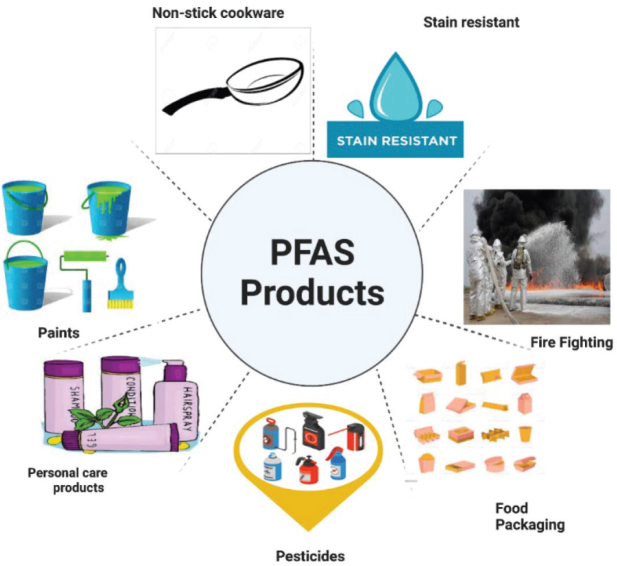
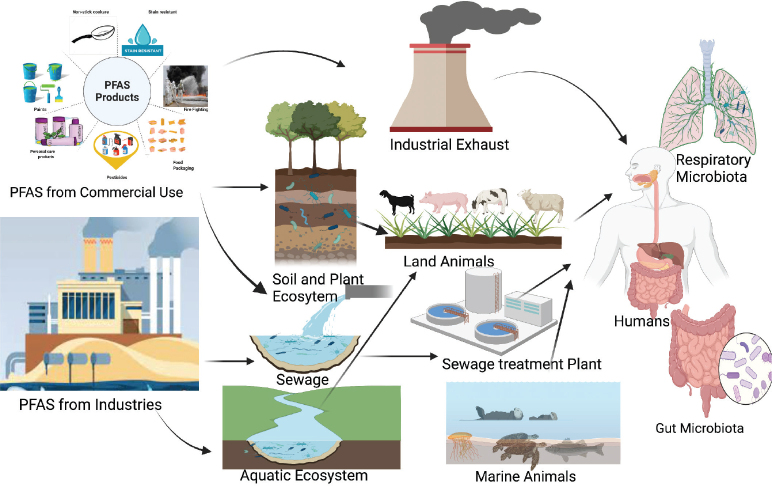
Utilised in a variety of consumer products, per- and polyfluoroalkyl substances (PFAS) are major environmental contaminants that accumulate in living organisms due to their highly hydrophobic, lipophobic, heat-resistant, and non-biodegradable properties. This review summarizes their effects on microbial populations in soils, aquatic and biogeochemical systems, and the human microbiome. Specific microbes are insensitive to and even thrive with PFAS contamination, such as and the in soil and aquatic environments, while some bacterial species, such as and , are sensitive and drop in population. Some bacterial species, in turn, have shown success in PFAS bioremediation, such as . and .
被广泛应用于各类消费品的全氟和多氟烷基物质(PFAS)是主要的环境污染物,由于其高度疏水、疏脂、耐热和不可生物降解的特性,它们在生物体中不断积累。本综述总结了它们对土壤、水生和生物地球化学系统以及人类微生物组中微生物种群的影响。一些特定的微生物对 PFAS 污染不敏感,甚至在 PFAS 污染中茁壮成长,如土壤和水生环境中的 和 ,而一些细菌物种,如 和 ,则对 PFAS 敏感,种群数量下降。一些细菌物种,如 和 ,则在 PFAS 的生物修复方面取得了成功。